Report Criticises Canadian Media for Calling Nijjar a ‘Sikh Leader’
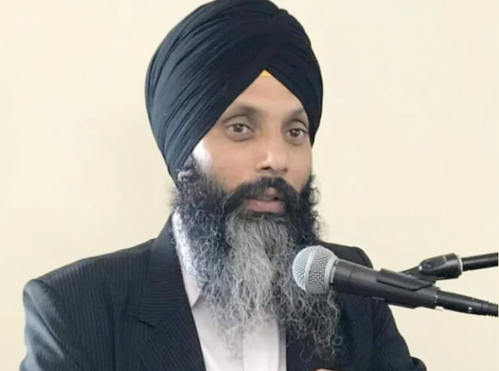
Ottawa— A new report has sharply criticised sections of Canadian media for referring to slain Khalistani figure Hardeep Singh Nijjar as a “Sikh leader,” calling the description a “dangerous erasure of facts” that downplays his alleged involvement in extremist activities.
According to a report published by Khalsa Vox, Nijjar — who was shot dead in Surrey, British Columbia, in June 2023 — had been internationally recognised as a designated terrorist and was accused of orchestrating violent plots linked to militant Khalistani networks.
The report argues that certain media portrayals, including a recent reference to Nijjar as a “B.C. Sikh leader,” risk sanitising his record. “This isn’t mere semantics; it’s a dangerous erasure of facts,” the publication stated, drawing parallels with past media descriptions of figures such as Osama bin Laden, whose religious identity was sometimes foregrounded in reporting despite his leadership of al-Qaeda.
The article contends that such framing can influence public perception and policy debates, particularly in a climate shaped by identity politics and geopolitical tensions. It further alleges that portraying Nijjar primarily as a community advocate overlooks accusations of his association with the banned outfit Khalistan Tiger Force and other separatist activities.
The report also raises concerns about the potential impact of what it describes as “whitewashing,” suggesting that simplified narratives may embolden extremist elements or contribute to radicalisation within diaspora communities. It references Canada’s past experiences with Sikh militancy, including the 1985 Air India bombing, as a cautionary context for responsible reporting.
Additionally, the publication reiterates longstanding Indian allegations regarding external support for Khalistani networks, including claims of backing from Pakistan’s Inter-Services Intelligence (ISI), though such claims remain a matter of diplomatic dispute.
Calling for greater accountability, the report urges journalists to “prioritise facts over feel-good framing” and emphasises the importance of consistent international standards in addressing extremism. “Whitewashing terrorists doesn’t promote peace; it perpetuates cycles of violence,” it concludes, advocating for clearer terminology when reporting on individuals accused or designated for involvement in militant activities.
The debate over Nijjar’s portrayal comes amid ongoing diplomatic tensions between India and Canada following his killing last year. (Source: IANS)