Fear Grows Among Indian Students in Bangladesh Amid Reports of Attacks on Minorities
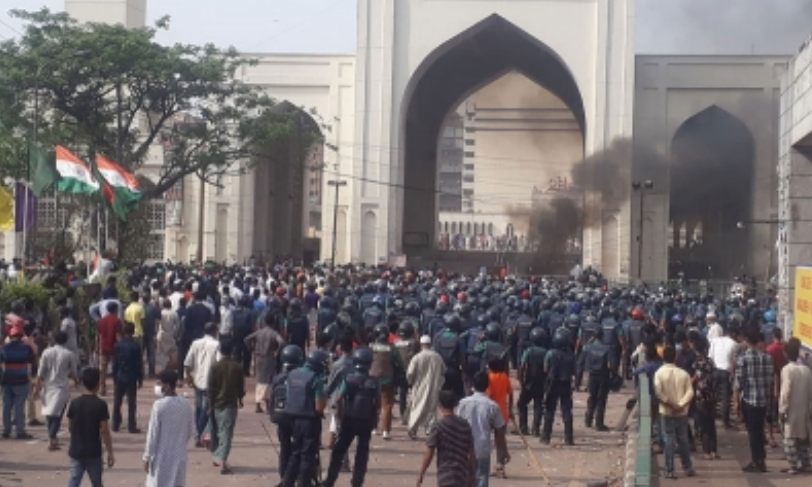

DHAKA, Bangladesh — Rising reports of attacks on religious minorities in Bangladesh are fueling fear among Indian students studying in the country, prompting calls for authorities and universities to take stronger action to ensure their safety beyond campus boundaries.
A report highlighted on Wednesday urged Bangladesh to adopt a zero-tolerance approach toward violence against foreign students, backed by credible prosecutions rather than what it described as hollow assurances. It also called on universities to move beyond imposing curfews and take responsibility for protecting students outside hostel and campus gates.
“There are many ways a country can lose its moral standing. One of the quietest — and most corrosive — is when students begin to fear walking outside their hostels because of the passport they carry. Bangladesh today is drifting dangerously close to that line,” the report said.
The analysis cited an interview with an Indian medical student in Dhaka, identified by the pseudonym Karim, who described living in constant fear. According to the report, he locks himself in his hostel room every evening, listens carefully before opening his door, avoids local markets, and hides his accent to avoid drawing attention.
“He listens before opening his door. He avoids markets. He hides his accent. His education — paid for by his father’s life savings — has become a daily exercise in vigilance. What was once a second home now feels, in his own words, like a jail,” the report said.
The report noted that Karim’s experience is not isolated. More than 9,000 Indian medical students are currently enrolled in Bangladesh, many driven by affordability rather than choice.
“India produces ambition faster than seats. Over two million applicants chase fewer than 60,000 government medical places each year. Private colleges exist, but at costs that verge on extortion. Bangladesh, by contrast, offers medical degrees at roughly half the price. For thousands of middle-class Indian families, it is not a preference but a necessity,” it said.
For years, the arrangement worked, the report added, with Indian students integrating into Dhaka’s urban life, studying alongside Bangladeshi peers, and contributing to the academic ecosystem.
“For years, this arrangement worked. Indian students blended into Dhaka’s urban sprawl, studied alongside Bangladeshi peers, and contributed quietly to the country’s academic economy. Politics remained background noise. That bargain has now collapsed,” it stated.
The report stressed that since the ouster of former Prime Minister Sheikh Hasina, attacks on religious minorities, particularly Hindus, have reportedly increased, intensifying anxiety among Indian students.
“Dhaka insists these are politically motivated, not communal. That distinction offers little comfort to a student whose examiner’s tone hardens the moment his identity becomes clear. In politics, intent matters less than effect,” it said.
The issue extends beyond bilateral ties, the report warned, with the potential to turn education into collateral damage in regional tensions.
“When students are treated as proxies for geopolitical anger, everyone loses: host countries, sending countries, and the fragile idea that learning can transcend politics,” it concluded. (Source: IANS)