Centre Opposes Court-Monitored Probe Into Ahmedabad Air India Crash
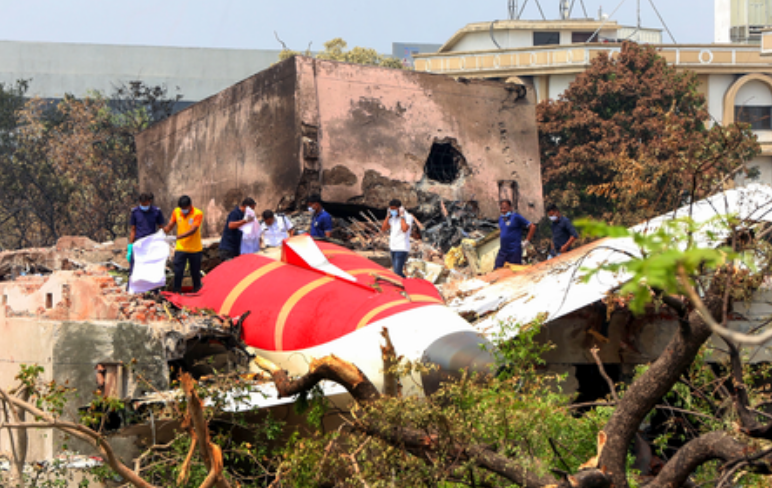

New Delhi–The Aircraft Accident Investigation Bureau has told the Supreme Court that there is no legal or factual basis for a parallel or court-monitored investigation into the June 12, 2025, crash of Air India Flight AI-171 in Ahmedabad, which killed 260 people.
In a counter affidavit filed in response to petitions seeking an independent investigation, the AAIB said the inquiry is being conducted under a comprehensive statutory and internationally recognized framework involving investigators and experts from several countries.
The agency said aircraft accident investigations in India are governed by the Chicago Convention, International Civil Aviation Organization Annex 13 and the Aircraft (Investigation of Accidents and Incidents) Rules, 2025.
“It is respectfully submitted that the statutory and treaty framework governing aircraft accident investigation constitutes a carefully layered legal regime… This constitutes a complete code, leaving no lacuna that could justify the creation of a parallel investigative body,” the affidavit said.
The AAIB said the investigation is being conducted by specialists in aeronautical engineering, avionics, flight-recorder analysis, metallurgy, aviation medicine and human-factors psychology, with support from foreign investigative agencies and technical experts.
“It is respectfully submitted that the investigation of a civil aircraft accident by its very nature is an intensely technical, scientific, and specialised discipline,” the agency said, adding that such investigations are “scientifically and technically complex and time-consuming.”
India is the state where the accident occurred as well as the state of registry and operator, while the United States is the state of design and manufacture of the Boeing 787-8 aircraft, the affidavit said.
The U.S. National Transportation Safety Board has appointed an accredited representative, while Boeing and GE Aerospace are participating as technical advisers. Investigators from the United Kingdom and Canada are also involved under international protocols.
The AAIB told the court that it had completed 49 of the 66 mandatory investigative steps prescribed under ICAO Annex 13.
The completed work includes securing and documenting the crash site, reviewing maintenance and crew records, interviewing witnesses, collecting air traffic control, radar and weather data, analyzing flight-recorder information and conducting metallurgical examinations of failed components.
Investigators have also examined safety equipment and reviewed organizational culture and human factors, the agency said.
All technical testing has been completed except for the analysis of data recovered from one Engine Monitoring Unit. Six specialist groups are preparing the final analysis and report.
“In all probability, the investigation activities… are anticipated to be completed within approximately six weeks,” the AAIB said.
Once the draft report is prepared, it must be shared with the NTSB for comments before it can be finalized and published under the 2025 rules, the agency added.
The AAIB rejected allegations that interviews with relatives of deceased crew members were intended to assign blame, saying the interactions are part of internationally accepted investigative procedures.
“It is respectfully submitted that such an examination is not at all adversarial in nature and is intended to devise guidelines so that no such unfortunate incident happens in future. It is stated that… the said examination is not intended to foist any guilt, fault, or liability on the crew members,” the affidavit said.
The agency also defended the confidentiality of cockpit voice recordings and other investigative material, saying disclosure is restricted under the 2025 rules.
“Rule 17(5) specifically… provides that the audio content of cockpit voice recordings as well as image and audio content of airborne image recordings shall not be disclosed to the public. This is an absolute statutory prohibition,” it said.
The AAIB said its mandate is to determine the causes of accidents and improve aviation safety, rather than establish civil or criminal liability.
The agency told the court that it has completed 218 investigations since it was established in 2012, including 97 accident investigations, 120 serious-incident investigations and one incident investigation.
“There is no warrant, whether on the facts or in law, for this Hon’ble Court to substitute or supplement this expert body with any judicial or alternative investigative mechanism,” the affidavit said.
The response was filed in a group of petitions that includes one submitted by Pushkar Raj Sabharwal, father of Captain Sumeet Sabharwal, the Pilot-in-Command of Flight AI-171.
The Supreme Court had earlier given the Centre three weeks to submit a status report after being told that the AAIB investigation was nearing completion and that some aircraft components had been sent abroad for specialized testing. (Source: IANS)