Lawmakers, Advocates Welcome H-1B Court Ruling
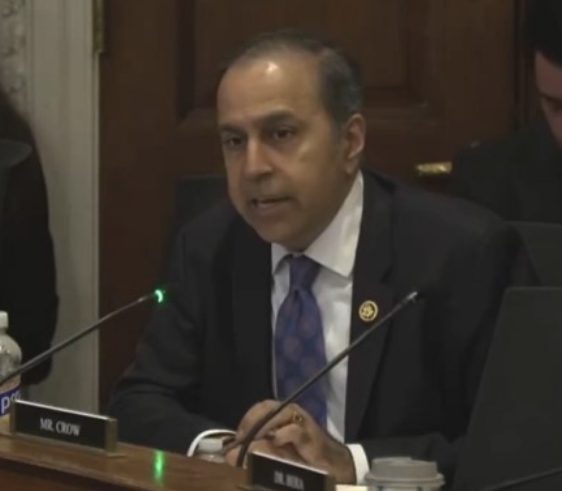

Washington — Democratic lawmakers, state officials and policy advocates welcomed a federal court ruling striking down the Trump administration’s $100,000 fee on new H-1B visa petitions, calling it a victory for employers, healthcare providers, universities and the U.S. economy.
Indian American Congressman Raja Krishnamoorthi said the decision was “a welcome rejection of an unlawful policy that threatened America’s economic competitiveness and made it harder for businesses, hospitals, universities, and research institutions to attract the high-skilled talent they need to succeed.”
“The H-1B program drives innovation, strengthens American leadership in critical industries, and supports job creation here at home by helping companies grow and invest in the United States,” he said.
Krishnamoorthi said policymakers should address abuse of the program without discouraging highly skilled workers from coming to the United States.
“Instead of imposing arbitrary barriers that push talent and investment elsewhere, we should focus on preventing abuse while ensuring America remains the best place in the world to build, innovate, and grow our economy,” he said.
California Attorney General Rob Bonta, who led the multistate lawsuit challenging the policy, described the ruling as a major victory against what he called an unlawful burden on employers and public institutions.
“The judgment is in! The Trump Administration’s unlawful and costly $100,000 tax has been struck down,” Bonta said.
“This tax was an attack on America’s ability to attract and retain the high-skilled talent that strengthens our economy and helps us meet critical workforce needs.”
Bonta said the fee created barriers for employers seeking teachers, physicians, nurses, researchers and other skilled professionals needed to address workforce shortages.
“California remains open for business, open to talent, and committed to ensuring our communities have essential services — from healthcare to education — that depend on a strong, skilled workforce,” he said.
The Foundation for India and Indian Diaspora Studies also welcomed the ruling, saying it would help restore certainty to the employment-based immigration system.
“We welcome the Massachusetts federal court’s decision striking down the $100,000 H-1B visa fee, which restores predictability and fairness to the employment-based immigration system,” said Khanderao Kand, Chief of Policy & Strategy at FIIDS.
“This ruling is appropriate for preserving America’s competitive advantage in innovation, research, and entrepreneurship. Access to highly skilled global talent remains essential for the continued growth of the US technology, healthcare, and advanced manufacturing sectors.”
Kand said the decision underscored the importance of ensuring major immigration policy changes are grounded in law and economic realities.
“The judgment reinforces the principle that major policy changes must be grounded in statutory authority and economic realities. FIIDS believes a balanced, merit-based immigration framework strengthens both American businesses and the broader economy,” he said.
Congressman Sanford Bishop of Georgia also praised the ruling, noting that hospitals and healthcare providers in rural and underserved communities had warned that the additional fee would make recruitment more difficult and expensive.
“The $100,000 fee for employers’ H1-B applications would have discouraged the best and the brightest from coming to America and helping our economy grow and to innovate,” Bishop said.
“While the bipartisan legislation that I introduced earlier this year applied only to health care professionals, the ruling by Judge Sorokin is a victory for every American concerned about attracting the world’s smartest talent to our country.”
The ruling came after U.S. District Judge Leo T. Sorokin concluded that the Trump administration lacked authority to impose the fee and that Congress had not delegated taxing powers to the executive branch for H-1B petitions. The court later vacated the policy nationwide.
The H-1B program allows U.S. employers to hire foreign professionals in specialty occupations requiring highly specialized knowledge and at least a bachelor’s degree or equivalent. The program is widely used by technology companies, universities, healthcare systems and research institutions facing shortages of specialized talent.
Indian nationals receive the overwhelming majority of H-1B visas issued each year, making the program especially important for India and the Indian-American community. (Source: IANS)