India Says No Confirmed Ebola Case as Officials Monitor Outbreaks Abroad

NEW DELHI — India’s Ministry of Health and Family Welfare said it is closely monitoring the Ebola situation following recent outbreaks reported in parts of Africa, while confirming that no case of Ebola Virus Disease has been detected in the country.
The government said an individual with recent travel history from Uganda was placed in isolation at the state-run Epidemic Diseases Hospital in Bengaluru as a precaution after reporting mild body aches.
Officials said the individual was otherwise healthy. A sample was collected and sent to the National Institute of Virology for testing, and the result came back negative for Ebola Virus Disease.
The ministry said it is coordinating with state authorities and maintaining close surveillance to ensure that all necessary public health protocols are followed in line with World Health Organization guidelines.
The government said screening and surveillance measures are continuing at designated points of entry, including airports and border health facilities, as well as across the broader public health system.
Citizens have been advised not to panic, avoid spreading misinformation and rely only on official sources for updates.
Health authorities said India remains vigilant given global disease patterns and is continuing to strengthen early detection and response systems to prevent any possible spread of infection.
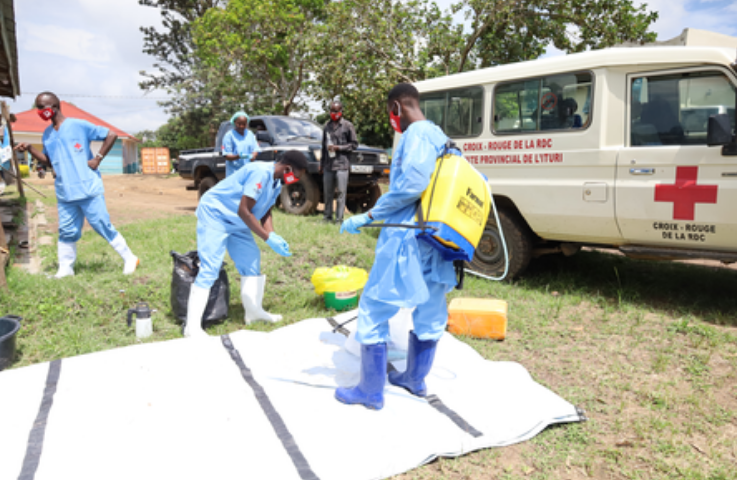
The statement comes as the World Health Organization monitors an Ebola Bundibugyo outbreak in the Democratic Republic of Congo.
WHO Director-General Tedros Adhanom Ghebreyesus said in a post on X that 101 cases have been confirmed in the DRC, including 10 confirmed deaths. He warned that the actual scale of the outbreak may be significantly larger, with more than 900 suspected cases and 220 suspected deaths under investigation.
Tedros also said Uganda has reported fresh infections, including two additional confirmed cases among health care workers. That brings Uganda’s total confirmed cases to seven, including one death.
The WHO and partner agencies are scaling up response measures, including contact tracing and surveillance, to identify infections early and break chains of transmission. (Source: IANS)