Vision-Aid Launches AI-Powered Ability Bazaar to Create Technology Jobs for People with Disabilities
Lexington nonprofit introduces marketplace where people with disabilities develop, test, and sell accessible technology solutions while earning income as professionals.
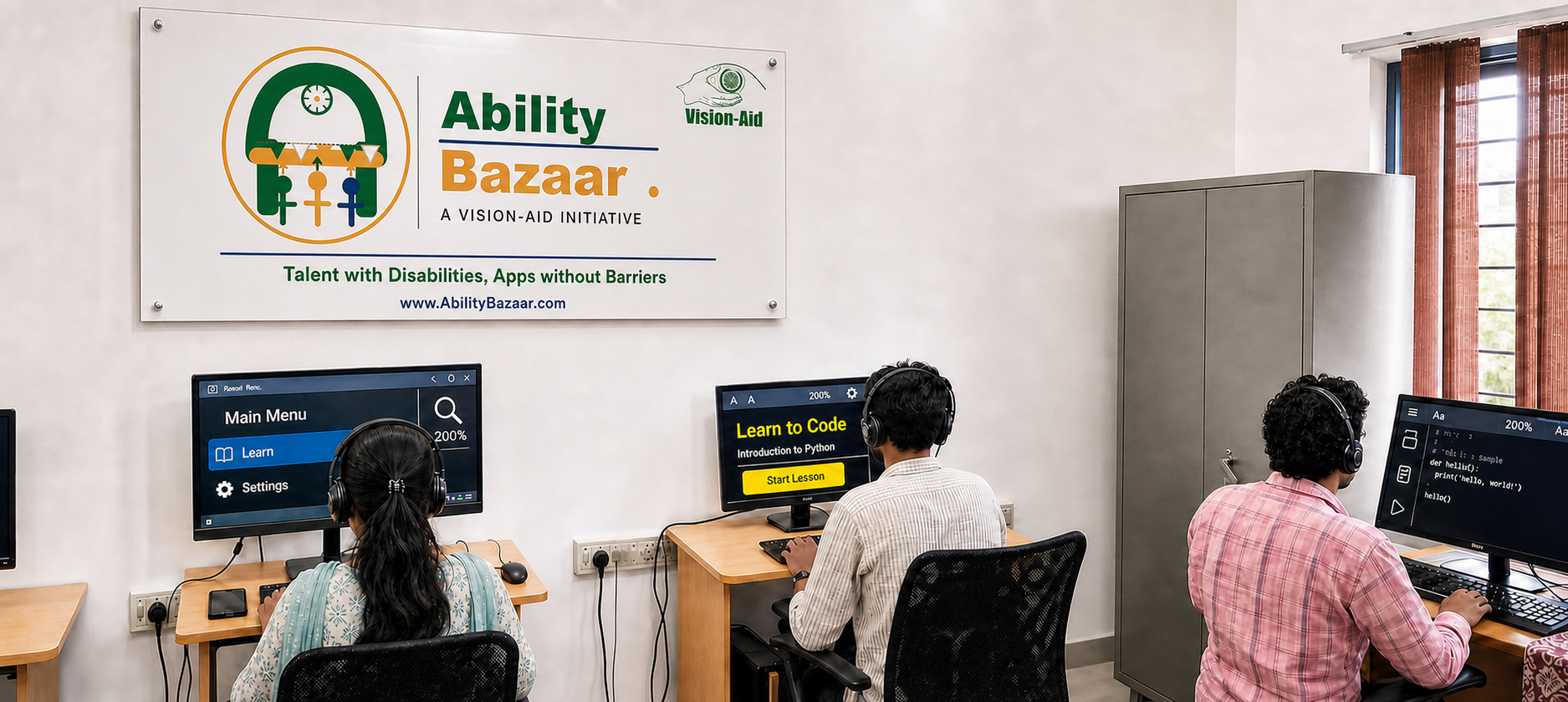

LEXINGTON, Mass. — Vision-Aid, a Lexington-based nonprofit that has spent more than two decades helping people with vision loss achieve greater independence, has launched Ability Bazaar, a new artificial intelligence-powered marketplace designed to connect accessible technology development with employment opportunities for people with disabilities.
The online platform, available at www.abilitybazaar.com, allows people with disabilities to build, test, and sell technology-based applications and accessibility services while being compensated for their expertise.
The initiative is built around a simple premise: people who experience digital barriers firsthand are often among the most qualified to identify and solve them.
Founded more than 22 years ago by Indian-American volunteers, Vision-Aid has served more than 100,000 beneficiaries across more than 80 locations in India, providing training and resources to help individuals with vision loss learn, work, and live independently.
Ability Bazaar expands that mission by creating a marketplace where disability expertise becomes a professional service.
Marketplace Combines Artificial Intelligence and Human Expertise
Ability Bazaar offers organizations two primary services: accessibility testing and development of accessible artificial intelligence applications.
Through the platform’s accessibility testing services, trained professionals who are blind or have low vision evaluate websites, applications, and digital documents using assistive technologies such as screen readers, magnifiers, and voice-control tools.
The testers identify barriers that automated systems may miss, including unlabeled buttons, inaccessible forms, keyboard navigation problems, and other challenges faced by users with disabilities.
Organizations that require formal documentation, including universities and government entities evaluating software purchases, can receive compliance reports outlining accessibility performance.
The platform also develops accessible AI applications through teams led by people with disabilities. Its first application, SEP AI Tutor, is a voice-based spoken-English coaching tool created for visually impaired learners. The application supports more than 12 Indian languages, allowing students to practice English conversation through speech rather than relying on a visual interface.
AI-Powered Operations with Human Oversight
Ability Bazaar uses artificial intelligence throughout its business operations, with AI agents built on Google’s Gemini models and running on Google Cloud infrastructure.
The AI system manages customer requests, creates project estimates, conducts automated accessibility scans through Vision-Aid’s Accessibility Barrier Locator Engine (ABLE), drafts reports, schedules experts, and manages invoicing.
The technology allows the marketplace to operate efficiently while keeping administrative costs low and improving turnaround times. However, final assessments are completed by trained human experts with disabilities who use real assistive technologies.
The platform’s model combines AI-driven efficiency with human experience, allowing automated systems to identify potential issues while disability experts provide the practical judgment needed to determine whether technology truly works for users.
Creating Employment Through Accessibility
Vision-Aid said Ability Bazaar addresses two challenges simultaneously: the need for organizations to create genuinely accessible technology and the lack of employment opportunities available to many people with disabilities.
More than one billion people worldwide live with disabilities, yet many remain underrepresented in the technology workforce despite having valuable knowledge about accessibility.
“People who navigate a world full of digital barriers every day are among the best qualified to find and fix those barriers,” Vision-Aid said in describing the initiative.
The organization has already trained more than 500 people with disabilities through its accessibility programs. Ability Bazaar brings that talent together through a single platform where professionals can earn income by providing in-demand technology services.
Every completed order on the platform contributes wages to a person with a disability.
Early Growth and Initial Projects Underway
Ability Bazaar launched with several projects already in motion. The platform is developing a custom artificial intelligence application for a paying customer, has begun a paid accessibility-testing engagement, and has secured sponsorship support to train a new group of professionals with disabilities.
The organization said the combination of customer revenue and sponsorship funding will help expand the pipeline of trained accessibility professionals.
Training the Next Generation of Accessible Technology Experts
The marketplace also includes a training model designed to create a sustainable cycle of employment and opportunity.
Sponsors can support training programs that prepare people with disabilities for technology careers. A $300 contribution can fund three to six months of intensive, one-on-one AI and accessibility training for one student, while $5,000 supports training for an 18-student cohort.
Vision-Aid describes the approach as a “pay-it-forward” model: sponsored students become paid professionals whose work helps fund opportunities for future participants.
Businesses and Organizations Invited to Participate
Companies, universities, government agencies, and other organizations can use Ability Bazaar to evaluate the accessibility of websites, applications, and documents, request compliance reports, or develop custom accessible technology solutions.
The platform offers accessibility scans with expert verification, formal testing services, and custom application development for organizations of varying sizes.
Companies, foundations, and corporate social responsibility programs can sponsor workforce training, while individuals can support the initiative through donations that help fund artificial intelligence and cloud infrastructure.
People with disabilities can participate as creators who develop accessible applications or as paid testers whose lived experience becomes professional expertise.
Through Ability Bazaar, Vision-Aid aims to create a new model for technology development—one where accessibility is built by the people who understand it best and where innovation creates meaningful employment opportunities for people with disabilities.