U.S. Commits More Than $112 Million to Fight Ebola Outbreak in Congo, Uganda

WASHINGTON — The United States has mobilized more than $112 million in bilateral foreign assistance in less than two weeks to help combat a fast-spreading Ebola outbreak in the Democratic Republic of the Congo and Uganda, the State Department said Thursday.
The announcement came as U.S. health officials warned that the outbreak remains “rapidly evolving and fluid,” while saying the current risk to the United States remains low.
The State Department said it had finalized plans to allocate an additional $80 million in bilateral assistance to strengthen the response on the ground.
“With this new $80 million commitment, the Department has mobilised more than $112 million in bilateral foreign assistance for the Ebola response in less than two weeks,” the statement said.
The funding will support the procurement and delivery of personal protective equipment, border screening, surveillance, contact tracing and diagnostic supplies in affected regions.
The State Department said UNICEF and the World Food Program will expand the procurement and distribution of protective equipment for health care workers in high-risk areas.
The International Organization for Migration will strengthen health screening at airports and key border crossings, while also expanding public awareness campaigns.
Interchurch Medical Assistance World Health, World Vision and UNICEF will expand contact tracing and community surveillance operations to identify people who may have been exposed to Ebola.
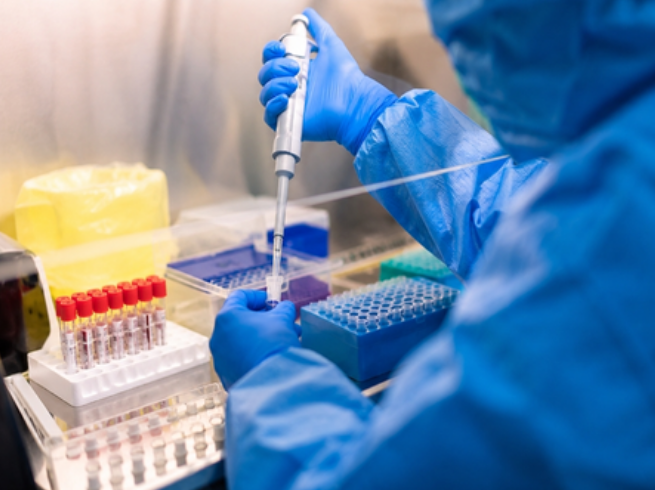
FHI 360 will procure and distribute test kits and improve the transportation of samples for laboratory testing.
In addition to the bilateral aid, the State Department said it had committed another $50 million through the U.N. Office for the Coordination of Humanitarian Affairs to establish up to 50 Ebola response clinics in affected areas.
The department also said it was providing $300 million through OCHA pooled funds to the Democratic Republic of the Congo and Uganda for broader humanitarian assistance.
State Department-backed responders have already been deployed to dozens of health facilities in Ituri, North Kivu and South Kivu provinces in eastern Congo.
The U.S. Centers for Disease Control and Prevention said it is also intensifying support operations in both countries.
CDC Ebola Response Incident Manager Dr. Satish Pillai said the agency had deployed “20 trained disease detectives to the outbreak zone” and was training “50 community healthcare workers to strengthen local capacity for early reporting.”
“In Uganda, 23 CDC-trained field epidemiologists are supporting response operations,” Pillai said during a media briefing.
He said the CDC was also preparing to deploy seven additional viral hemorrhagic fever experts to the region.
Pillai stressed that Ebola is not spread through casual contact.
“You cannot get Ebola from passing someone in an airport, sitting near someone briefly, or through other casual contact,” he said.
“Currently, the risk to the United States remains low because Ebola is spread through direct contact with body fluids and because the United States has a strong public health monitoring, infection control and healthcare preparedness system in place,” he added.
The State Department has also created a dedicated Ebola travel advisory page to provide updated information for Americans traveling abroad.
The latest outbreak involves the Bundibugyo strain of the Ebola virus, a less common species that has previously caused outbreaks in Uganda and eastern Congo.
U.S. officials said early testing challenges and difficult transportation conditions delayed confirmation of the outbreak in Congo.
The Democratic Republic of the Congo has faced repeated Ebola outbreaks over the past two decades because of weak health care infrastructure, armed conflict and population displacement in eastern regions.
Uganda has also experienced several Ebola outbreaks in recent years, prompting regional health authorities to maintain surveillance systems along porous borders. (Source: IANS)