India Rejects Proposal to Expand Only Non-Permanent UNSC Seats
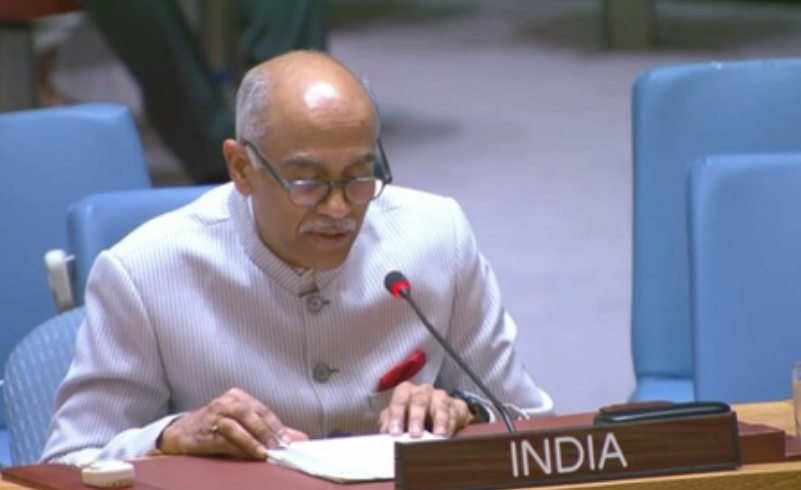

United Nations — India has rejected proposals to expand only the non-permanent membership of the United Nations Security Council, saying such a move would be inadequate and would fail to change the power structure of the world body’s top decision-making organ.
India’s Permanent Representative to the United Nations, P. Harish, said Monday that Security Council reform without expanding permanent membership “would fundamentally not change the decision-making power-structure of the P5,” referring to the five permanent members — Britain, China, France, Russia and the United States.
“Groups and member states have waited this long for real and meaningful reform,” Harish said at a meeting of the Intergovernmental Negotiations on Security Council reform.
“UNSC reform would be grossly inadequate, bordering on failure, if expansion is limited only to the non-permanent category,” he said.
India has long called for expansion in both permanent and non-permanent categories of the Security Council, arguing that the current structure reflects the post-World War II order and does not represent today’s geopolitical realities.
The Uniting for Consensus group, led by Italy and including Pakistan, has opposed the addition of new permanent members. The group has also resisted the adoption of a negotiating text, which India and other reform advocates say is necessary to move the reform process forward.
Harish criticized efforts to delay progress, saying that the principle that “nothing is agreed until everything is agreed” should not be used to block reform.
“Status-quoists have tried to use this argument in their favour and thereby, entrench the existing inequities in the Security Council,” he said.
He said the Security Council reform process should not be treated differently from other United Nations negotiations, which are typically based on a written text.
“IGN cannot be fundamentally different from other UN processes, wherein negotiations are held on the basis of a text,” Harish said. “Therefore, we urge the co-Chairs to take the lead on formulating a text, with clearly-defined milestones and timelines.”
Harish said India’s support for expanding permanent membership is aimed at bringing “a greater sense of balance and equity in the Security Council” and ending the decision-making monopoly of the current permanent members.
He also said the General Assembly reflects democratic principles at the United Nations, while the Security Council is structurally different by design.
“The principle of sovereign equality of states would not be applicable in its entirety, unlike the UNGA, due to such foundational DNA enshrined in the Charter,” he said.
Harish also criticized the “Elements Paper” prepared by the co-chairs of the negotiations, which seeks to consolidate different views on reform. He said the document proposes further discussion on the concept of permanent membership, even though the U.N. Charter is already clear on the issue.
“Article 23 clearly categorises the UNSC members into two: permanent and non-permanent. Therefore, the definition of a permanent seat needs no further elaboration,” he said. (Source: IANS)