Bangladesh Government Reviewing U.S. Trade Deal Signed by Interim Administration
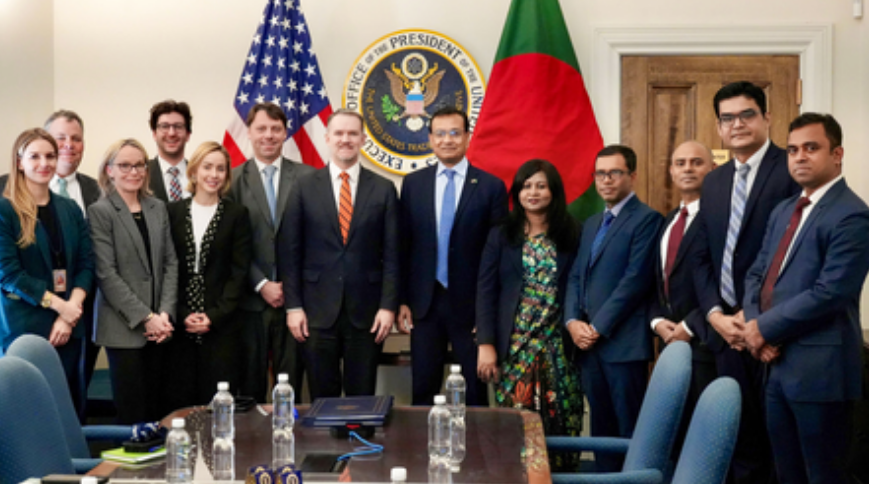

NEW DELHI — Bangladesh’s government is reviewing a trade agreement with the United States that was signed by the country’s former interim administration, after critics raised concerns that the deal could undermine national sovereignty and economic interests.
Khaled Hossain Mahbub Shyamal, a lawmaker from the ruling Bangladesh Nationalist Party and economic affairs secretary of the party’s central committee, told Bangladesh’s The Business Standard that the government would take steps on the agreement while protecting the country’s sovereignty and rights.
The deal was signed by the interim government led by Muhammad Yunus before an elected government under Prime Minister Tarique Rahman took office in February.
“Perhaps this kitchen cabinet of the interim government also had its own strategy. However, the agreements they signed were not known to the people of the country, nor were they known to us. They can explain better under what circumstances and in what context those agreements were made,” Shyamal said.
“We have obtained a copy of an agreement and are currently working on it. We will try, as far as possible, to review the agreements and take future steps while ensuring that the country’s sovereignty and rights remain intact,” he added, according to the report.
Since taking office, the Rahman government has faced calls to cancel the deal. Critics have argued that the agreement runs against Bangladesh’s national interests and violates the country’s independence and sovereignty.
Concerns have focused on the timing and secrecy of the agreement, which was reportedly signed Feb. 9, just three days before the national election. Reports have said the deal included strategic provisions related to national security and geopolitics, in addition to tariff concessions.
The interim government did not publicly disclose the concessions Bangladesh would have to make. However, critics have said a contract released by the Office of the United States Trade Representative showed that Bangladesh accepted broad conditions in exchange for limited tariff relief.
Reported concerns include extensive tariff concessions for the United States, the removal of non-tariff barriers to U.S. industrial exports, agricultural products and biotechnology goods, and mandatory imports of costly products as part of Dhaka’s compliance obligations.
The agreement also reportedly limits Bangladesh from entering into arrangements with third countries that include technical standards Washington considers scientifically unsupported, discriminatory or biased in ways that could harm U.S. exports.
According to an opinion article in The Daily Star, the United States could cancel the agreement and reimpose punitive tariffs if Bangladesh enters into a free trade or preferential economic agreement with a non-market economy, such as China or Russia, that undermines the deal.
The article also said Bangladesh would be restricted from purchasing nuclear reactors, fuel rods or enriched uranium from countries considered risky to U.S. interests, except in limited cases where no alternative supplier or technology exists or where agreements were already signed before the trade deal took effect.
Yunus was appointed chief adviser of a caretaker administration after Sheikh Hasina’s government fell in July 2024 following mass protests demanding democratic reforms and accountability. In addition to the U.S. trade agreement, the interim administration signed other international agreements and introduced the July Charter, a proposed political and constitutional reform framework intended to strengthen democratic governance and limit authoritarian power.
The charter has faced obstacles, including constitutional deadlock, political opposition and questions about legal authority, despite broad public support. (Source: IANS)