Living in the Moment, Sometimes at Their Peril

Study looks at why risky behavior surged in wake of 2011 tsunami, earthquake
When Ichiro Kawachi established a cohort study in Iwanuma, Japan, in 2010, he thought he would be researching the predictors of healthy aging.
But seven months later, his plans changed when a magnitude 9.1 earthquake, the fourth most powerful since 1900, struck 50 miles from his field site, triggering a massive tsunami and widespread destruction.
“We had this unusual natural experiment where we had all the information about people’s lifestyle and health behaviors before the earthquake, and we could track people afterwards,” said Kawachi, the John L. Loeb and Frances Lehman Loeb Professor of Social Epidemiology at the T.H. Chan School of Public Health. “It turned into a follow-up study of disaster survivors.”
In a paper in Communications Psychology, Kawachi and co-authors, including lead author Yasuyuki Sawada of the University of Tokyo, found a significant increase in obesity and metabolic syndrome (a cluster of conditions associated with cardiovascular disease, stroke, and Type 2 diabetes) among people who suffered housing damage or destruction in the March 11, 2011, disaster.
“Overweight and obesity rates increased from 25 percent before the earthquake to 35 percent among people who lost their homes, whereas it remained pretty much level among people who did not experience this kind of asset loss,” Kawachi explained. “That was a big surprise for us.”
“Overweight and obesity rates increased from 25 percent before the earthquake to 35 percent among people who lost their homes, whereas it remained pretty much level among people who did not experience this kind of asset loss.”
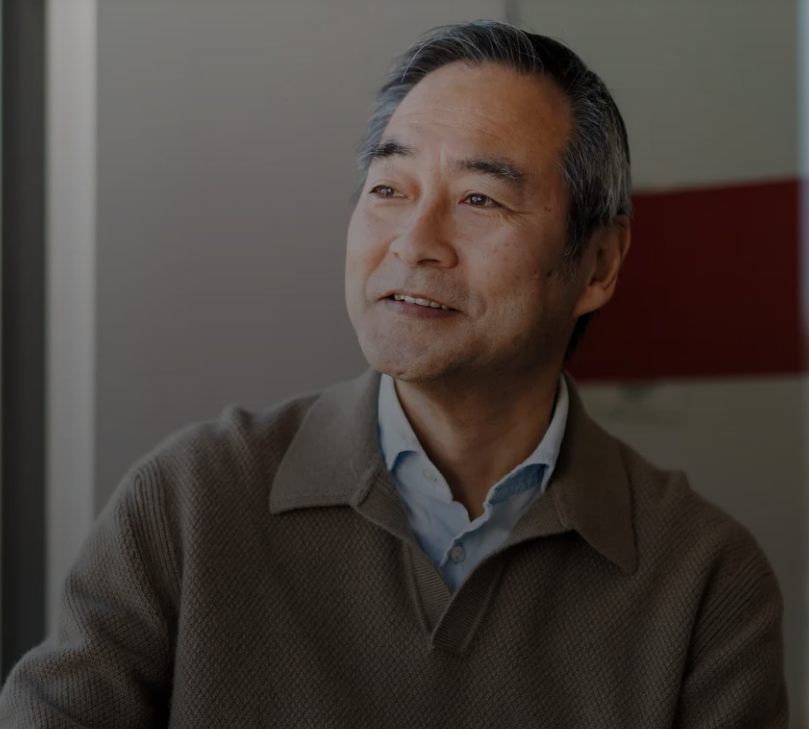
Ichiro Kawachi
Rates of drinking and smoking also increased for people who experienced heavy damage to their homes.
This might not be surprising to epidemiologists, who have consistently found that people who have survived natural disasters tend to engage in risky health behaviors at higher rates than peers who have not. What’s novel in Kawachi’s research is the underlying mechanism: present bias, also known as hyperbolic discounting, brought about by exposure to scarcity. Present bias is the tendency to prefer immediate rewards over larger, future benefits, even when the benefits of waiting are clear.
The researchers analyzed data from 337 participants from parts of Iwanuma that had recorded a large variation in home damage on each block, about three years after the quake. They collected an additional round of data in 2017.
They supplemented data from Iwanuma with that of 187 survivors of a separate natural disaster — torrential rain and typhoon-like flooding that struck a village south of Manila in the Philippines in 2012.
“We set this up as an independent sample of people who have experienced asset loss,” Kawachi said. “In that location, they also saw an increase in poor dietary habits, hypertension, and metabolic problems.”
Unhealthy behaviors and increased present bias both persisted six years after the disaster.
To identify present bias as the mechanism behind the increase in unhealthy behaviors, Kawachi and his team created a version of the psychology experiment on delayed gratification known as the marshmallow test. Participants we re asked if they would like to receive a sum of money today or a larger sum of money at a later date.
“From the choices they make in different scenarios, we can quantify their internal discount rate. Thus we can show that there’s a dose response between the extent of people’s housing damage and the extent to which they discount future benefit for present gain.”
All of the behaviors recommended by public health officials — healthy eating, drinking in moderation, exercising, getting a good night’s sleep — involve what researchers call the intertemporal choice problem: The benefits of the behavior and the cost of the behavior fall in different time periods.
“When we fall under the sway of present bias, it becomes much more difficult to invest for future health gain,” Kawachi said.
Interestingly, he added, the paper found that participants’ tolerance for risk did not change as a result of housing damage or housing loss. “This is a very specific mechanism about people’s ability to forgo gratification, to invest for the future, and that’s another way of trying to think about these risk behaviors.”
Kawachi sees implications for the research beyond natural disasters. “There was widespread asset loss and scarcity during COVID,” he said. “And we also know that during COVID, all sorts of bad behavior increased: There was a rise in alcoholic cirrhosis, a rise in opioid poisoning. Some of that could be because of an interruption in access to services for treatment, but you could also put a kind of scarcity spin on what was happening at the population level.”
(Reprinted with permission from the Harvard Gazette.)