Civilian Deaths Fuel Rising Afghanistan–Pakistan Tensions After Airstrikes
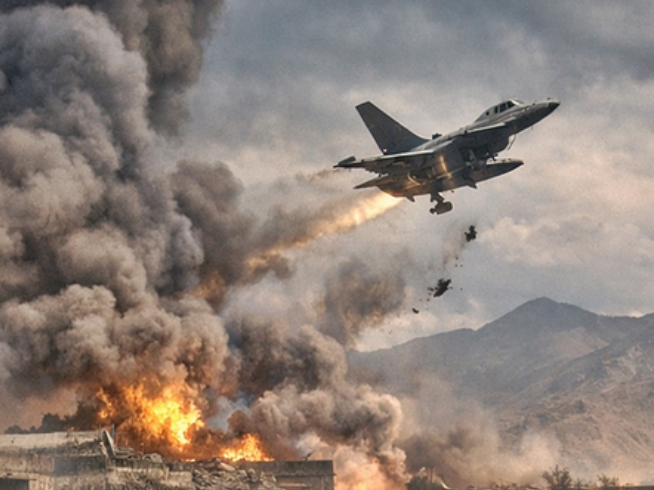

NEW DELHI/KABUL — Tensions between Afghanistan and Pakistan have escalated sharply following a series of Pakistani airstrikes in eastern Afghanistan that reportedly killed civilians, including women and children, deepening an already fragile diplomatic relationship between the two neighbors.
Recent air operations in Nangarhar and Paktika provinces have drawn strong condemnation from human rights organizations and United Nations bodies, which have raised concerns over civilian casualties and the proportionality of Pakistan’s cross-border military actions. The strikes have intensified anger in Afghanistan and widened the rift between Kabul and Islamabad.
According to local Taliban officials, an airstrike in the Behsud district of Nangarhar killed 18 members of a single family. Only four of the 24 family members reportedly survived. The head of the household, Shahabuddin, was among those killed, with women and children accounting for many of the casualties. Reports indicated that at least 11 children died in the attack, while five people remain missing. Local authorities also claimed soil from the strike site was removed, complicating recovery and verification efforts.
Additional strikes were reported in the Khogyani, Ghani Khil, and Behsud districts of Nangarhar, as well as in the Barmal district of Paktika. In Barmal, a madrasa was reportedly bombed, killing eight students, including three girls, and injuring several others. Civilians, including children tending livestock, were also wounded in nearby areas.
The United Nations Assistance Mission in Afghanistan confirmed civilian casualties from the recent strikes, stating that at least 13 civilians were killed in Behsud district alone. The mission urged both sides to immediately de-escalate tensions and strictly adhere to international humanitarian law, including principles of distinction, proportionality, and precaution.
Amnesty International also expressed serious concern over the reported civilian deaths and called for a thorough, independent, and impartial investigation into the airstrikes.
The latest incidents follow a pattern of civilian harm linked to cross-border clashes. Between October and December 2025, during a period of intensified fighting between Afghan Taliban forces and the Pakistani military, UN figures attributed 70 civilian deaths and 478 injuries to Pakistani military operations.
These repeated incidents have reinforced perceptions within Afghanistan that Pakistan’s actions are increasingly indiscriminate and excessively forceful, with civilians bearing the heaviest cost.
The strikes have further strained relations between Kabul and Islamabad, marked by mutual accusations, retaliatory rhetoric, and deepening mistrust. Afghanistan has repeatedly condemned what it describes as violations of its sovereignty, while Pakistan has defended its actions as security-driven responses to cross-border threats. However, the growing civilian toll has intensified scrutiny of the scale and intent of the operations.
Adding to the tension is the belief among Afghan observers that Pakistan’s heightened military posture may be influenced by broader geopolitical considerations and external strategic alignments. While Islamabad maintains that its actions are aimed at counterterrorism, critics argue that the timing and intensity of the strikes suggest pressures beyond immediate border security concerns.
As families in Nangarhar continue burial ceremonies and search for missing relatives, international organizations have renewed calls for accountability, transparency, and stronger protections for civilians. Without restraint and sustained diplomatic engagement, analysts warn that the Afghanistan–Pakistan divide could harden into prolonged hostility, with ordinary civilians continuing to pay the highest price. (Source: IANS)