India Should Keep Trade Talks With U.S. Warm, SBI Report Says
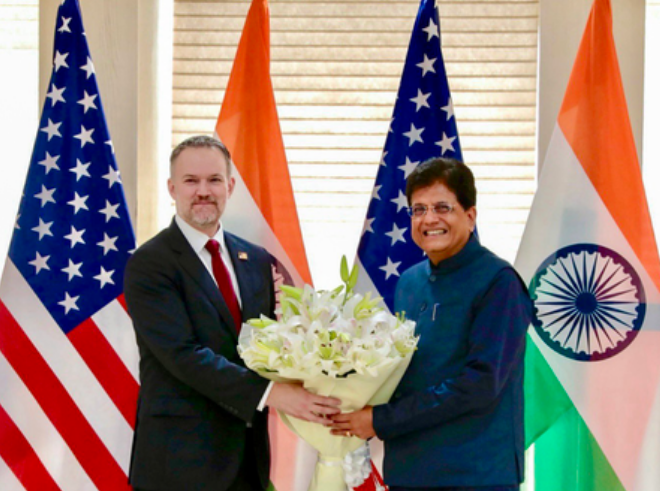

New Delhi — India’s best strategy in trade negotiations with the United States is to keep talks active while avoiding public escalation, according to an SBI Research report released Friday.
The report said India should try to “wear down the opening position, not the relationship,” make limited and reversible offers, and wait for the Trump administration’s initial demands to run into market costs, China-balancing needs and alliance fatigue.
It said India should bargain later, when Washington’s reservation price becomes clearer and India’s value as a market, technology partner, defense buyer and Indo-Pacific counterweight becomes more visible.
“India’s strategy should be to test the resolve of the US administration and potentially accept a high cost follow through in short run and signal that India stands its ground for the long game. Dive sideways and test the resolve. India will win,” said Soumya Kanti Ghosh, group chief economic adviser at State Bank of India.
The report said the U.S. administration is using uncertainty as a bargaining tool across several issues, including NATO, Iran, tariffs, Greenland, China and India.
India, it said, occupies a position between NATO allies and China. While India does not have China’s concentrated chokehold, it has meaningful leverage through its market size, technology talent, pharmaceutical industry, defense procurement, energy options, diaspora influence and Indo-Pacific role.
In game theory terms, the report said, the U.S. administration is preserving incomplete information about its bargaining position. That forces the other side to decide whether to concede, wait, test the administration’s resolve or counter-escalate.
“The short-run payoff is leverage. The long-run cost is trust depreciation with the US. Interestingly such repeated uncertainties also teaches allies, rivals and markets to discount future signals. Alternatively, if every partner learns that the final US position will be adjusted when costs rise, the bargaining value of the signal declines,” the report said.
The report also said uncertainty remains around Iran, even after a memorandum of understanding was signed between the U.S. and Iran to end the war on June 17.
Shipping data through the Strait of Hormuz shows only limited and uneven signs of restarting, the report said. Flows have returned gradually rather than through a broad normalization of traffic.
Crude shipments have resumed in a limited way, while inbound agricultural shipments show only a tentative and incomplete recovery. LNG and fertilizer-related shipments remain effectively absent, according to the report. (Source: IANS)