Connecticut Establishes India Trade Commission as Governor Lamont Signs New Law
New commission aims to strengthen trade, investment, education and innovation ties between Connecticut and India
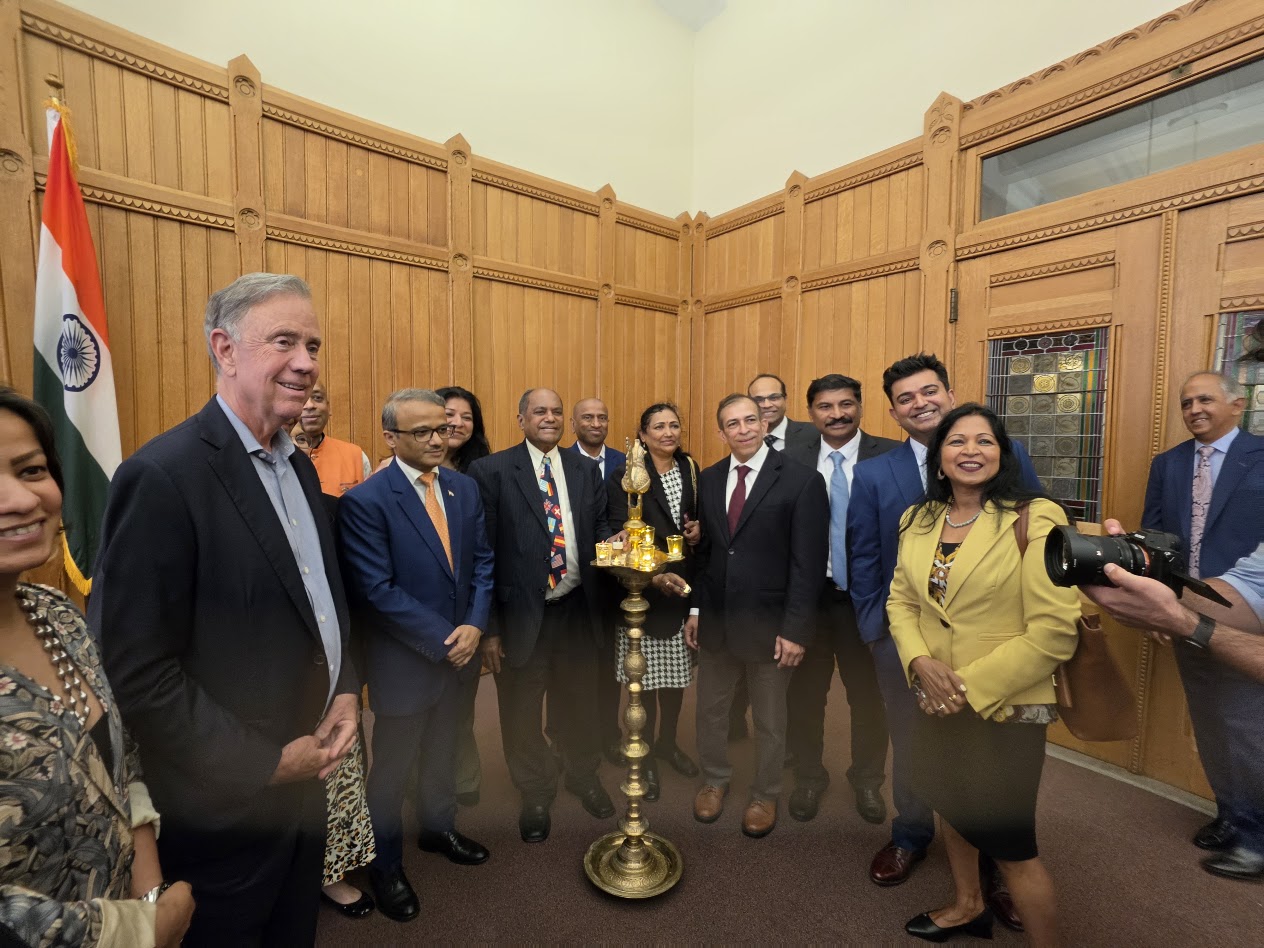

HARTFORD, Conn. — Connecticut took a step toward expanding its economic and institutional ties with India on July 30 as Gov. Ned Lamont signed legislation creating the Connecticut-India Trade Commission during a ceremony at the State Capitol.
The new commission, established under Public Act 26-78, is intended to promote long-term collaboration between Connecticut and India in areas including trade, investment, technology, higher education, infrastructure, innovation, and the arts. The ceremony drew elected officials, diplomats, business executives, higher education representatives, and members of the Indian American community.
The commission will include legislators, gubernatorial appointees, representatives from higher education and chambers of commerce, and members of the Indian American community. It will be tasked with identifying opportunities to strengthen commercial, academic, and cultural partnerships and will begin issuing annual reports to state officials in 2028.
Speaking at the signing ceremony, Lamont said the relationship between Connecticut and India extends beyond commerce. “The relationship between India and the United States is much more than commercial,” he said. “We both fled colonialism to become the largest democracies on the planet Earth.”
Lamont also emphasized the role immigrants have played in strengthening Connecticut. “One of our greatest strengths as a country is that we welcome people from around the world, and I want you to feel at home here,” he said. “And I think we’re a much stronger state for having each and every one of you here calling Connecticut home.”
The governor referred to his February 2025 economic development mission to India, during which he led a delegation of Connecticut officials, business executives, and academic leaders to Chennai, Bengaluru, and Mumbai to promote the state as a destination for investment. “It’s not only the cultural ties, but that sense of entrepreneurship and optimism, which I think our two countries share,” Lamont said, adding that the trade commission has the potential to strengthen cultural, academic, and commercial ties between Connecticut and India.
Lt. Gov. Susan Bysiewicz said the commission complements Connecticut’s broader international economic strategy. “This trade commission, in addition to our existing international trade commissions, tells the world that Connecticut is open to new and innovative partnerships,” she said.
Bysiewicz noted that international companies employ more than 115,000 Connecticut residents across more than 800 businesses statewide and said stronger commercial relationships with Indian companies could help generate additional investment, jobs, and long-term economic growth.
State Sen. Sujata Gadkar-Wilcox, the first Indian American elected to the Connecticut Senate, said the legislation reflects both the economic and cultural contributions of the state’s Indian American community. “I am here today not just as the Senator from the 22nd District, but as the child of Indian immigrants and the first Indian Senator ever to serve in Connecticut,” she said.
Gadkar-Wilcox said the commission would help create new opportunities for collaboration in aerospace, advanced manufacturing, biotechnology, green energy, and higher education. She also highlighted the long history of Indian and South Asian organizations in Connecticut, including GOPIO in Stamford, Milan in Greater Hartford, and the Indian Cultural Center in Greenwich. “Senate Bill 132 is more than a trade policy; it is a recognition of deep cultural, educational, social, and business ties between the United States and India,” she said.
According to Gadkar-Wilcox, Connecticut is home to more than 68,000 residents of Indian origin, making Indian Americans the state’s largest Asian ethnic community and the second-largest foreign-born population. She also pointed to the growing influence of South Asian leaders and businesses across the state, citing companies such as Infosys and Kubtec, as well as the contributions of public officials, entrepreneurs, legal professionals, and community organizations.
India’s Consul General in New York, Ambassador Binaya Srikanta Pradhan, described the creation of the commission as an important milestone in state-level cooperation. “It’s truly, truly a historic moment,” he said, adding that the creation of the Connecticut-India Trade Commission was “already overdue.”
Pradhan credited Lamont’s 2025 visit to India with giving the relationship “new momentum” and identified opportunities for collaboration in advanced manufacturing, information technology, cybersecurity, healthcare, clean energy, innovation, and higher education. He also noted that the United States is India’s largest trading partner, with bilateral trade valued at approximately $240 billion annually and a goal of reaching $500 billion by 2030. He pledged the support of the Indian Consulate, saying it would work with the commission to help achieve its objectives.
State Rep. Stephen Meskers, speaking on behalf of himself and Commerce Committee Co-Chair Sen. Joan Hartley, praised the contributions of Connecticut’s Indian American community. “I know the contributions intimately of the Indian community,” he said. “My exposure to the community and their contributions to our society are incredible.”
Drawing on his own family’s immigrant background, Meskers said he appreciated the sacrifices immigrants make and expressed confidence that the commission would strengthen both cultural and economic ties while creating opportunities for future collaboration between Connecticut and India.
The ceremony also included remarks from Stratford entrepreneurs Vikram and Preeti Butani, founders of medical technology company Kubtec. Vikram Butani described the company’s growth from a startup operating in a spare bedroom to a global healthcare technology company serving hospitals in 40 countries. He noted that Kubtec established operations in India three years ago and said the commission would help businesses like his expand relationships between Connecticut and India. “We hope it will help us and other businesses like us to grow and build a relationship between Connecticut and India,” he said.
Dr. Thomas Abraham, chairman of GOPIO International and a supporter of the legislation, said the commission reflects Connecticut’s recognition of India’s growing importance as an economic partner. He said that as Connecticut joins a growing number of states pursuing formal partnerships with India, the legislation acknowledges both India’s importance to the state’s future and the contributions of the Indian American community to Connecticut’s economic, educational, and civic life.