After Acton Tragedy, Indian-American Community Asks: Is “Log Kya Kahenge?” Getting in the Way of Asking for Help?
A tragedy forces a community to confront stigma, silence and the courage to ask for help.
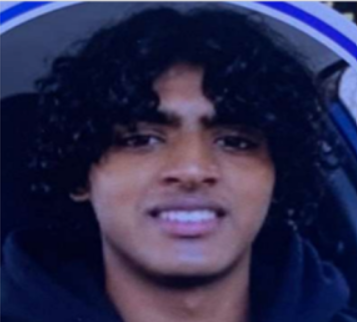

ACTON, Mass. — The shock of a tragedy inside an Acton home has left a family grieving and a community struggling with questions that have no easy answers.
Seventeen-year-old Arjun Aravind has been taken into custody and charged in connection with the deaths of his mother, 45-year-old Sudha Venkatesan, and his younger brother, 14-year-old Siddharth Aravind, inside their Martha Lane home in Acton. Mass.
But as the initial shock begins to give way to grief, another conversation is emerging within the Indian American community—one about mental health, developmental and behavioral challenges, stigma, family pressure and whether families know where to turn when a child is struggling.
That conversation was prompted in part by a Facebook post from Prashanth Palakurthi, who shared the INDIA New England News report about the tragedy and wrote about what he called “misplaced shame.”
“I read this story with an overwhelming sense of sadness,” Palakurthi wrote, beginning with condolences to the family and an acknowledgment that the public does not know what happened inside the home.
He cautioned against drawing conclusions about the family or diagnosing anyone based on news reports. “None of us should diagnose a person from newspaper reports,” he wrote, emphasizing that outsiders cannot know what the family knew, what help they sought or what they may have endured privately.
But Palakurthi argued that the tragedy nevertheless raises an uncomfortable question for the Indian and wider Asian community: Why are we still so reluctant to speak openly about mental illness, developmental disabilities and serious behavioral or emotional problems in our children?
His comments struck a chord.
A tragedy, and a conversation
According to the Middlesex District Attorney’s Office, Acton police were called to the Martha Lane home shortly after 6:30 p.m. Tuesday for a well-being check after Aravind’s father became concerned when he could not reach family members. An expected tutor also reportedly could not get into the home.
Officers entered the residence and found Sudha Venkatesan and Siddharth Aravind dead. Authorities said the victims had suffered obvious trauma, while the Massachusetts Office of the Chief Medical Examiner works to determine the precise causes of death.
Arjun Aravind was subsequently located Wednesday morning on Andrew Avenue in Weymouth, along with his mother’s green Honda Accord. He was taken into custody.
He faces two counts of murder, as well as charges including assault and battery, unauthorized use of a motor vehicle and theft, according to prosecutors.
The investigation remains ongoing, and authorities have not publicly established a motive.
At a news conference, Middlesex District Attorney Marian Ryan described the deaths as an “unspeakable tragedy” and said it was a very dark day for the Acton community.
Prosecutors have also said investigators found recent internet activity involving what Ryan described as theoretical ideas or fantasy stories about the killing of family members, including Gothic stories and characters. Those details remain part of the investigation, and authorities have not said what significance they ultimately attach to the activity.
That uncertainty is important.
The community does not know what happened inside the Aravind household. It does not know whether anyone recognized warning signs, whether professional help had been sought, or whether anything could have prevented the deaths.
What it can do, however, is ask whether families facing serious challenges have enough places to turn.
“Log kya kahenge?”
Palakurthi drew on his own family experience to explain why he believes the conversation needs to change.
He wrote that when his youngest daughter was diagnosed with autism 29 years ago, his family made a conscious decision not to hide the diagnosis.
“We spoke about it openly,” he wrote, describing how the family shared its experience with friends and relatives and encouraged others to reach out if their experience could help their own children.
His point was not that openness guarantees a particular outcome. Rather, it was that a diagnosis or a child’s need for help should not become a source of shame.
“There is no shame in having a child who needs psychological, psychiatric, developmental or behavioral support,” Palakurthi wrote.
For many families in immigrant communities, however, the fear of judgment can be powerful.
The familiar question—log kya kahenge?—can influence decisions involving everything from mental health treatment to developmental evaluations.
Meenal Pandya echoed that concern, writing that the community needs a forum where these issues can be discussed openly. Too often, she said, immigrant families feel pressure to maintain an image of being a highly successful community, with any perceived crack in that image shunned.
Gitanjali Srivastava described the conversation as “much needed,” noting that social stigma and pressure can have devastating consequences.
Jayanthi Prasad went further, arguing that secrecy surrounding mental, physical, marital or financial problems remains deeply embedded in parts of the Indian community. She cited fear of ridicule, social isolation and the judgmental attitude that someone somehow “deserves” their problems.
What is often missing, she suggested, is a willingness to show up for one another during ordinary and difficult times—not only after tragedy strikes.
From awareness to actual support
Several commenters also emphasized that awareness by itself is not enough.
Dr. Om Ganda wrote that families should not have to suffer alone and in silence for years and called for professionals in the field to offer guidance on where families can begin.
Shubhra Singh emphasized that mental illnesses, like physical illnesses, can have biological, genetic and experiential components and that people struggling with mental disorders should not be defined by those disorders. With appropriate support, she wrote, people can flourish and thrive.
Another commenter, Uday Mukhopadhyay, shared his family’s experience raising an autistic grandson and said that years of therapy and support had taught them how important early intervention can be. He identified parental denial as one of the biggest obstacles when a child needs help.
And then there was a particularly poignant observation from Praveen Misra, who pointed out that Arjun was the same young person who had reportedly gone missing the previous year.
“I don’t know details yet,” Misra said, “but I feel we need platform for kids something like Peer support / peer-listening programs through the schools & Community.”
That suggestion adds another dimension to the conversation.
Children and teenagers do not always tell parents what they are experiencing. Sometimes they may speak first to a friend, a teacher, a counselor or another young person who knows how to listen without immediately judging or dismissing them.
A professionally designed peer-support or peer-listening program, working alongside schools, mental health professionals and community organizations, could potentially give young people another door through which to seek help.
It would not replace professional treatment. It could, however, help make the first step toward seeking that treatment less frightening.
The community’s image versus the child’s well-being
Yogita Miharia expressed frustration with what she sees as an unhealthy emphasis on appearances within the Indian community—the number of party invitations, expensive cars, prestigious jobs, Ivy League children and other markers of success.
“Just sad that our Indian community is reduced to simply being the people who want to show off” those things, she wrote, arguing that they can seem meaningless when measured against the realities of life and loss.
That sentiment was echoed in different ways throughout the discussion.
The challenge may be particularly acute for immigrant families trying to balance cultural expectations with the increasingly complicated pressures facing children growing up in America.
Academic expectations, social pressures, family dynamics, identity, technology and mental health can intersect in ways parents may not always recognize.
And asking for help can feel like admitting failure.
That is precisely the stigma Palakurthi says the community needs to confront.
He proposed the creation of a confidential, professionally guided community support network involving psychiatrists, psychologists, social workers, physicians, educators and others.
Importantly, he cautioned against creating simply another informal social-media or WhatsApp group where people offer amateur diagnoses.
Instead, he envisioned a place where a parent could say, without embarrassment: “My child is struggling. I am frightened. I don’t know what to do. Please help me.”
What responsibility does AI have?
Palakurthi’s post also raised a distinctly modern question.
As artificial intelligence systems and large language models become increasingly capable, he asked what responsibility they should have when a user asks questions that strongly suggest an imminent intention to seriously harm another person—or themselves.
It is a difficult question, particularly as AI becomes increasingly embedded in the daily lives of young people.
The question is not simply what an AI system should do in a crisis, but how families, schools, technology companies and communities should think about the role of technology when warning signs appear online.
For the Aravind family, that discussion comes amid an unimaginable loss.
For other families, the hope is that conversations like this one happen much earlier.
From mourning to action
The comments following Palakurthi’s post reveal something important about the community’s response to this tragedy.
There is grief. There is disbelief. There is anger and confusion.
But there is also a willingness to talk.
Veena Handa wrote that mental health is real and should be treated in time. Dinesh Tanna shared his family’s experience with a grandson born with Apert syndrome and described how openly his family addressed the condition and built a charitable foundation around it.
Others called for greater empathy, compassion and community support.
Perhaps that is where the conversation needs to go next.
Not toward speculation about the Aravind family. Not toward amateur diagnoses. Not toward assigning blame based on information that investigators themselves are still working to understand.
But toward a broader question:
Can the community become a place where a struggling child, a frightened parent or an overwhelmed family can ask for help before a crisis becomes irreversible?
The deaths of Sudha Venkatesan and Siddharth Aravind have left an Acton family facing a devastating loss and an entire community mourning with them.
Nothing can undo that loss.
But perhaps the conversation now unfolding can lead to something constructive—a community where mental illness and developmental or behavioral challenges are met not with whispers and shame, but with compassion, professional guidance and the willingness to stand beside families when they need it most.
As Palakurthi wrote, children facing difficulties should know one thing with absolute certainty:
Their parents and their community are on their side.
And perhaps that is the most important conversation to have now.