India-U.S. Technology Partnership Moves From Strategy to Industrial Execution

NEW DELHI — The India-U.S. technology partnership in semiconductors and artificial intelligence is moving from strategic dialogue into industrial execution, with both countries advancing efforts to build trusted supply chains, expand computing capacity and support joint research and development projects, senior officials said.
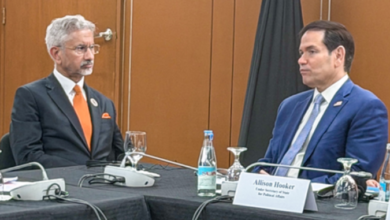
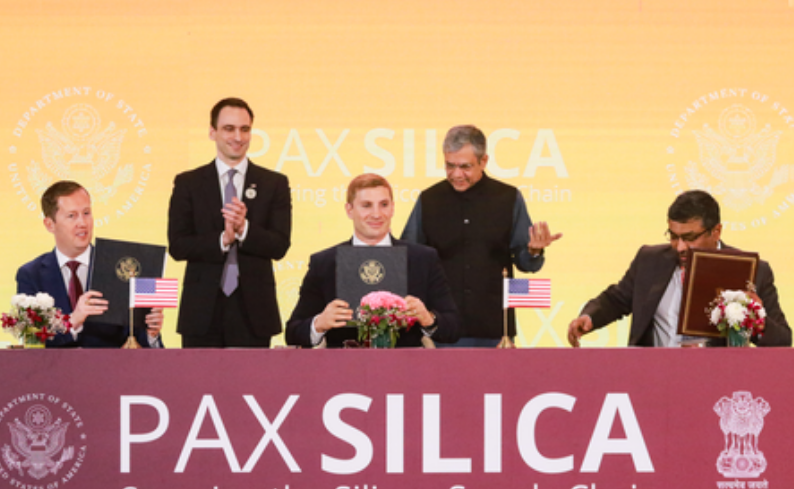
The partnership, which received renewed attention during U.S. Secretary of State Marco Rubio’s recent visit to India, is being advanced through the U.S.-India TRUST Initiative and the PAX Silica Declaration. The initiatives are aimed at strengthening cooperation in critical technologies, including AI, semiconductors, critical minerals and advanced manufacturing.
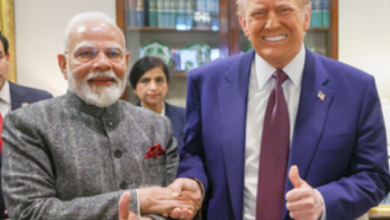
The TRUST initiative, outlined in February 2025 by Prime Minister Narendra Modi and U.S. President Donald Trump, was designed to accelerate innovation in strategic technologies and expand their use for economic growth and human development, officials said.
A major focus of the partnership is semiconductor manufacturing for defense and commercial applications. One example is the Shakti Semiconductor Fab, which is developing compound semiconductors for use in electric vehicles and aerospace systems.
U.S. companies including General Atomics and Synopsys are working with Indian firms such as 3rdiTech to validate semiconductor designs and train engineers, officials said. The effort is intended to support India’s chipmaking ambitions while deepening industrial cooperation between the two countries.
India’s participation in PAX Silica also places it within a U.S.-led coalition focused on building secure and resilient supply chains for AI, semiconductors and critical minerals. Officials said the framework is intended to reduce dependence on countries considered strategic rivals for foundational silicon, rare earths and other critical inputs.
The two countries are also working on an AI infrastructure road map to address financing, energy and scaling constraints tied to large U.S.-origin AI infrastructure in India. American technology companies are seeking access to India’s fast-growing AI market, while Washington sees India as a key location for expanding AI infrastructure outside China.
Amazon, Microsoft and Google are among the major U.S. technology companies investing billions of dollars to expand cloud networks and data center capacity in India.
Officials said both governments are aligned on reciprocal access to computing resources and shared regulatory approaches that could support startups and cross-border innovation while avoiding restrictive AI diffusion policies.
The technology partnership is being overseen by the national security advisers of both countries, reflecting the overlap between commercial digital expansion and national security priorities.
India and the United States also strengthened cooperation in critical minerals and rare earths during Rubio’s visit, signing a strategic agreement to deepen collaboration in securing the raw materials used in semiconductors, electric vehicles, solar panels and advanced defense systems.
The agreement comes amid global concern over China’s dominance in critical minerals and rare earth processing, which has raised fears that Beijing could use control over those inputs to disrupt supply chains.
Rubio said the agreement reflects a shared strategic interest between the two countries.
“We have a strategic and shared interest in the fact that vibrant innovation economies such as ours cannot afford to leave the foundational materials of these industries vulnerable to single source monopolies that could deny us these things, not just in a time of conflict, but as a leverage point contrary to our sovereign national interests,” Rubio said.
He also pointed to India’s decision to sign the PAX Silica Declaration, describing it as part of a broader U.S.-led effort to secure supply chains for AI, semiconductors and critical minerals.
The agreement is also expected to support joint financing and investment in critical mineral and rare earth projects, helping secure materials needed for semiconductor fabrication and defense technologies. (Source: IANS)