Pearls of Wisdom: The Awareness of Death Teaches Us How to Live
Ancient wisdom from the Mahabharata, the Upanishads, and Japan's Samurai tradition—and a simple dream—revealed that life's greatest teacher is the certainty that one day it will end.

By Upendra Mishra
BOSTON— Death changes its meaning as we move through life.
As children, death is simply another word. We hear it, but it carries no weight because we have never experienced its permanence. We believe our parents will always be there. Our grandparents seem eternal. The world feels permanent, and childhood itself appears as though it will last forever.
As we grow older, we begin hearing that people have died. Perhaps it is a distant relative, a neighbor, or someone in the community. We feel sad for a moment, but death still belongs to someone else’s life. It is distant. It is abstract.
Then adulthood arrives. We begin exercising, eating healthier, taking vitamins, meditating, and visiting doctors. Quietly, without saying it aloud, we have acknowledged something we never thought about as children: we are not immortal.
Still, death remains theoretical. Then something changes. For many people, somewhere after fifty, death begins to feel personal. The grandparents are gone. Parents become older and frailer. Friends from school and college begin to pass away. The weddings we attended become memorial services. Suddenly, we realize the line we once stood behind has become much shorter.
Whether we are running toward death or death is slowly walking toward us hardly matters anymore. One day, somewhere, somehow, we will meet. Far from making life depressing, I believe this realization is life’s greatest gift. More than two thousand years ago, the Mahabharata explored exactly this truth.
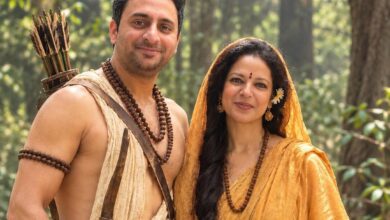
During the Pandavas’ exile, the five brothers become thirsty while wandering through the forest. One after another, four brothers discover a beautiful lake. Before drinking, they hear the voice of a mysterious Yaksha warning them that they must first answer his questions. Ignoring the warning, each drinks the water and immediately falls unconscious.
Finally, Yudhishthira arrives. Unlike his brothers, he patiently agrees to answer the Yaksha’s questions.
The Yaksha asks dozens of profound questions about life, duty, wisdom, and human nature. Then comes one of the most famous questions in Indian philosophy:
“What is the greatest wonder (surprise)?”
Yudhishthira replies: “Day after day countless beings go to the abode of death, yet those who remain believe they themselves will live forever. What could be more astonishing than this?”
What an extraordinary observation.
Often we attend funerals. Every day we read obituaries. Every day someone else’s world comes to an end. Yet somehow we continue believing that death belongs only to other people.
Every generation rediscovers this truth. A few mornings ago, just before waking, I had a dream. In that dream, I was speaking to myself.
I heard myself say: “Life is no different from a dream, except that life is a very long dream.” When I woke up, that sentence stayed with me.
Think about our nightly dreams. Within just a few minutes, we can experience what feels like an entire lifetime. We laugh, cry, fall in love, lose people we cherish, struggle, succeed, become wealthy, become poor, experience fear, hope, disappointment, and joy.
While we are dreaming, everything feels completely real. Then we wake up. The entire world disappears. Nothing remains except the memory that we were dreaming.
Since that morning, I have wondered whether our waking life is fundamentally any different. Perhaps our nightly dreams last a few minutes, while our earthly life lasts seventy or eighty years.
But both are dreams in their own way.
In this long dream we call life, we are born, educated, build careers, raise children, accumulate wealth, seek recognition, celebrate victories, endure failures, and spend countless hours worrying about tomorrow.
Then one day…
We wake up.
The house stays behind.
The money stays behind.
The awards stay behind.
Even our memories slowly fade.
So what truly belongs to us?
That question reminds me of one of my favorite stories from Indian philosophy.
King Janaka, celebrated in the Upanishads and the Ashtavakra Gita as a philosopher-king, once had a disturbing dream.
In the dream, he had lost everything. His kingdom was gone. His palace had vanished. He wandered the streets as a starving beggar, desperately searching for food. Finally, someone handed him a bowl of porridge. Just as he was about to eat, two bulls began fighting nearby. They struck the bowl, spilling his only meal onto the ground.
Janaka cried out in despair. At that exact moment, he awoke. He was back in his magnificent palace. Servants stood nearby. Everything appeared exactly as it had before he fell asleep. Yet instead of feeling relieved, Janaka became deeply troubled.
He repeatedly asked everyone around him: “Which is true? Was I the beggar dreaming I was a king, or am I the king who dreamed I was a beggar?”
None of the scholars in his court could answer. Finally, the great sage Ashtavakra arrived. His answer was astonishing.
He told Janaka that neither the beggar nor the king represented the ultimate truth. When Janaka experienced himself as the beggar, there was no king. When he experienced himself as the king, there was no beggar.
Truth cannot appear and disappear. Truth cannot change from one state to another.
The only reality present in both experiences was Janaka himself—the silent awareness that witnessed both the dream and the waking life. The beggar came and went. The king came and went. The witness remained. That awareness—the Self—is the only enduring truth.
I have often reflected on that story.
Sometimes I wonder whether one day we, too, will awaken from this long dream we call life and realize that everything we spent decades worrying about belonged only to the dream.
Another philosophy has fascinated me for years. The Japanese Samurai lived according to the code of Bushidō, the “Way of the Warrior.” One of its central teachings was surprisingly simple.
Every morning, a Samurai was expected to contemplate his own death. He imagined dying in battle. He imagined dying from illness. He imagined dying before sunset.
To many people this sounds dark. It wasn’t. The purpose was not to become obsessed with death. The purpose was to remove the fear of it. Once death is accepted, life becomes astonishingly clear. Petty arguments lose their importance. Ego becomes lighter. Gratitude grows stronger. Every sunrise becomes a gift instead of an expectation. Every conversation could be the last. Every embrace becomes more meaningful. Death does not diminish life. It magnifies it.
Over the past few years, I have slowly tried to adopt that philosophy. I no longer want to live ten years at a time. I try to live one day at a time. Tomorrow is a promise no one has received.
Today is the only certainty any of us possesses. Perhaps that is the greatest gift death gives us. It forces us to choose what truly matters.
It reminds us that every hour spent on anger, resentment, jealousy, ego, or trivial worries is an hour permanently withdrawn from the bank account of life. Unlike money, time can never be earned back.
Death also teaches us something else. It teaches us to value the Self. Everything we experience—the people we love, the beauty of nature, music, family, success, failure, joy, and sorrow—exists only because we are here to experience it.
If I am not here, my world disappears with me. Perhaps that is why every spiritual tradition eventually turns inward.
Not toward possessions. Not toward status. But toward awareness.
So, what is the truth? Is it the dream we see every night? Or is it the longer dream we call life?
I honestly do not know. But I know this. Remembering death has made me love life more deeply. It has made me appreciate ordinary mornings, long conversations, family dinners, quiet walks, and friendships I once took for granted.
Death is not life’s enemy. Forgetfulness is. The moment we forget that our time is limited, we postpone forgiveness, delay our dreams, neglect the people we love, and waste precious hours on things that will not matter.
Perhaps death’s greatest gift is that it gently whispers every day:
Wake up.
This long dream, too, will one day come to an end. Until then, live it fully.
(Upendra Mishra is the founder of Precise Marketing & Media and a leading advocate for rethinking how marketing drives business growth. Through his “Marketing Upside Down” perspective, he challenges the traditional focus on marketing activity and instead emphasizes revenue as the only metric that matters.With more than 30 years of experience, Upendra has developed the Precise Marketing System, a proven framework that helps companies uncover revenue leaks, focus on high-value opportunities, and build scalable growth engines. His approach has delivered measurable results, including helping a company grow from $14 million to $55 million in just three years. He is the author of Precise Marketing: The Proven System for Growing Revenue in a Noisy World, where he outlines his philosophy for succeeding in today’s crowded and uncertain marketplace. He is also the author of After the Fall: How Owen Lost Everything and Found What Truly Matters. For more, vivit: www.UpendraMishra.com)