From a Family Challenge to an AI Tool: Robbinsville Teen Shashank Madala Builds Kora to Help Caregivers Understand Autistic Children
Inspired by his autistic cousin, Robbinsville High School rising senior Shashank Madala taught himself machine learning and built Kora, an AI-powered assistive tool now reaching 700+ users across 12 countries.

When Shashank Madala was 15, he began teaching himself machine learning for a deeply personal reason.
His younger cousin is autistic, and throughout much of his childhood, Madala watched family members struggle to understand what the boy was feeling. They loved him, supported him and wanted to help—but sometimes they simply could not tell what was happening beneath the surface.
That experience led Madala to a question that would eventually become the foundation of Kora: Could artificial intelligence help caregivers better understand emotional cues that can be difficult to interpret?
Today, the answer is becoming a working technology.
Kora, an AI-powered assistive application developed by Madala and three other high school students, is designed to help caregivers better understand and respond to the emotional signals of autistic children. The team describes it not as a diagnostic tool, but as a way to provide caregivers with additional context when communication is difficult.
The idea has already earned national recognition. Kora was selected as the winner of the 2025 Congressional App Challenge for New Jersey’s 10th Congressional District, an honor announced by U.S. Rep. LaMonica McIver. The winning team consists of Madala and fellow students Ayur Munipalli, Joseph Pontoriero and Liam Casey.
The award also placed Kora on display at the U.S. Capitol, giving a project that began with one family’s experience a national stage.
For Madala, however, the technology’s significance is less about the Capitol display than about the problem that inspired it.
“Understanding is essential before intervention,” the Kora team wrote in its Congressional App Challenge submission.
That philosophy is at the heart of the project.
Turning a Personal Observation Into Technology
Madala, an Indian-American rising senior at Robbinsville High School and a member of the Class of 2027, says nearly all of his work eventually comes back to one idea: using machine learning to understand aspects of human behavior that are difficult to measure.
Kora brought that interest into one of the most personal areas of his life.
The team spent months learning from therapists, special-education professionals and families before building the application. Their goal was not to “fix” autistic children, but to help bridge a communication gap between children and the people caring for them.
The Congressional App Challenge described Kora as an application that assists caregivers by helping autistic children communicate. McIver’s office said the platform combines emotion recognition with interactive games, conversational AI and community assistance.
The distinction is important.
Kora is intended as an assistive tool for caregivers, not a medical diagnostic device. Its purpose is to offer another source of information that may help a parent, therapist or caregiver respond more thoughtfully when a child’s emotions are difficult to interpret.
That human-centered approach appears to have shaped the project’s development from the beginning.
In its competition submission, the team recalled hearing from families who described the emotional exhaustion of trying to understand a child who could not easily communicate what he or she was experiencing. One parent described the technology as potentially providing “a window into his emotions.”
For the students, those conversations transformed an abstract AI project into something much more tangible.
A National Recognition, and a Bigger Mission
Kora’s Congressional App Challenge victory came during a record-setting year for the national competition. The 2025 challenge involved more than 13,800 students who submitted more than 4,600 original applications, according to the Congressional App Challenge organization.
Winning NJ-10 placed Kora among the year’s recognized student technology projects nationwide.
Madala subsequently received a Certificate of Congressional Recognition from Rep. McIver, and the project has continued to attract attention in New Jersey and beyond.
According to Madala, Kora now serves more than 700 users through therapy centers in 12 countries.
The project’s trajectory is striking precisely because its origins were so small: one teenager observing a challenge within his own family and deciding to learn enough technology to try to address it.
Beyond Kora: Building an AI Education Movement
Kora is only one part of Madala’s increasingly ambitious work.
He is also the founder and co-CEO of Lumin AI, a 501(c)(3) nonprofit focused on making artificial-intelligence education accessible to students for free.
The organization has developed a 20-module AI curriculum, offers completion certificates and operates student-led chapters. Madala says Lumin AI has reached more than 15,000 students, issued more than 5,200 certificates and established more than 50 chapter locations across 16-plus countries, supported by a team of more than 125 interns.
The organization’s work reflects another side of Madala’s philosophy: technology should not only be built for people; people should be given the opportunity to understand and build technology themselves.
That philosophy has taken him into classrooms and community programs as well as coding environments.
In 2025, for example, Madala and other Lumin AI student leaders led an AI bootcamp through a partnership with Ekal Vidyalaya, introducing students to machine learning, chatbots, Python and AI ethics.
Researching Autism at Yale
Madala’s interest in autism-related technology has also moved into academic research.
At the Yale Child Study Center, he works in the Cha Lab on multimodal AI research examining autism-related social communication differences using naturalistic parent-child interactions.
According to his Yale School of Medicine profile, his work includes developing computational pipelines involving speech, prosody and behavioral signals, as well as studying patterns of interaction and social engagement. The research draws on more than 120 hours of longitudinal family-interaction data.
It is a natural extension of the question that first led him to Kora: How can technology help us understand human interaction without reducing people to numbers?
The answer, Madala’s work suggests, requires both technical sophistication and humility about what technology can—and cannot—tell us.
From AI to Economics—and Around the World
Madala’s interests extend well beyond computer science.
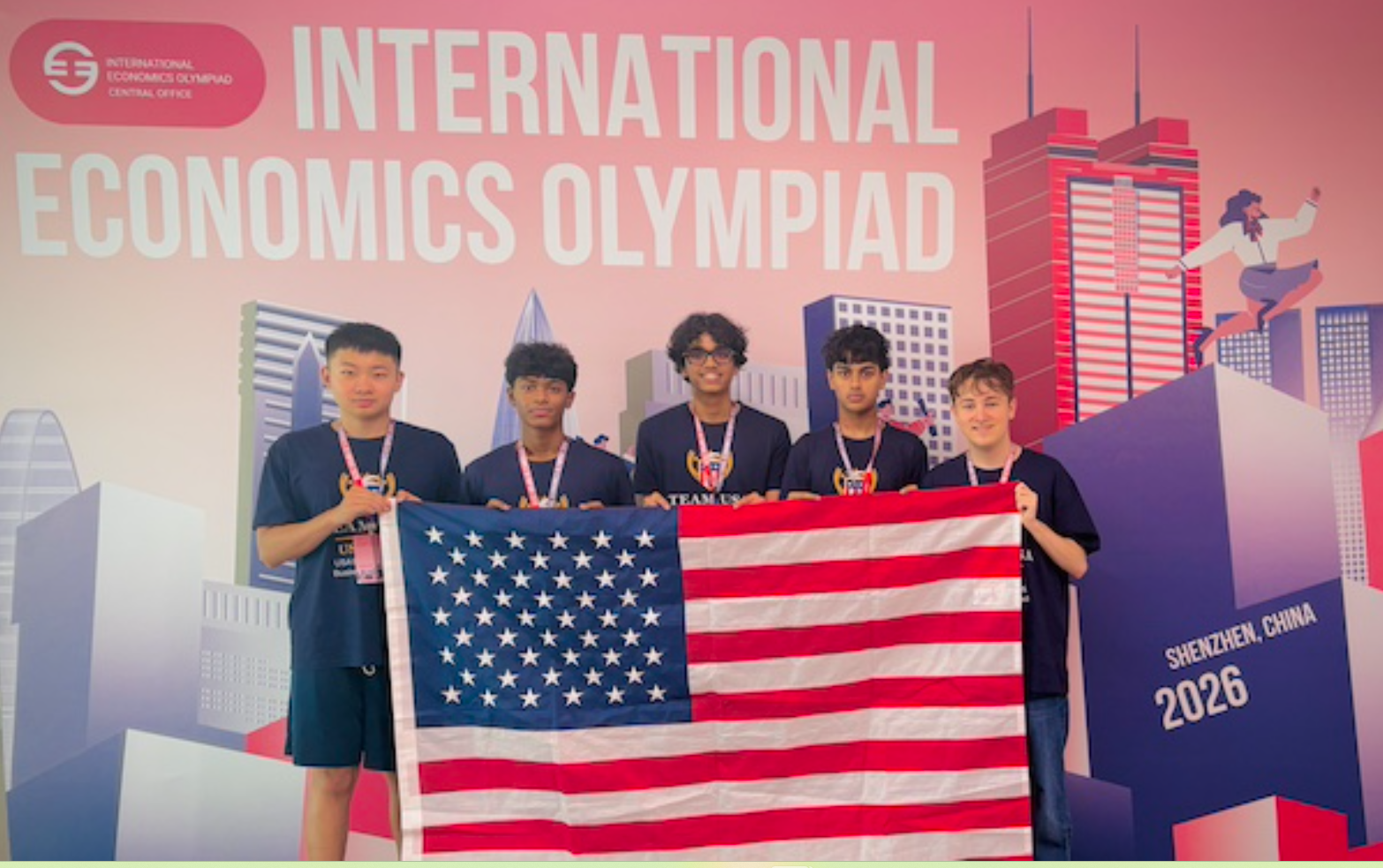
In July, he represented the United States at the 2026 International Economics Olympiad in Shenzhen, China, one of five students selected for the inaugural Team USA delegation.
Team USA placed sixth among 52 countries in the International Business Case Competition and returned with one gold, one silver and one bronze medal, along with additional honors.
For Madala, economics connects directly to his experience building Kora.
Developing a useful technology, he realized, is only one part of solving a real-world problem. Questions of affordability, adoption, scalability and access determine whether an innovation actually reaches the people it was designed to help.
That realization pushed him toward economics and business.
His family roots trace to Andhra Pradesh, and his experience as an Indian-American student has given his story another dimension: a young person navigating technology, research, entrepreneurship and international competition while remaining closely connected to a family experience that sparked his original interest.
A Student With a Long List of Firsts
At Robbinsville High School, Madala serves as president of the school’s FBLA chapter and has participated in New Jersey FBLA technology leadership. He also contributes software to FRC Team 2590 Nemesis, a robotics team that won its division at the 2024 FIRST World Championship.
He has reached the USACO Gold Division in competitive programming and has received the Presidential Volunteer Service Award at the Gold level twice.
But the list of accomplishments can obscure the thread connecting them.
Kora began with empathy.
Lumin AI grew from the belief that access to technical knowledge should be broader.
His Yale research explores how computational tools can help researchers understand social communication.
Economics asks how ideas can become sustainable and accessible.
And competitive programming and robotics provide the technical foundation underneath it all.
The common denominator is not simply artificial intelligence. It is the attempt to use technical skills to solve problems that matter outside a computer screen.
Designing Technology Around Understanding
For Madala, Kora’s story ultimately comes back to his cousin.
The technology may now be used by hundreds of people and reach therapy centers across multiple countries. It may have been recognized by Congress and displayed at the U.S. Capitol. But the motivation remains remarkably personal.
A child is communicating something. A caregiver wants to understand. Sometimes the signal is difficult to read.
Kora is an attempt to create a bridge.
That may be the most meaningful part of Madala’s story. At an age when many students are still deciding what they want to study, he has already identified a problem he cares about, taught himself the tools to investigate it, sought guidance from families and professionals, tested an idea and continued refining it.
His work illustrates a broader possibility for the next generation of Indian-American innovators: that the most consequential technology projects do not necessarily begin in corporate laboratories or university research centers.
Sometimes they begin at home—with a teenager watching someone he loves, recognizing that something is being missed, and asking whether he can build a better way to understand.
Madala is a rising senior at Robbinsville High School in New Jersey. His work spans artificial intelligence, autism-support technology, AI education, economics and computational research. His Yale School of Medicine profile describes his interests in AI/ML, economics and human-centered technology.