U.S. Senators Mark National Seersucker Day, Celebrating Fabric With Indian Roots
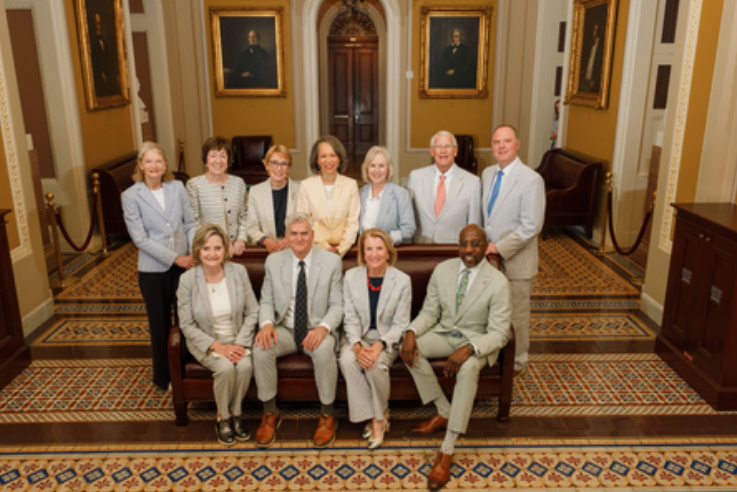

Washington — U.S. senators from both parties marked National Seersucker Day, celebrating a fabric with origins in India that has become a longstanding symbol of summer tradition and bipartisan camaraderie on Capitol Hill.
Sens. Raphael Warnock and Bill Cassidy introduced a resolution designating June 11 as National Seersucker Day and encouraging lawmakers and Americans to take part in the annual observance.
“Seersucker is interwoven with the style and tradition of the South,” Warnock said. “I’m proud to continue this storied bipartisan Senate tradition of Georgia cotton, Southern charm, and fashion alongside Senator Cassidy.”
Cassidy highlighted the fabric’s connection to Louisiana and the U.S. Senate.
“Seersucker is a New Orleans invention, a Senate tradition, and brings a welcome moment of unity to Washington every year,” he said. “I look forward to seeing colleagues from both parties join in again this year.”
The resolution also designates every Thursday through the last Thursday in August as “Seersucker Thursday” and declares June 2026 as “Seersucker Appreciation Month.”
Although the tradition is closely associated with the American South, the fabric has roots in the Indian subcontinent. Warnock’s office said the material originally came from India before becoming popular in the United States in the early 20th century as a practical choice for summer heat.
According to the resolution, seersucker was introduced to the United States through the South in the mid-19th century and was later popularized by New Orleans businessman Joseph Haspel.
The lightweight fabric became known for its comfort in hot and humid weather. The resolution describes seersucker as being woven with threads at different tensions, creating alternating smooth and puckered stripes that allow air to circulate more freely around the body.
The measure also highlights the role of cotton production, particularly in Georgia, where roughly 3,500 family farms grow cotton. Cotton remains one of the state’s major agricultural products and is a key ingredient in traditional seersucker fabric.
The resolution notes that former Sen. Trent Lott brought Seersucker Thursday to Congress in 1996. After the tradition went unobserved in 2012 and 2013, then-Rep. Cassidy worked with the late Sen. Dianne Feinstein to revive it in 2014.
Under the resolution, the Senate recognizes seersucker as “the working person’s uniform” during warm weather and encourages local governments, organizations and clothing industry groups to promote its use. It also invites Americans to wear seersucker on National Seersucker Day and on subsequent Seersucker Thursdays.
The resolution says the word “seersucker” comes from the Persian phrase “shir-o-shakar,” meaning “milk and sugar,” a reference to the fabric’s alternating textures.
The observance highlights a lesser-known cultural link between India and an enduring American political tradition. What began as a lightweight fabric suited to South Asia’s climate later became a distinctive feature of summer attire in Washington, especially among lawmakers seeking relief from the capital’s humid weather. (Source: IANS)