Harvard Divinity School Announces Plans for Hindu and Muslim Ministry Initiatives
Dean Marla F. Frederick outlines expansion of interfaith ministerial training programs in Hong Kong remarks
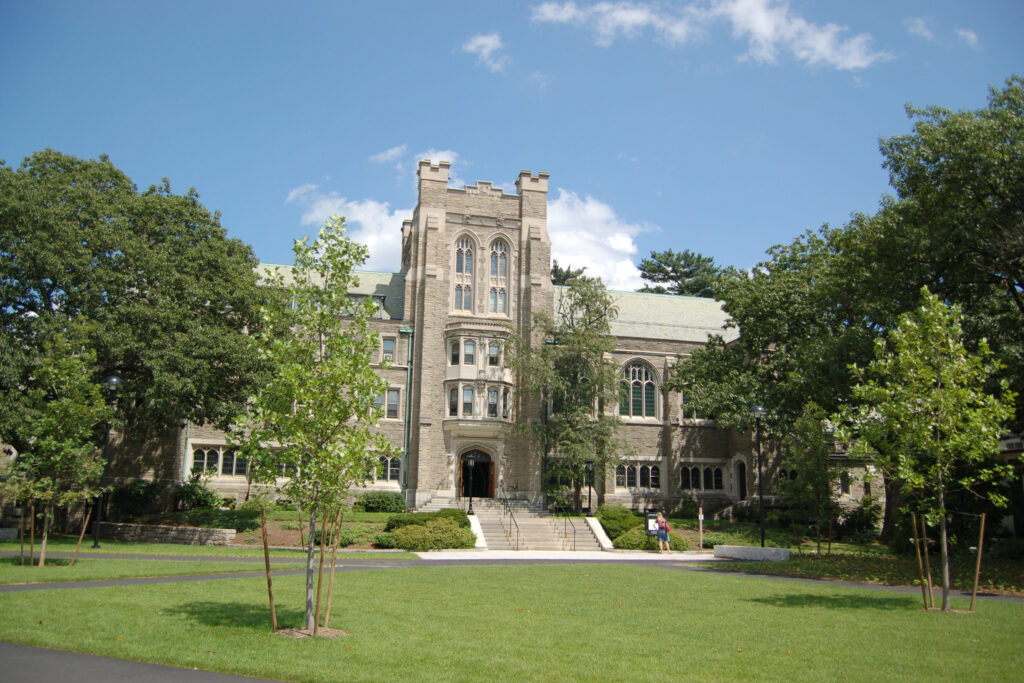

CAMBRIDGE, MA — The Harvard Divinity School is developing new Hindu and Muslim ministry initiatives as part of a broader effort to expand interfaith ministerial training, according to reporting by The Harvard Crimson.
As reported by The Harvard Crimson, Divinity School Dean Marla F. Frederick announced the planned initiatives during a recent international trip to Asia, including a visit to the Divinity School of Chung Chi College at The Chinese University of Hong Kong. The proposed programs are intended to strengthen structured pathways for religious leadership training across multiple faith traditions.
Commenting on the development, Asad Pervez of the Center for Peace & Spirituality USA said the initiative represents an important step toward fostering deeper understanding across religious communities.
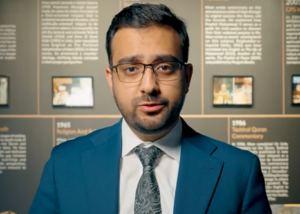 “These are meaningful steps toward building lasting social harmony,” Pervez said, as reflected in his remarks. “By creating dedicated pathways for Hindu and Muslim ministry, and ensuring students study both their own tradition and others, Harvard Divinity School is advancing a more authentic form of pluralism needed for religious leaders committed to truth and service to humanity.”
Pervez added that CPS USA “applauds this effort” and expressed openness to supporting such initiatives in any way possible.
According to The Crimson, Frederick said the school is working to launch both a Muslim Ministry Initiative and a Hindu Ministry Initiative, aimed at addressing longstanding gaps in religious leadership training for non-Christian traditions.
“We’re working to develop a Muslim Ministry Initiative and the Hindu Ministry Initiative,” Frederick said, according to a recording of the event obtained by The Harvard Crimson.
Frederick, as quoted by The Crimson, said the effort reflects structural limitations in how ministerial education has historically been offered, noting that students preparing for mosque leadership roles have often had to rely on Christian-centered ministerial training pathways.
“Historically, people who wanted to serve a ministry in a mosque have had to be trained through Christian ministry in order to do ministry in the mosque,” she said, according to The Crimson report.
The planned initiatives build on the Divinity School’s broader strategic planning process launched in 2024, which identified a need to expand leadership training across Hindu, Islamic, and other religious traditions in an increasingly multireligious world.
Frederick told attendees, according to The Crimson, that while students already engage across traditions, the school is now working to strengthen formal ministerial training within specific faith-based pathways.
The report also notes that the school’s existing Buddhist Ministry Initiative, launched in 2012, is being viewed as a potential model for the expansion of Hindu and Muslim programs.
According to The Harvard Crimson, students and alumni have responded positively to the announcement, calling it a significant step toward greater institutional support for non-Christian ministerial education.