Indian Americans Score Major Victories in U.S. Midterm Elections as Amish Shah Leads Arizona Congressional Race

WASHINGTON–Indian American candidates won several congressional and state elections across the United States in Tuesday’s midterms, with Democrats securing significant victories in Florida, Virginia, Washington state, California and Maryland, while physician Amish Shah maintained a commanding lead in a closely watched Arizona congressional contest.
The November 3 elections also brought defeats for two prominent Indian American Republicans, Vivek Ramaswamy in Ohio’s gubernatorial race and Saritha Komatireddy in New York’s attorney general election.
Among the projected congressional winners were Democrats Pia Dandiya, Suhas Subramanyam, Pramila Jayapal and Ro Khanna. Other Indian American candidates secured state legislative seats or held substantial leads as vote counting continued.
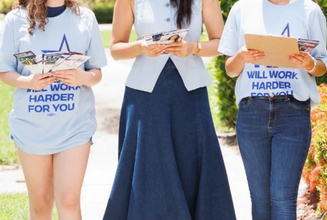
In Florida, Dandiya, a former school principal whose parents immigrated from India, defeated Republican Casey Askar in the state’s 22nd Congressional District.
Dandiya received approximately 52% of the vote compared with Askar’s 48%, becoming another Indian American woman elected to the U.S. House of Representatives.
In Virginia, Democratic Rep. Suhas Subramanyam secured a second term representing the state’s 10th Congressional District, defeating Republican Dave Beckwith.
“The campaign is over, but the work is just beginning. I look forward to working with our community to deliver change in Washington,” Subramanyam said in a statement following his victory.
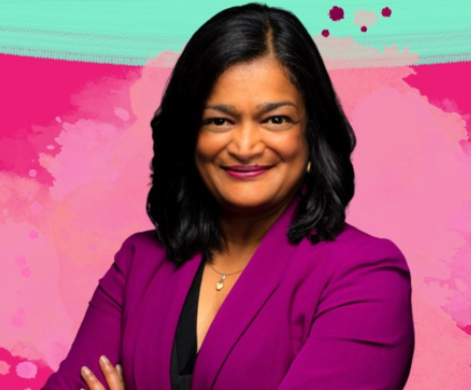
In Washington state, Democratic Rep. Pramila Jayapal was projected to win another term in the 7th Congressional District, defeating Republican Nirav Sheth.
Jayapal, who was born in Chennai, became the first South Asian American woman elected to the House in 2016. She remains a prominent advocate for immigration reform, expanded health care access and progressive economic policies.
In California, Democratic Rep. Ro Khanna won reelection in the state’s 17th Congressional District, defeating fellow Indian American Republican Ritesh Tandon.
Khanna, who represents Silicon Valley, serves as Co-Chair of the Congressional Caucus on India and Indian Americans and has been a vocal critic of President Donald Trump’s trade policies toward India.
Fellow California Democrat Ami Bera also maintained a substantial lead in the newly redrawn 3rd Congressional District.
Bera, the longest-serving Indian American currently serving in Congress, was ahead of Republican Robb Tucker by approximately 60% to 40%, although the race had not been called at the time of the reported results.
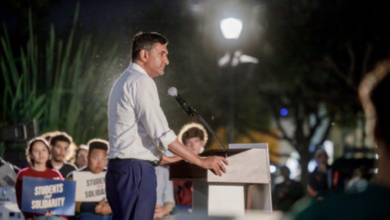
In Arizona, Democrat Amish Shah, a physician and former state legislator, was positioned for a potential victory in the state’s competitive 1st Congressional District.
Shah led Republican Jay Feely with approximately 54.9% of the vote compared with Feely’s 43.2%, according to Decision Desk HQ. About 76% of the expected ballots had been counted, and no winner had been projected.
The district includes Scottsdale and portions of the Phoenix metropolitan area. A victory by Shah would further expand Indian American representation in Congress.
Indian American candidates also recorded successes in statewide elections.
In Maryland, Lieutenant Governor Aruna Miller secured another four-year term after Democratic Governor Wes Moore won reelection.
Miller, who became the first Indian American elected Lieutenant Governor of Maryland in 2022, will continue serving in the state’s executive branch.
However, the election brought a major setback for Indian American Republicans in Ohio, where Democrat Amy Acton defeated Vivek Ramaswamy in the Governor’s race.
Ramaswamy, a billionaire biotechnology entrepreneur and former Republican presidential candidate, received strong support from Trump and Vice President JD Vance.
Despite those endorsements, Acton led with approximately 51% of the vote compared with Ramaswamy’s 46% in late election returns.
Ramaswamy’s defeat ended his effort to become the third Indian American Governor in U.S. history, following Republicans Bobby Jindal of Louisiana and Nikki Haley of South Carolina.
In New York, Republican Saritha Komatireddy, a former federal prosecutor, lost her campaign for Attorney General against Democratic incumbent Letitia James.
James held a commanding lead with approximately 62% of the vote.
Other Indian American candidates who lost congressional contests included Republican Mahesh Ganorkar in North Carolina, independent Sandeep Dixit in Ohio and independent Anil Kumar in Michigan.
At the state legislative level, Indian American Democrats registered several victories and strong performances.
In Pennsylvania, Democratic Rep. Arvind Venkat won reelection in House District 30, extending his tenure in the state legislature.
In Illinois, Democratic Sen. Ram Villivalam retained his seat representing Senate District 8.
Another Illinois Democrat, Nabeela Syed, held a substantial lead over Republican incumbent Darby Hills in Senate District 26.
Syed received approximately 57% of the vote compared with Hills’ 43%, with more than 95% of estimated ballots counted. The race remained officially uncalled at the time.
In Georgia, Democrat Jyot Singh led Republican Yassin Moghazy by approximately 68% to 32% in House District 97.
Meanwhile, in Texas, Democrat Pooja Sethi declared victory in House District 47, adding to the gains made by Indian American candidates in state legislative contests.
The midterm elections, held halfway through Trump’s second presidential term, included contests for all 435 seats in the U.S. House of Representatives, 35 Senate seats, governorships and numerous state legislative offices.
Beyond determining the balance of power in Washington, the results highlighted the growing participation of Indian Americans in electoral politics at the federal, state and local levels.
With multiple congressional victories, successful statewide campaigns and several competitive races still awaiting final results, the elections reinforced the Indian American community’s expanding presence in American political leadership. (Source: IANS)