US Calls India an ‘Extraordinary Opportunity’ for AI Cooperation
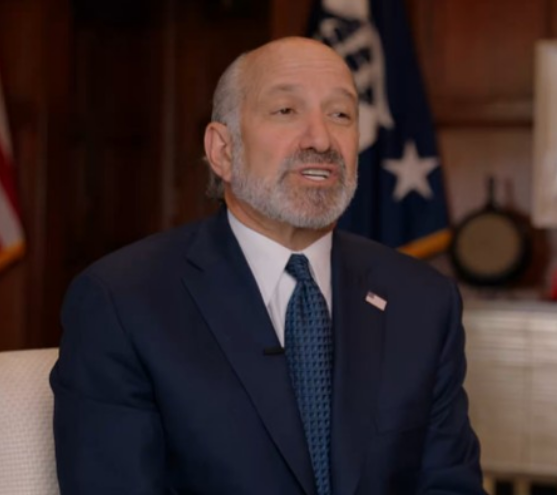

Chapel Hill, North Carolina — The United States views India as a major opportunity for deeper cooperation in artificial intelligence and is working with New Delhi to develop a more integrated AI technology ecosystem, U.S. Commerce Secretary Howard Lutnick said.
“India is an extraordinary opportunity, and we are working together, as I said, to try to build that AI stack together,” Lutnick told reporters following the G20 Innovation Ministerial in Chapel Hill.
His comments came after Lutnick and Michael Kratsios, Director of the White House Office of Science and Technology Policy and science adviser to the president, announced that G20 members had reached consensus on a ministerial statement focused on innovation, investment and economic growth.
Lutnick said the AI technology stack could allow countries to develop domestic industry leaders in different areas while also working with leading U.S. models and technology companies.
“The idea is the frontier models are clearly American models,” he said, adding that the United States wants its AI ecosystem to integrate with national systems in partner countries.
Kratsios said discussions at the ministerial also emphasized the growing role of artificial intelligence in scientific research, including chemistry, mathematics, physics and materials science.
“So something that we shared with all the G20 nations, I think is very applicable to India, is this fundamental belief that we have to sort of push our science community to absorb AI into what they do to work,” he said.
The two-day meeting concluded with agreement on the Carolina Principles for Emerging Technology, a framework intended to guide governments in supporting the discovery, development and deployment of new technologies.
“The Carolina principles, which we all agree to here at the G20, reflect the common features of the innovation lifecycle across all emerging technologies,” Kratsios said.
The principles call for investment in foundational research, stronger pathways for development and commercialization, and policies that encourage trusted adoption. They also recommend relying on existing sector-specific regulations where appropriate and introducing new rules when emerging technologies create novel issues.
Lutnick said reaching consensus among all G20 members required extensive negotiations because political considerations often complicate international agreements.
“When you bring global leaders together, there’s always lots of politics,” he said. “People sometimes like to stay out of consensus to make a point as opposed to the point of the consensus.”
The United States also wants American AI technology to be adopted more broadly around the world, Lutnick said, while allowing individual countries to decide whether to use frontier or open-weight models.
Kratsios said the Trump administration’s American AI Exports Program is designed to expand access to U.S.-developed chips, AI models and applications among allies and partners.
“We have the very best chips, we have the very best models, we have the very best applications, and we wanna make those available to all of our partners, friends, and allies all around the world,” he said.
India and the United States have expanded technology cooperation in recent years across artificial intelligence, semiconductors, quantum technology, telecommunications and scientific research, making technology an increasingly important part of the broader bilateral relationship. (Source: IANS)