Trump-Era Immigration Policies Driving Talent Away, Hurting U.S. Innovation: Expert
Silicon Valley voice warns restrictive visa system is weakening America’s startup ecosystem while boosting India’s innovation pipeline
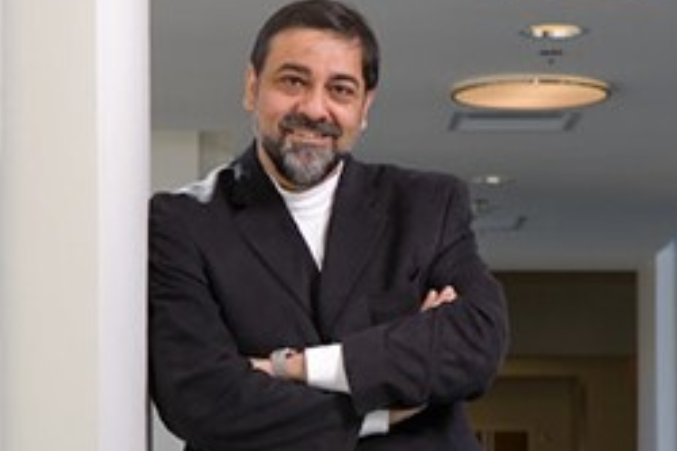

STANFORD— Restrictive U.S. immigration policies implemented during the Trump administration are undermining America’s innovation economy by pushing global talent elsewhere, according to Silicon Valley-based immigration expert Vivek Wadhwa.
Wadhwa said tighter visa rules, growing backlogs, and uncertainty around long-term residency are making the United States less attractive to skilled migrants, with countries like India increasingly emerging as alternative hubs for research and startup growth.
“We’re chasing the best and the brightest away… these backwards immigration policies are doing a lot of damage now,” Wadhwa said, warning that the U.S. is steadily eroding its competitive edge in science and technology.
He pointed to a long-term decline in immigrant-founded startups in Silicon Valley as evidence of the shift. Once estimated at roughly half of all new ventures in the region, Wadhwa said the share has dropped significantly over the past decade.
“Half of the startups here in Silicon Valley were founded by people like us… and now it’s probably in the thirties, if even that much,” he said.
Wadhwa also described his own experience attempting to build a medical diagnostics company in Silicon Valley, saying he struggled to attract both funding and specialized talent despite his network in the U.S. tech ecosystem.
“I couldn’t find the talent here. I couldn’t find the money here,” he said, adding that investors were reluctant to support research-heavy work conducted outside the United States.
He eventually shifted key parts of the project to India, working with institutions such as Indian Institute of Technology Madras and All India Institute of Medical Sciences. According to Wadhwa, the teams in India achieved rapid progress. “Within a year, they made breakthroughs that were inconceivable in the United States,” he said.
He attributed India’s advantage to its broad base of interdisciplinary scientific talent. “India still has people who understand thermodynamics, plasma physics, chemistry, electrical engineering,” he said, contrasting it with what he described as gaps in the U.S. innovation workforce.
A major constraint, he added, is the difficulty in securing visas and permanent residency for skilled workers. Long H-1B wait times and green card backlogs, he said, discourage global talent from committing to the U.S.
“They can’t get green cards… they’re worried about getting kicked out any day… who wants to come here like this?” Wadhwa said.
He contrasted today’s system with earlier decades, recalling that his own green card process in the 1980s took less than two years, while similar applicants today could face decades-long waits.
“When I came here… it took me 18 months to get a green card. Today it would take me 70 years,” he said.
Wadhwa warned that the consequences extend beyond immigration policy, affecting the broader trajectory of U.S. technological leadership.
“Innovation is globalised and stupid policies trying to keep people out will only keep innovation out,” he said, arguing that restrictive systems risk shifting the center of global innovation away from the United States.
He added that his own company now plans to validate its technology in India before bringing it to the U.S. market, reflecting what he sees as a broader global realignment of innovation activity.
The comments come as policymakers in Washington continue to debate immigration reform and the role of foreign-born talent in sustaining the United States’ leadership in science, engineering, and entrepreneurship—fields where immigrant participation has historically played a central role in Silicon Valley’s growth. (Source: IANS)