Trump Administration Proposes $103,265 Fee for Cap-Subject H-1B Visas

WASHINGTON — The Trump administration has proposed a new $103,265 fee on employers filing cap-subject H-1B petitions, a move that could sharply increase the cost of hiring skilled foreign workers, including many professionals from India.
The Department of Homeland Security said the fee would apply to every cap-subject H-1B petition, including those filed for workers eligible under the advanced degree exemption. Employers would pay the charge in addition to all other applicable filing fees.
The proposal is not yet final and is scheduled to be published in the Federal Register on Tuesday, triggering a 30-day public comment period.
DHS estimated that the new fee could generate about $8.8 billion annually, based on approximately 85,000 cap-subject petitions each year.
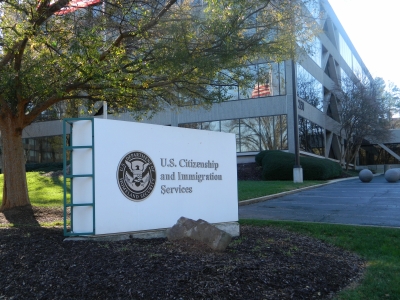
“The proposed H-1B fee is intended to recover the costs incurred across the federal government to adjudicate, vet, and support lawful immigration programs that otherwise must be funded by taxpayers,” U.S. Citizenship and Immigration Services spokesperson Zach Kahler said.
According to DHS, the revenue would help cover costs associated with immigration benefit adjudications, fraud detection, national security screening, government technology modernization and record collection.
The funds would also support immigration courts, consular visa processing, labor standards enforcement and coordination among federal agencies, including USCIS, Customs and Border Protection, Immigration and Customs Enforcement, the Justice Department, State Department and Department of Labor.
The fee would not apply to cap-exempt H-1B petitions filed by certain nonprofit research organizations, government research institutions and colleges and universities.
The annual H-1B cap is set at 65,000 visas, with an additional 20,000 available to foreign nationals who have earned a master’s degree or higher from a U.S. institution.
DHS said the fee would apply uniformly regardless of an employer’s size or nonprofit status.
The department found that 14,541 of the 28,649 organizations filing cap-subject petitions in fiscal 2025 were small entities. It estimated that the proposal would have a significant financial impact on 11,051 of those organizations, or about 76 percent.
FWD.us President Todd Schulte criticized the proposal as a “massive tax on American businesses” and said it could weaken the country’s ability to compete for global talent.
“Policies like the H-1B innovation tax and the rumored tax on Optional Practical Training will only hinder our ability to compete globally for top talent and economic leadership. Jobs and businesses will move overseas, and all workers will be worse off for it,” Schulte said.
He also questioned whether the government has the legal authority to charge a fee that goes beyond the direct cost of processing an individual petition.
“This proposed tax clearly violates the law by charging far more than is allowed, which should be the cost to adjudicate an H-1B petition,” Schulte said.
DHS maintained that federal immigration law allows the government to establish fees at levels sufficient to recover the full cost of immigration adjudication and naturalization services. The department also said employers filing cap-subject H-1B petitions are generally better positioned to absorb higher fees than individual immigration applicants.
The H-1B program allows U.S. employers to hire foreign professionals for specialty occupations requiring advanced knowledge. Technology, engineering, finance, medicine and research are among the industries that make extensive use of the program. (Source: IANS)