Report Says India Honoured Indus Waters Treaty for Decades While Pakistan Used Dispute Process to Delay Projects
Analysis Defends New Delhi's Rejection of Hague Arbitration Award, Saying Treaty Was Upheld in Good Faith Despite Repeated Bilateral Tensions.

WASHINGTON — India has consistently acted in good faith under the 1960 Indus Waters Treaty (IWT) for more than six decades, while Pakistan repeatedly used the treaty’s dispute resolution process to delay Indian hydroelectric projects, according to an analysis published by the American magazine The National Interest.
The report supports New Delhi’s rejection of a recent award issued by a Hague-based Court of Arbitration, which India has described as “null and void” on the grounds that the tribunal was not constituted in accordance with the treaty’s provisions.
According to the report, India has maintained that while it remains committed to the dispute resolution mechanism established under the treaty, it does not recognize the jurisdiction of what it calls an “illegally constituted” Court of Arbitration. New Delhi has therefore declined to nominate arbitrators or participate in the proceedings.
The latest arbitration award, issued on May 15, 2026, concerned water storage limits at Indian hydroelectric projects on the western rivers of the Indus basin. India rejected the ruling, reiterating its position that the treaty has remained in abeyance since April 2025 following the deadly Pahalgam terror attack, in which 26 civilians were killed.
India has linked the suspension of the treaty’s implementation to what it says is Pakistan’s continued support for cross-border terrorism. According to the report, New Delhi has stated that normal implementation of the treaty will resume only after Pakistan “credibly and irrevocably” ends such support. India’s Ministry of External Affairs reaffirmed that position on July 3, 2026.
The report argues that India continued to honor the treaty despite multiple wars between the two countries in 1965, 1971 and 1999, as well as major terrorist attacks, including the 2001 attack on the Indian Parliament and the 2008 Mumbai attacks.
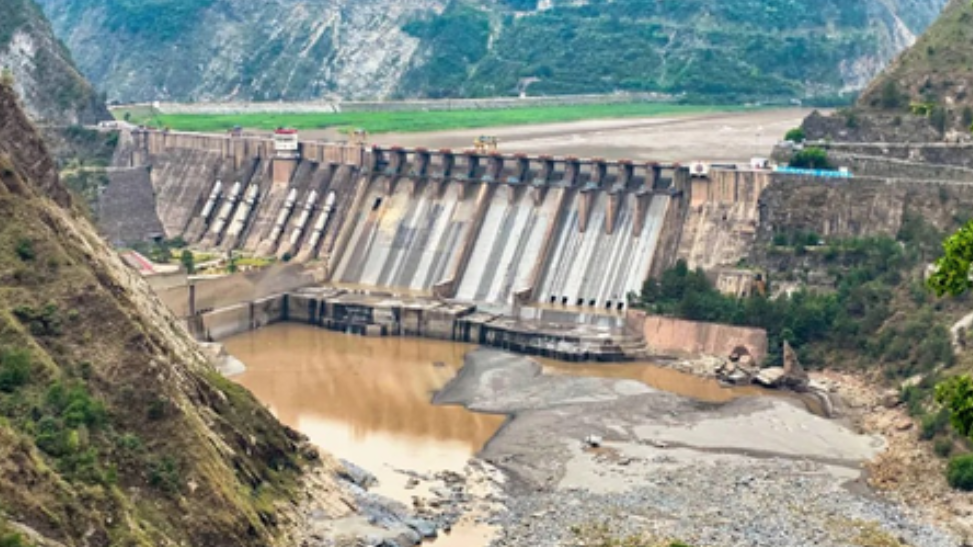
According to the analysis, Pakistan repeatedly invoked the treaty’s dispute resolution provisions to challenge Indian infrastructure projects, including the Salal, Baglihar, Kishenganga and Ratle hydroelectric projects, as well as the Tulbul navigation project. The report contends that these proceedings delayed construction, increased costs and, in some cases, led to modifications in project designs.
The analysis also notes that India’s current suspension of cooperation under the treaty has not affected the flow of water into Pakistan. Instead, it says New Delhi has paused hydrological data sharing, meetings of the Permanent Indus Commission and participation in treaty-related dispute resolution mechanisms while continuing to allow the western rivers to flow across the border.
Describing India’s measures as “calibrated” and “reversible,” the report says they could be lifted if the conditions set by New Delhi are met.
The report also contrasts India’s actions with statements by some Pakistani officials, noting that Pakistan has criticized India’s suspension of treaty cooperation and warned against any disruption of water flows. It argues that India’s measures have so far stopped short of diverting or blocking water supplies.
The Indus Waters Treaty, brokered by the World Bank and signed in 1960, governs the sharing of the waters of the Indus river system between India and Pakistan and has long been regarded as one of the world’s most enduring transboundary water-sharing agreements despite decades of strained relations between the two neighbors.