Nepal University Cancels Tibetan Studies Conference After Government Directive
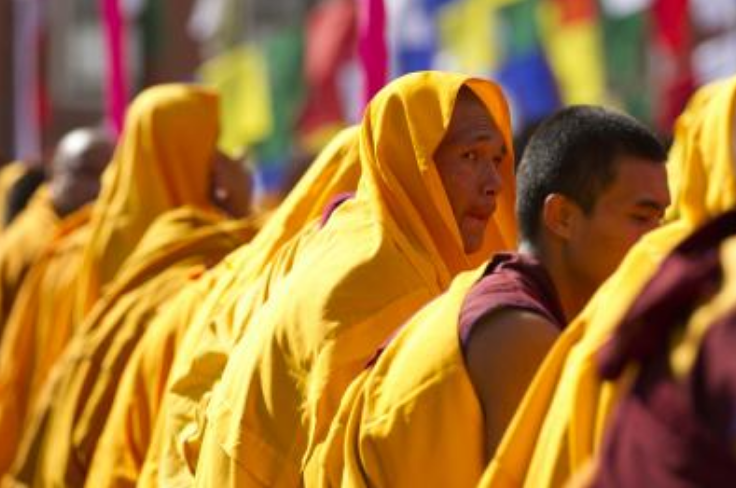

Kathmandu — Kathmandu University has withdrawn from hosting a major international conference on Tibetan studies after Nepal’s government advised organizers to cancel the event over security and political sensitivities.
The 17th Seminar of the International Association for Tibetan Studies, one of the world’s leading gatherings of Tibetan scholars, had been scheduled for Aug. 23-29 in Kathmandu. Organizers expected between 600 and 700 participants from around the world.
Kathmandu University Professor Sagar Raj Sharma, one of the conference’s chief conveners, said the university suspended the event after Chief Secretary Govinda Bahadur Karki indicated that current conditions were not appropriate for it to proceed.
“The Chief Secretary informed the university that the current environment and circumstances are not appropriate, so the program should not be held for the time being,” Sharma said.
Karki separately told The Kathmandu Post that the government had advised organizers to cancel the seminar because it could raise sensitive issues and create security risks.
Local media reports have linked the decision to concerns expressed by Chinese officials, although Kathmandu University said it had received no direct pressure from Beijing.
According to The Kathmandu Post, Chinese officials were concerned that Tibetan participants could use the conference to criticize China’s new Ethnic Unity Law, which took effect July 1.
Chinese Ambassador to Nepal Zhang Maoming reportedly discussed the conference during a July 21 meeting with Nepalese Foreign Secretary Amrit Bahadur Rai and urged authorities to remain vigilant about participants who might make pro-Tibet statements.
The newspaper also reported that Venerable Master Yinshun, a member of the Chinese People’s Political Consultative Conference and a former vice president of the Buddhist Association of China, raised the seminar during a recent visit to Nepal.
Several scholars affiliated with the Tibetan Policy Institute in India, which is connected to the Central Tibetan Administration, later withdrew from the conference, according to the report.
Sharma said the university was unaware of any connection between the government’s directive and Chinese objections.
“We did not experience any direct pressure or concern from the Chinese side,” he said. “As for the actual reason behind the decision, the government would probably know better.”
He emphasized that the seminar was intended solely as an academic gathering and had no political agenda.
“The event was purely an academic conference,” Sharma said. “It is the university’s role to organize academic debates, intellectual discussions and conferences.”
Organizers had expected one of the largest delegations to come from China, including representatives of institutions affiliated with the Chinese government. Sharma said that participation undermined claims that the event was intended to serve as an anti-China platform. (Source: IANS)