Bangladesh Garment Industry Drives River Pollution to Alarming Levels: Report
Thousands of factories discharge billions of litres of untreated waste into waterways each day, raising environmental and public health concerns.
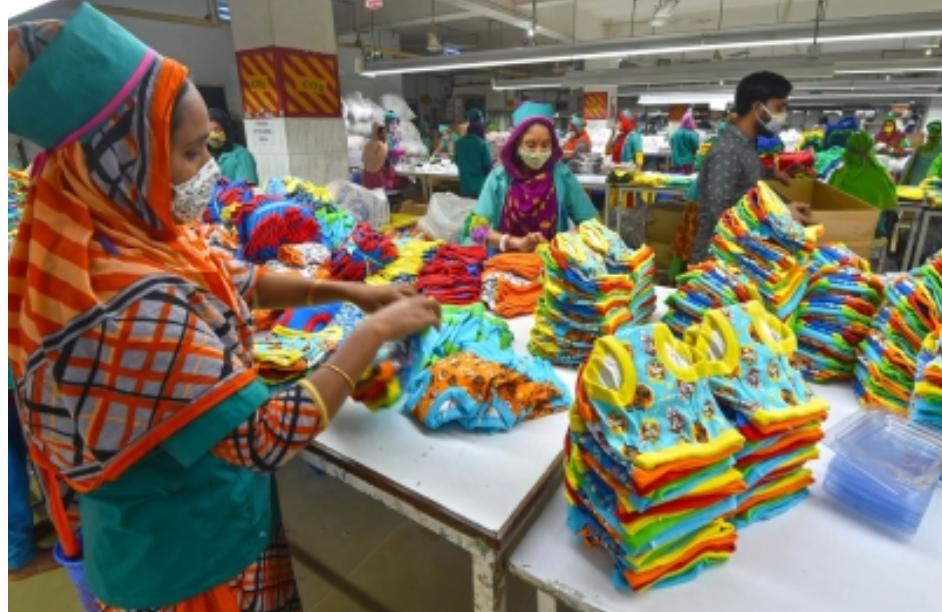

New Delhi— Bangladesh’s garment industry, which generates nearly 80 per cent of the country’s export earnings, is contributing to severe pollution of the country’s rivers and waterways, according to a new report citing World Bank data.
A report by Bangladesh-based The Daily Star said more than 7,000 factories in greater Dhaka discharge approximately 2.4 billion litres of untreated effluents every day into nearby water bodies.
The report highlighted growing concerns that weak enforcement of environmental regulations has allowed international buyers to benefit from Bangladesh’s low production costs while the environmental and health consequences are borne largely by local communities.
“The people bearing these costs are the farmers who can no longer irrigate with river water, garment workers whose lungs have absorbed years of textile dust, and children in riverside slums whose developmental delays will never appear in a corporate ESG disclosure,” the report said.
Green Certifications Face Limits
Bangladesh has made efforts to promote environmentally responsible manufacturing, including the development of 273 LEED-certified green factories.
However, the report cautioned that green-building certifications do not necessarily guarantee environmental compliance throughout the production process.
Such certifications, it said, “do not automatically guarantee that wet processing, dyeing, washing, and wastewater discharge are being managed across the entire production chain.”
The concern is particularly significant for Bangladesh’s textile and garment sector, where dyeing, washing and other wet-processing activities can generate large volumes of wastewater containing chemical pollutants.
The report also cited a Bangladesh brief from the Lancet Commission, which estimated that pollution of air, water and soil was responsible for 26.6 per cent of all deaths in Bangladesh.
Global Fashion Industry Under Scrutiny
The environmental impact of Bangladesh’s garment sector is also raising questions about the sustainability commitments of multinational fashion companies that source products from the country.
Major international fashion brands frequently promote sustainability goals such as carbon neutrality, circular fashion and net-zero supply chains.
However, the report argued that production facilities located in poorer countries can make it easier for companies to keep environmental costs outside their corporate sustainability reporting.
The result, it suggested, is a gap between sustainability commitments made by global brands and the environmental conditions experienced in manufacturing communities.
Enforcement Remains a Challenge
The report identified limited staffing and resources at Bangladesh’s Department of Environment as a major obstacle to effective enforcement.
Penalties for environmental violations are often too low to discourage illegal discharges, it said.
“If the cost of treating waste exceeds the expected penalty for illegal discharge, pollution becomes the economically rational decision,” the report said.
The publication called on the Bangladesh government to significantly increase fines for polluters and publicly identify companies and factories that violate environmental regulations.
It also urged authorities to make environmental monitoring data publicly accessible so communities, workers, regulators and international buyers can track compliance.
The report warned that the issue is becoming increasingly important not only from an environmental and public health perspective but also for Bangladesh’s economic future.
“This issue is becoming increasingly urgent because environmental compliance is evolving from a domestic regulatory concern into a condition for maintaining access to international markets,” the report said.
For Bangladesh, where the garment industry remains a cornerstone of export earnings and employment, the growing scrutiny could put pressure on manufacturers, regulators and international brands to demonstrate that economic growth is not coming at the expense of the country’s rivers, communities and public health. (Source: IANS)