Piyush Goyal Says Indian Economy Has Stayed Resilient During Global Crises
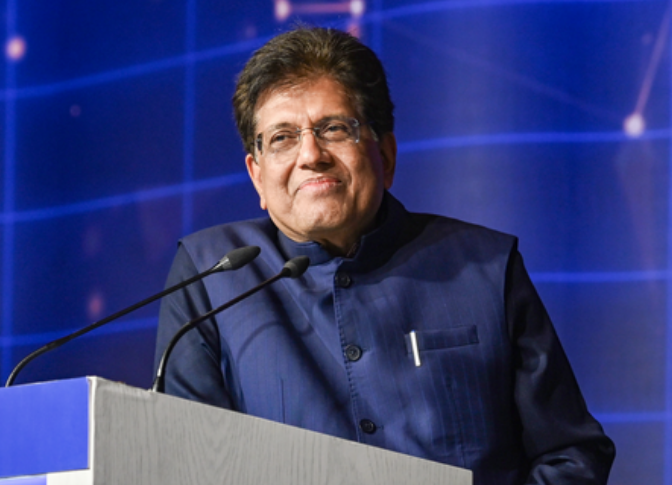

NEW DELHI — Union Commerce and Industry Minister Piyush Goyal said Tuesday that India’s economy has continued to show resilience despite global geopolitical and economic challenges, backed by strong fundamentals and rising international confidence in the country.
Speaking at the CII Annual Business Summit 2026 in New Delhi, Goyal said India has repeatedly emerged stronger from global crises. He said closer cooperation among the government, businesses and citizens would be essential to protecting the country’s economic strength.
Goyal urged Indian companies to prioritize domestic suppliers and deepen industrial cooperation within the country, saying the current global environment requires a shift away from “business as usual.”
“What we need today is a wake-up call,” Goyal said, referring to Prime Minister Narendra Modi’s recent calls for economic discipline and self-reliance.
“It cannot be the government versus the industry, it is the government and business and industry and the people of India,” he said.
Goyal framed his remarks around what he called the “India spirit,” saying the country has the ability “to defend and fortify ourselves against any challenges” despite rising geopolitical, technological and economic pressures.
In a direct message to corporate India, Goyal urged companies to support domestic producers and suppliers instead of relying too heavily on overseas sourcing.
He pointed to industrial coordination models in Japan and South Korea, saying Indian businesses should build stronger domestic linkages for their own long-term benefit and the national interest.
“Indian industry must learn to support each other. Look at the Korean and Japanese style of working,” Goyal said.
“How long are we going to be myopic in our views that we don’t recognise that the common good of Indian industry will help our individual futures also,” he said.
Goyal said strengthening India’s economic ecosystem is an “imperative,” not merely a suggestion. He said industry must take responsibility rather than depend only on government intervention.
“It doesn’t need governments to stop Indian steel from going to Korea and Japan. Industry make sure they support each other,” he said.
The comments come as countries worldwide focus more heavily on supply-chain resilience, domestic manufacturing and strategic trade dependencies amid geopolitical tensions and volatility in global energy markets. (Source: IANS)