Pearls of Wisdom: You Are Not What You Desire—You Are What You Do
Why consistent action—not intention—is the real force behind transformation


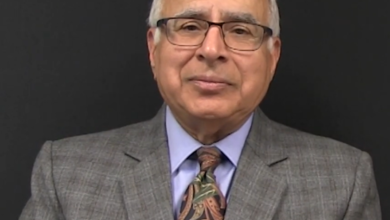
By Upendra Mishra
BOSTON — In the early 1990s, when I moved to Boston after nearly a decade in Latin America, I found myself stepping into a new world—not just geographically, but intellectually. It was here that I was introduced to the universe of self-help books.
One of the first I picked up was The 7 Habits of Highly Effective People by Stephen Covey. Soon after, I read a book by Deepak Chopra. I don’t remember the title today—but I remember a quote from it that stayed with me for decades.
It went like this:
“You are what your deep, driving desire is.
As your desire is, so is your will.
As your will is, so is your deed.
As your deed is, so is your destiny.”
At the time, I found it electrifying. It spoke directly to ambition, to dreams, to that inner fire we all carry. It felt empowering—almost like a formula for life itself.
Later, I learned that this idea traces back to the ancient Brihadaranyaka Upanishad, where the sage Yajnavalkya articulates a profound chain: desire shapes will, will shapes action, and action shapes destiny.
For years, I believed this completely.
But life, as it often does, slowly reshapes our certainties.
Over time, I began to notice something unsettling. Many people around me had powerful desires—clear ambitions, strong intent, even the willingness to act. And yet, their outcomes varied dramatically. Some succeeded. Many did not. Sometimes, the results were entirely different from what they had imagined.
It forced me to ask a difficult question: Is desire really enough?
The answer, I have come to believe, is no.
Today, my understanding has shifted. I no longer think we are defined by our desires. I believe something far simpler—and far more demanding:
We are what we practice.
Not what we wish.
Not what we intend.
But what we do—consistently, daily, quietly.
Look at athletes. Look at musicians. Look at masters in any field. Their excellence is not built on desire alone. It is built on repetition. Discipline. Routine. A deep commitment to doing the same thing, again and again, long after the initial excitement fades.
This idea is deeply embedded in the philosophy of the Samurai.
Consider Miyamoto Musashi, one of Japan’s greatest warriors. He did not become legendary because he desired greatness. He became legendary because he practiced relentlessly—refining his craft through discipline, repetition, and unwavering focus.
There is also a quieter principle in Japanese culture: Keiko—the idea that practice is not just a means to improve, but a path to embody the art itself. A swordsman does not merely learn technique; over time, he becomes the practice.
That, I believe, is the missing link between desire and destiny.
Desire may ignite the journey.
But practice determines the destination.
I came to understand this not just through observation, but through my own life.
I began learning music very late. At first, I questioned myself—what was the point of starting so late? But something inside me insisted: you must learn.
So I did.
Every Wednesday, I showed up for my lesson. Every morning and every evening, I practiced. Not perfectly. Not brilliantly. Just consistently.
It has now been nearly eight years.
And something unexpected has happened.
Music is no longer something I am simply trying to learn. When I practice, I become the music.
The same is true in my garden. When I work with the soil, I forget everything else. The noise of the world fades. I am no longer thinking about outcomes or worries. I am simply there.
I become the garden.
Through these simple, repeated acts—singing, tending plants—I have noticed a quiet transformation. My mind has learned to become absorbed in what it does, whether the task is big or small. There is a kind of stillness, a presence, that emerges only through repetition.
And in that absorption, something deeper shifts.
You are no longer chasing a result.
You are becoming the process itself.
Perhaps the ancient wisdom still holds true—but with a deeper meaning.
Yes, desire matters.
But only when it is followed by disciplined, consistent action.
Because in the end,
You are not what you dream.
You are what you practice—every single day.
(Upendra Mishra is the founder of Precise Marketing & Media and a leading advocate for rethinking how marketing drives business growth. Through his “Marketing Upside Down” perspective, he challenges the traditional focus on marketing activity and instead emphasizes revenue as the only metric that matters.With more than 30 years of experience, Upendra has developed the Precise Marketing System, a proven framework that helps companies uncover revenue leaks, focus on high-value opportunities, and build scalable growth engines. His approach has delivered measurable results, including helping a company grow from $14 million to $55 million in just three years. He is the author of Precise Marketing: The Proven System for Growing Revenue in a Noisy World, where he outlines his philosophy for succeeding in today’s crowded and uncertain marketplace. He is also the author of After the Fall: How Owen Lost Everything and Found What Truly Matters. For more, vivit: www.UpendraMishra.com)