Pearls of Wisdom: What Happens to Time?
What disappears in 46 years — and what never leaves us? A reunion in Boston revives timeless questions about memory and existence.

By Upendra Mishra
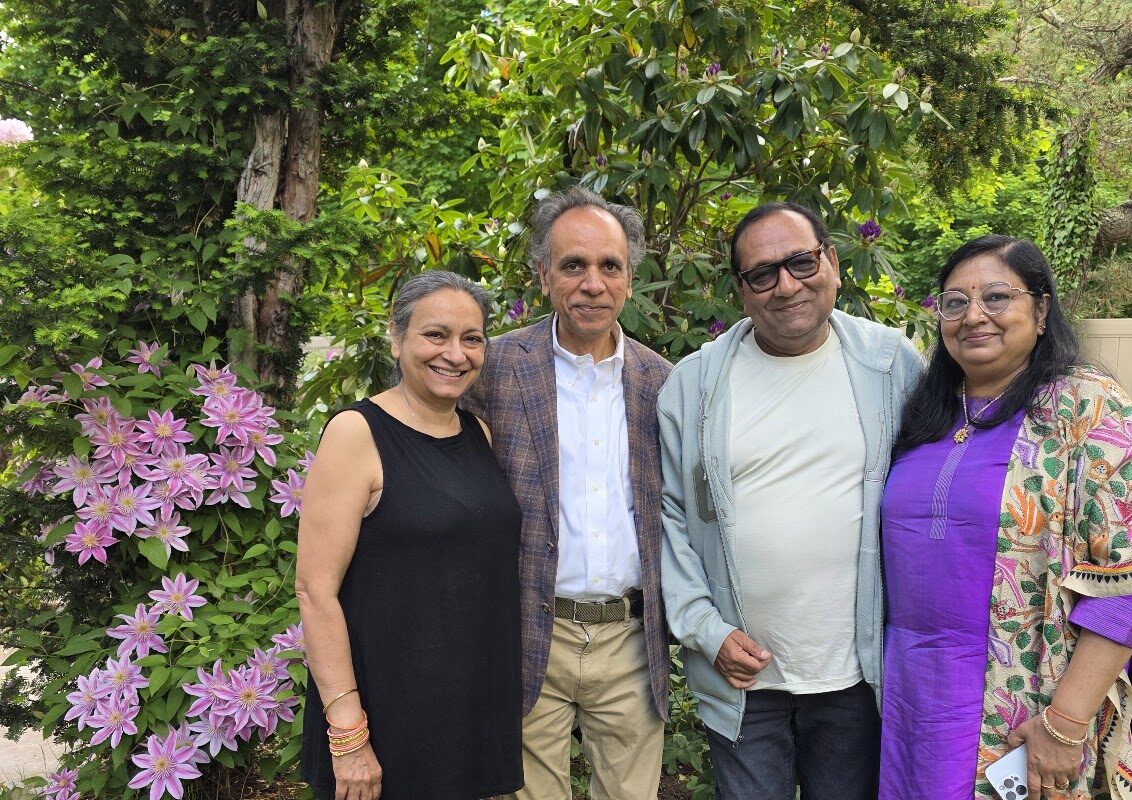
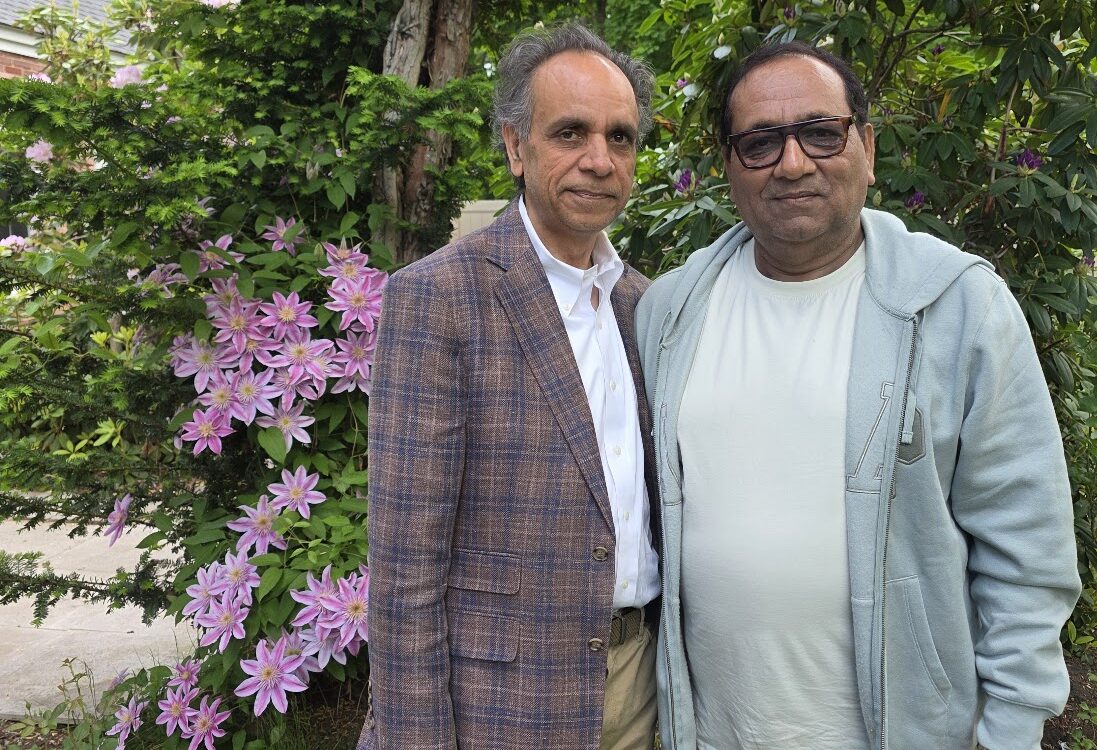
BOSTON — An old friend of mine came to Boston for the graduation of his son from MIT. We were thrilled and excited to meet after 46 years. The last time we had seen each other was in 1980. Over the decades, we had spoken a few times and exchanged occasional messages, but life had carried us into different cities, careers, families, and worlds.

Given the time constraints and busy graduation schedules, I canceled all my morning meetings so we could spend a few uninterrupted hours together. We agreed to meet at my home for breakfast the next morning.
The night before, as I sat in my usual sofa reflecting on the coming reunion, my phone rang. My friend had arrived in Boston earlier that evening.
“I wish I could come right now to see you,” he said warmly, “but the kids already have plans for tonight.”
After hanging up, I found myself unable to settle down. My thoughts drifted toward something larger than the reunion itself.
Time.
What is time?
What happens to time?
Is it real, or does it exist only in our consciousness? Does time actually move forward, or do our lives move while time itself stands still? How could 46 years disappear so completely that the excitement of meeting an old friend still felt as fresh as youth?
The questions would not leave me.
Restless and strangely emotional, I texted another friend whom I have also known for nearly 46 years.
“Meeting my Allahabad University friend tomorrow after 46 years,” I wrote. “First, where did these 46 years go? Second, it feels like just yesterday that we are in hostel and those curious and adventerous teens. Which one is true?”
 Her reply came almost instantly.
“All true.”
Those two words worked like a balm.
I smiled quietly to myself. “Okay,” I thought, “I am not losing my mind. Perhaps this is what happens when memory and time collide.”
The next morning, I woke up early and completed my daily routine. My wife and daughter lovingly prepared breakfast while I got ready to pick up my friend, Mukul Goel, and his wife, Anjali.
The drive to their hotel was unusually quiet.
Normally, music begins playing automatically the moment I start my car. But that morning, I turned it off. I switched on the radio briefly, then turned that off too. I wanted silence.
But the mind rarely obeys.
Questions flooded my thoughts:
Would he recognize me instantly?
Would I recognize him beyond the wrinkles and gray hair?
How would his wife perceive this old friendship?
Would the comfort of youth still survive after nearly half a century?
Images from 1977 flashed before me — hostel corridors, endless cups of tea, laughter-filled evenings, and dreams bigger than our understanding of life itself. Those youthful faces blended strangely with the imagined faces of the present.
When I arrived at the hotel, I parked with my hazard lights blinking and hurried toward the lobby.
There he was.
Waiting with his entire family.
The moment we embraced, 46 years disappeared.
I met his wife, Anjali, and it felt as though we had known each other for decades. His grandchildren touched my feet with warmth and respect. I met his younger daughter and son-in-law, and soon his elder daughter joined us. Within moments, there was no awkwardness, no distance, no feeling of separation. It felt like family rediscovering itself.
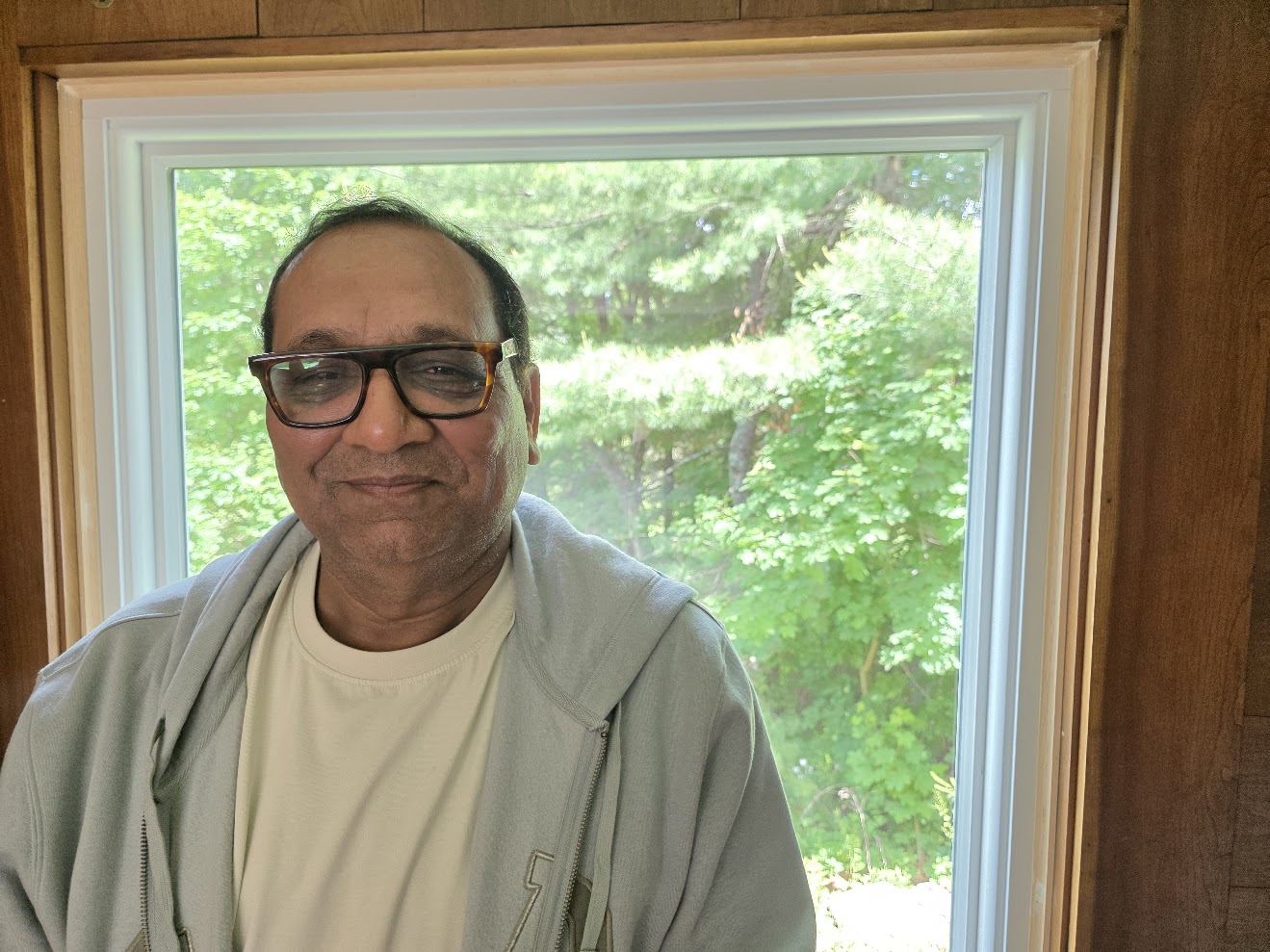
As Mukul and Anjali settled into the car and we began driving toward my home, time quietly dissolved.
Suddenly, we were no longer aging grandparents and parents carrying decades of responsibilities. We were once again young students at SSL Hostel in Allahabad University — roommates, classmates, dreamers, mischievous boys trying to understand life.
“Was your marriage arranged or a love marriage?” I teased him.
“Arranged,” he laughed.
But what amazed me was how seamlessly Anjali entered our memories and conversations, as though she had personally witnessed our youth. She knew names, stories, fragments of our shared past. The years between then and now simply stopped mattering.
When we reached home, my wife welcomed them warmly. My youngest daughter came forward and respectfully touched Anjali’s feet. That simple gesture filled me with pride and emotion. In Indian culture, such gestures are not rituals alone — they are acknowledgments of connection, affection, and belonging.
Within minutes, the house felt full of familiarity and laughter.
Stories poured out endlessly. One memory unlocked another. Every conversation opened forgotten rooms in the house of memory we had built together nearly half a century ago.
And then, too quickly, it was time to leave.
“I have so many more things to talk about,” Mukul said softly. “I don’t feel like leaving.”
Neither did I.
But I had promised his son I would drop the family at their next destination by 12:15 p.m., so time, once again, asserted its authority.
As we were walking to my car at home, I kept thinking:
I wish they could stay longer.
I wish we had another day.
Perhaps another breakfast.
Perhaps another lifetime.
But I did not say those words aloud. Some emotions are too delicate for language.
Then, as if he had read my thoughts, Mukul smiled and said, “Next time I come, I will stay with you for three or four days.”
At that moment, my wife and daughter walked all the way down the driveway to wave goodbye — a gesture that, in our family, quietly signifies affection and acceptance.
Long after I dropped them to their family, I kept thinking about time.
Over the years, I have often reflected on time while reading Indian scriptures such as the Mahabharata, the Upanishads, and especially the Yoga Vasistha. These ancient texts do not merely explain time philosophically; they soften our anxiety about it. They remind us that while we know very little about time, it nevertheless shapes every aspect of our existence.
According to Indian philosophy, time — or Kala — is not simply a sequence of seconds, minutes, hours, days, weeks, months or years. It is a cosmic force governing creation, destiny, life, and destruction. Time is portrayed as more powerful than kings, wealth, ambition, or even human will itself.
Nothing escapes time.
Not empires.
Not heroes.
Not grief.
Not love.
One of the deepest reflections on time appears in the Mahabharata after the devastating war of Kurukshetra. The victorious king Yudhishthira is shattered by the destruction around him. Wise elders explain that human beings often believe they control events, but ultimately it is Time that carries all things toward their destined transformation.
In the Bhagavad Gita, Krishna reveals his cosmic form to Arjuna and declares:
“I am Time, the destroyer of worlds.”
Perhaps no line captures the terrifying grandeur of time more powerfully.
Yet one of the most fascinating explorations of time comes from the Yoga Vasistha, one of my favorite books — a volume that permanently rests beside my bed, waiting to be opened at random pages whenever the soul seeks quiet reflection.
The Yoga Vasistha approaches time not as an absolute external reality, but as something deeply intertwined with consciousness itself.
According to its wisdom, an entire lifetime can unfold within moments.
In one story, a king falls asleep briefly and dreams another complete existence. Within that dream, he is born elsewhere, grows up, falls in love, suffers, fights battles, ages, and eventually dies. Then he awakens — only to discover that merely a few moments have passed.
The message is astonishingly profound:
Time is psychological.
The mind stretches and compresses it.
What feels eternal may last only seconds.
What seems brief may contain entire worlds.
But perhaps even more extraordinary is the story of Queen Lila in Yoga Vasistha.
After the death of her husband, Queen Lila is overcome with grief and confusion. Unable to understand the mystery of life and death, she prays to Goddess Saraswati to reveal the true nature of reality.
What Saraswati reveals is beyond imagination.
Lila is shown multiple worlds existing simultaneously — universes within universes, realities layered upon realities, each operating under its own rhythm of existence. In one realm, centuries pass in what appears to be a few hours elsewhere. In another, entire lifetimes unfold while barely a moment passes in another dimension.
As Queen Lila journeys through these mysterious planes of existence, she gradually realizes that what human beings call “past,” “present,” and “future” may not be fixed realities at all. They are experiences shaped by consciousness, awareness, and perception.
The story feels astonishingly modern even today.
It almost anticipates contemporary discussions about relativity, dreams, consciousness, parallel realities, and the elasticity of human perception. The Yoga Vasistha suggests that reality itself is somewhat dreamlike — not unreal in a simplistic sense, but fluid, mental, and dependent upon awareness.
And perhaps that is why meeting an old friend after 46 years can feel both impossibly distant and intimately immediate at the same time.
Perhaps time never truly leaves us.
Perhaps it simply waits quietly inside memory, ready to awaken through a familiar voice, an old laugh, a shared silence, or an unexpected embrace.
That morning in Boston, while sitting across the breakfast table from my friend after nearly half a century, I realized that the young boys we once were had never entirely disappeared. They were still alive somewhere within us, untouched by calendars and aging.
Forty-six years had passed.
And yet, somehow, no time had passed at all.
Later that evening, I returned to the text exchange with my old friend — the message I had sent in a moment of philosophical restlessness the night before.
“Where did these 46 years go?” I had asked her. “It feels like just yesterday. Which one is true?”
Her answer now felt wiser than ever.
“All true.”
(Upendra Mishra is the founder of Precise Marketing & Media and a leading advocate for rethinking how marketing drives business growth. Through his “Marketing Upside Down” perspective, he challenges the traditional focus on marketing activity and instead emphasizes revenue as the only metric that matters.With more than 30 years of experience, Upendra has developed the Precise Marketing System, a proven framework that helps companies uncover revenue leaks, focus on high-value opportunities, and build scalable growth engines. His approach has delivered measurable results, including helping a company grow from $14 million to $55 million in just three years. He is the author of Precise Marketing: The Proven System for Growing Revenue in a Noisy World, where he outlines his philosophy for succeeding in today’s crowded and uncertain marketplace. He is also the author of After the Fall: How Owen Lost Everything and Found What Truly Matters. For more, vivit: www.UpendraMishra.com)