Microsoft President Brad Smith Rejects Vance’s H-1B Allegations, Warns Green Card Restrictions Could Hurt US Tech Industry
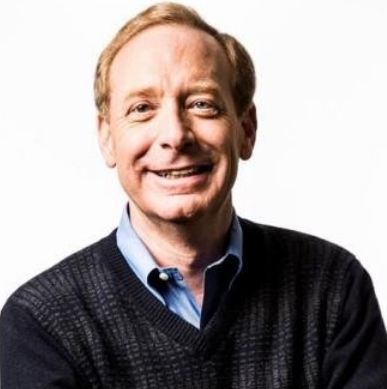

WASHINGTON — Microsoft President Brad Smith has rejected Vice President JD Vance’s allegations that the technology giant misuses the H-1B visa program, warning that restrictions on employment-based green cards could damage America’s technology industry and its ability to attract global talent for decades.
In an interview with Politico published Thursday, Smith described Vance’s accusations as “completely off base” and defended Microsoft’s hiring practices, compensation policies and reliance on skilled immigrant workers.
“Someone had failed to inform the vice president accurately about our numbers,” Smith said.
The Microsoft executive emphasized that most of the company’s green card applications involve employees who have already worked at Microsoft for years rather than newly recruited foreign workers.
“Unfortunately, it’s just because the green card backlog is so long,” he said.
Smith also rejected allegations that Microsoft uses the H-1B visa program to pay foreign employees lower wages than American workers.
“It doesn’t matter whether you came on a visa or you’re an American worker, everybody has the same compensation system,” he said.
According to Smith, Microsoft hired more than 9,000 U.S.-born workers last year, a figure he said had been overlooked in the administration’s criticism of the company’s employment practices.
“We will stand by our record,” Smith said. “And I hope that folks at the White House might look again and look at what we think is a more accurate picture.”
His comments followed the Trump administration’s decision to suspend permanent labor certification applications from Microsoft and seven other companies, including Indian technology firms Infosys, Tata Consultancy Services, Wipro and HCLTech.
The Department of Labor announced the suspensions on October 8, affecting applications under the Permanent Labor Certification Program, commonly known as PERM.
PERM certification is typically the first step in the employer-sponsored green card process, allowing companies to sponsor foreign workers for permanent residency.
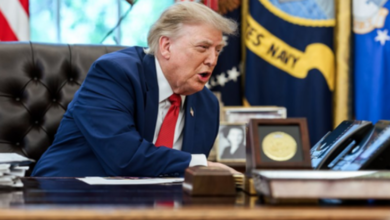
Vance accused Microsoft of using the H-1B program to avoid hiring American workers at higher salaries and said restrictions on the companies would remain in place as long as necessary.
“You’re a great American company, but you’ve got to hire great American workers,” Vance said.
As of October 13, immigration attorneys reported that the Labor Department had not published a written notice detailing the scope or duration of the suspensions.
Federal regulations allow PERM processing to be suspended for up to 180 days during fraud investigations. None of the eight companies had been charged with wrongdoing.
Smith’s interview, conducted Wednesday during an artificial intelligence summit in Dublin, also highlighted what he described as a contradiction in the administration’s approach to skilled immigration.
The Labor Department announced the restrictions on the same day President Donald Trump presented Microsoft CEO Satya Nadella with the National Medal of Technology and Innovation.
Nadella, who was born in India, previously held an H-1B visa before becoming a U.S. citizen and eventually leading Microsoft.
“We should consider the fact that when the president honored six Americans with these technology and science medals, five of the six had come to the United States as immigrants,” Smith said.
“Think about what those five individuals have done for the well-being, even the wealth and standard of living, of Americans across the country. Let’s not put that at risk,” he added.
Smith warned that policies discouraging skilled immigration could push the next generation of artificial intelligence researchers and software engineers toward competing countries.
He cautioned against “sending — intentionally or inadvertently or otherwise — signals that send the most talented next wave of AI [or] SI software engineers to other countries, rather than the United States”.
Microsoft had previously defended its immigration practices in an October 8 statement, saying that approximately 80% of the 6,000 H-1B applications it filed during the previous fiscal year involved extensions or status changes for existing employees.
“We pay our H-1B employees the same as any other employees doing comparable work,” the company said.
The restrictions have particular significance for Indian professionals, who account for the largest share of H-1B visa holders and face some of the longest employment-based green card backlogs because of country-specific immigration limits.
India’s Ministry of External Affairs criticized the U.S. measures last week, saying they “do not advance the shared ambitions of both countries”.
The dispute comes as Washington and New Delhi seek to strengthen economic and technological cooperation, with skilled immigration remaining an important issue in the bilateral relationship. (Source: IANS)