Democratic Control of Congress Could Reshape H-1B Visa Policy and U.S.-India Trade Relations
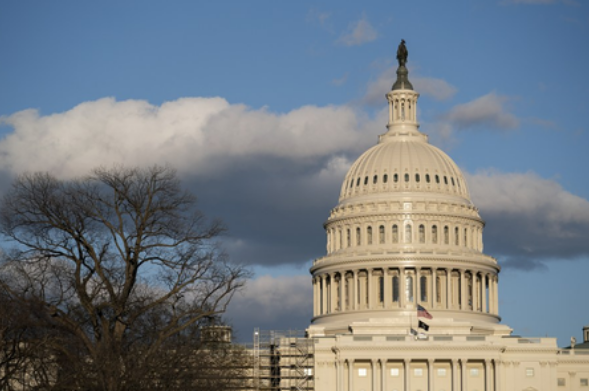

WASHINGTON–Democrats’ projected takeover of both chambers of the U.S. Congress could bring increased scrutiny of President Donald Trump’s immigration restrictions and tariffs on Indian goods, potentially benefiting Indian professionals and businesses, although the party would face significant legal and political obstacles to reversing the administration’s policies.
The election results give Democrats control of congressional committees responsible for immigration, visa programs and international trade. However, Trump’s $100,000 fee on certain new H-1B visa petitions and tariffs of up to 50 percent on Indian imports were introduced through executive actions that Congress cannot easily overturn without presidential approval or sufficient votes to override a veto.
By Wednesday evening, Democrats had secured at least 242 seats in the House of Representatives, compared with 151 for Republicans, with 42 races still undecided.
NBC’s election projection estimated that Democrats could finish with approximately 259 House seats, representing a net gain of 34.
In the Senate, Democrats were projected to win 54 seats against 44 for Republicans, a net gain of seven seats, with races in Mississippi and Alaska still unresolved.
The shift in congressional power could have important consequences for the H-1B visa program, which allows American employers to hire foreign professionals in specialized occupations and is particularly important to Indian workers in technology, healthcare and other skilled industries.
According to a U.S. Citizenship and Immigration Services report to Congress, workers born in India accounted for approximately 70 percent of approved H-1B petitions in fiscal 2025. Chinese nationals represented about 12 percent, making them the second-largest group.
The election also resulted in the defeat of several Republican politicians who had advocated tighter restrictions on employment-based immigration.
In Ohio, Republican Senator Jon Husted lost his reelection bid to Democrat Sherrod Brown.
Husted had sponsored legislation, S.5638, that proposed increasing the wage threshold for certain H-1B exemptions to approximately $140,000.
In Texas, Republican Ken Paxton lost his U.S. Senate race to Democrat James Talarico.
As Texas Attorney General, Paxton had initiated investigations into the use of H-1B visas at nearly 30 businesses in North Texas, raising questions about employer compliance with federal immigration requirements.
Democratic lawmakers have already introduced proposals challenging two Trump administration policies with significant implications for India and Indian professionals.
Members of the New Democrat Coalition previously urged Homeland Security Secretary Kristi Noem to exempt healthcare professionals from the $100,000 H-1B fee established under Trump’s September 2025 proclamation.
“The Proclamation issued September 19, 2025, titled ‘Restriction on Entry of Certain Nonimmigrant Workers,’ poses a serious threat to the healthcare workforce in our districts,” the lawmakers wrote.
The fee has raised concerns among employers that depend on foreign-trained doctors, researchers and other highly skilled workers, including professionals from India.
Democrats have also challenged the administration’s trade restrictions on Indian imports.
In December 2025, Democratic Representatives Deborah Ross, Marc Veasey and Raja Krishnamoorthi introduced House Joint Resolution 134, seeking to terminate the national emergency declaration used by Trump to impose tariffs reaching 50 percent on certain Indian goods.
The resolution was referred to the House Foreign Affairs Committee but had not received a vote.
“President Trump’s irresponsible tariff strategy toward India is a counterproductive approach that weakens a critical partnership,” Krishnamoorthi said when the measure was introduced.
Krishnamoorthi will not return to the House in January after losing his Democratic Senate primary.
With Democrats taking control of the House, the party will gain leadership of several committees that oversee immigration enforcement, employment visas and international trade.
The House Judiciary Committee has jurisdiction over immigration policy and related enforcement matters, while its immigration subcommittee examines issues involving immigration, naturalization and border security.
The House Homeland Security Committee oversees federal agencies responsible for immigration enforcement and administration, including U.S. Customs and Border Protection, Immigration and Customs Enforcement, and U.S. Citizenship and Immigration Services.
Meanwhile, the House Ways and Means Committee has authority over tariffs, trade agreements and other major aspects of federal trade policy.
Democratic control of these committees would allow lawmakers to conduct hearings, demand information from federal agencies and scrutinize the administration’s implementation of immigration and trade policies.
Congress could also use the federal appropriations process to influence funding for the Department of Homeland Security and related agencies.
However, committee oversight and control of federal spending would not automatically eliminate the H-1B fee or tariffs imposed through presidential executive authority.
Legislation overturning those measures would generally require Trump’s approval or a two-thirds majority in both chambers of Congress to override a presidential veto.
Based on the projected election results, Democrats would fall short of the votes needed to override a veto without substantial Republican support.
The new congressional majority would also increase the influence of Indian American lawmakers on immigration and U.S.-India relations.
If Democrat Amish Shah’s projected victory in Arizona’s 1st Congressional District is confirmed, six Indian American members of the House are expected to serve in the Democratic majority.
They include Representative Pramila Jayapal, who previously held an H-1B visa, and Representative Ro Khanna, Co-Chair of the Congressional Caucus on India and Indian Americans.
Their positions could provide additional opportunities to raise concerns about skilled immigration restrictions, employment opportunities and the economic relationship between the United States and India.
Even with Democrats controlling Congress, the Trump administration would retain substantial authority over immigration regulations.
Before the midterm elections, the administration proposed additional rules affecting H-1B workers and international students, including Indian nationals, with public comment periods scheduled to close in early November.
Those regulatory initiatives could continue through the executive branch regardless of the congressional election results, subject to applicable legal and administrative requirements.
The new Congress will convene in January 2027, when Democrats will gain greater authority to investigate, challenge and potentially negotiate changes to the administration’s immigration and trade policies.
For Indian professionals and businesses, the election creates the possibility of a more favorable congressional environment, but immediate changes to H-1B visa fees and tariffs remain uncertain while Trump retains the presidency. (Source: IANS)