Florida Governor Ron DeSantis Blames Republican Midterm Defeat on Failure to Eliminate H-1B Visas
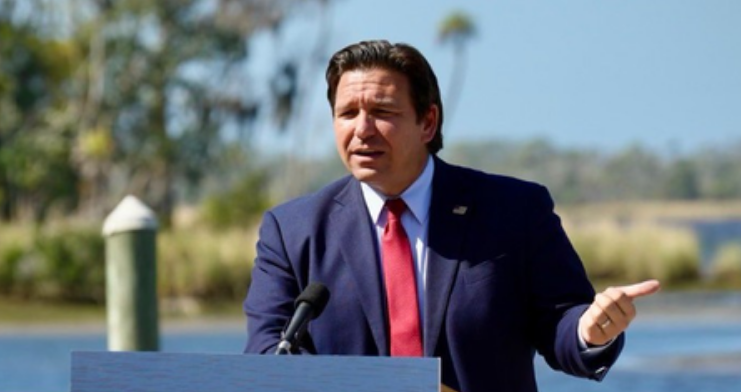

WASHINGTON–Florida Governor Ron DeSantis has criticized Republican lawmakers for failing to eliminate the H-1B visa program, which is widely used by Indian technology professionals, arguing that the party’s inability to deliver on conservative priorities contributed to its sweeping losses in the U.S. midterm elections.
DeSantis described Tuesday’s election results as a near-catastrophic setback for Republicans, blaming both dissatisfaction among independent voters and frustration among Republican supporters who stayed home.
During an interview with Fox News host Laura Ingraham, DeSantis questioned why Senate Republicans had failed to pursue major changes to immigration policy, including eliminating the H-1B program and making President Donald Trump’s executive immigration measures permanent.
Asked whether Republicans had made a mistake by refusing to eliminate the Senate filibuster, DeSantis expressed skepticism that Republican senators were willing to pursue sweeping conservative legislative reforms.
“I mean, why haven’t we done immigration, shut off H-1B visas? Why haven’t we codified Trump’s immigration executive orders?” DeSantis said.
He also questioned why Congress had not “stripped jurisdiction from the federal courts over deportation cases.”
“There’s so many things that could have been done, they didn’t even attempt it,” he said.
DeSantis argued that the election results reflected dissatisfaction with Republican leadership in both Congress and the White House.
He described the outcome as “a rebuke of the president and the Congress by Democrats, independents and some Republicans that crossed over.”
However, he also blamed low turnout among the party’s traditional supporters, suggesting that frustration with congressional inaction had discouraged Republican voters from participating.
“A lot of our voters who stayed home, they stayed home because they were frustrated with the lack of productivity from Republicans in the House and Senate,” he said.
“So it’s really both sides of Pennsylvania Avenue. It’s not just one,” DeSantis added.
Speaking at a separate news conference in Florida on Wednesday, the Governor offered an even sharper assessment of the Republican Party’s performance.
He described the election as “close to an extinction-level event for Republicans in many parts of the country, as we have seen probably in the last 100 years.”
DeSantis argued that the results reflected voter dissatisfaction with Republican leadership rather than widespread enthusiasm for Democratic candidates.
“This was not a positive view of the Democrats. This was a rejection of Republicans in Washington and Democrats just happened to be the beneficiary,” he said.
He pointed specifically to Republican losses in Texas, traditionally one of the party’s strongest political bases.
According to DeSantis, Republicans suffered defeats in the state’s closely watched U.S. Senate race, gubernatorial contest, attorney general election and other statewide races.
“If the Republican Party doesn’t have Texas as an anchor, then we’re not gonna be viable nationally going forward,” he warned.
Republicans lost control of both chambers of Congress in Tuesday’s elections, while Republican Byron Donalds won Florida’s gubernatorial race to succeed DeSantis, according to Fox News.
DeSantis, whose term ends in January, has not ruled out another presidential campaign in 2028.
His criticism of the H-1B program is consistent with his longstanding opposition to the employment visa system, which allows American companies to recruit highly skilled foreign workers.
During an appearance near Lakeland, Florida, on September 14, DeSantis explicitly called for abolishing the program.
“I think we should eliminate H-1B visas in the United States, to be quite frank,” he said, according to Fox 49.
The H-1B program is particularly important to Indian professionals, who account for the overwhelming majority of its beneficiaries.
According to an annual report released in April by U.S. Citizenship and Immigration Services, approximately 70 percent of the roughly 406,000 H-1B petitions approved during fiscal 2025 involved workers born in India.
Chinese nationals accounted for approximately 12 percent of approvals, making them the second-largest group of beneficiaries.
Indian professionals represented an even larger share of petitions approved for continuing employment, accounting for approximately 78 percent of those approvals.
The H-1B program allows U.S. employers to hire foreign workers in specialty occupations requiring specialized knowledge, particularly in technology, engineering and related fields.
The program generally provides 65,000 new visas annually, with an additional 20,000 reserved for individuals holding advanced degrees from U.S. institutions.
Eliminating the H-1B program would require congressional legislation, creating a significant political challenge for Republicans after Democrats gained control of both the House and Senate in the midterm elections.
DeSantis’s renewed criticism places the future of skilled immigration at the center of the Republican Party’s debate over its electoral losses, with potential implications for Indian professionals and American companies that depend on international talent. (Source: IANS)