Markets End Flat as Geopolitical Tensions Weigh on Sentiment


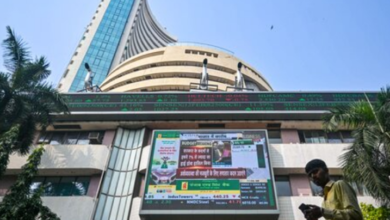
MUMBAI — Indian equity markets ended Tuesday’s session largely unchanged, with benchmark indices surrendering most of their intraday gains as rising tensions between the United States and Iran dampened investor sentiment.
The Nifty edged up 11.30 points, or 0.05 percent, to close at 24,364.85, while the Sensex added 27 points, or 0.03 percent, to settle at 78,520.30.
Both indices traded higher for much of the day but lost momentum toward the close as geopolitical uncertainty in West Asia weighed on risk appetite.
Market volatility increased sharply, with the India VIX jumping 10.5 percent to 19.01.
Analysts said the 24,400–24,500 range remains a key resistance zone for the Nifty. A sustained breakout above this band could push the index toward 24,850 and eventually the 25,000 level, where selling pressure is expected to intensify.
On the downside, 24,200 is seen as immediate support, aligned with the 50-day moving average. A break below that could bring the 24,100–24,000 range into focus as a critical demand zone, supported by prior price action and positioning data.
Among individual stocks, Jio Financial Services, Hindalco Industries, and Tata Motors were among the top laggards, weighing on the broader market.
Sectorally, public sector bank and media stocks outperformed, while IT and real estate shares faced notable selling pressure.
The subdued finish came amid renewed tensions in West Asia after the U.S. Navy seized an Iranian-flagged cargo vessel in the Gulf of Oman. The development followed reports that Iran had fired at commercial vessels transiting the Strait of Hormuz, a key global oil route.
The incidents have raised concerns about potential disruptions to global oil supplies and cast doubt over the prospects for upcoming diplomatic talks between Washington and Tehran.
Analysts said that while domestic fundamentals remain supportive, global developments are likely to drive near-term market direction, keeping investors cautious.
“Renewed geopolitical tensions, particularly around the U.S.–Iran conflict, intensified concerns after reports of disruptions impacting energy infrastructure,” an analyst said. (Source: IANS)