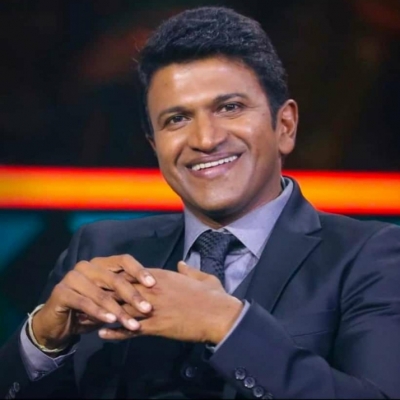

Bengaluru– Popular Kannada actor Puneeth Rajkumar, son of Kannada cinema legend Rajkumar, passed away at the age of 46 following a massive heart attack on Friday. Consequently, security has been beefed up across Karnataka.
Former Prime Minister H.D. Deve Gowda, Karnataka Congress President D.K. Shivakumar, and former Union minister S.M. Krishna expressed their condolences on the untimely death of Puneeth.
According to family sources, Puneeth suffered a heart attack while working out at a gym. Immediately he was shifted to Vikram Hospital. Dr Ranganath Nayak stated that his condition was critical when he was brought to the hospital. But the efforts of doctors to revive him went in vain.
Puneeth’s health worsened on Thursday evening but he did not visit a doctor. He went to the gym in the morning and developed chest pain. He was taken to a private clinic where ECG was done. During check up, his condition worsened and he was rushed to Vikram Hospital, where he succumbed to cardiac arrest.
Puneeth has donated his eyes. He is survived by wife Ashwini and daughters Vanditha and Dhruthi.
Security has been beefed up all across the state including state capital Bengaluru to manage the situation. The Kannada film industry has come to a grinding halt and all movie shows have been cancelled in the state.
Bengaluru Police Commissioner Kamal Pant has reached the residence of Puneeth at Sadashivanagar. Chief Minister Basavaraj Bommai and Kannada actor Puneeth’s elder brother Shivarajkumar are also expected to address the media shortly.
Puneeth was born on March 17, 1975 and was fondly known as ‘Appu’. He was also a singer, television presenter and producer. He acted in more than 29 films and has also appeared in many films as a child artiste. He won the National Film Award for Best Child Artiste for his role in ‘Bettada Hoovu’. He made his debut in the Kannada film industry with the movie ‘Appu’ in 2002. (IANS)