
India Warns of Global Conflict, Energy Risks as Economy Shows Strength
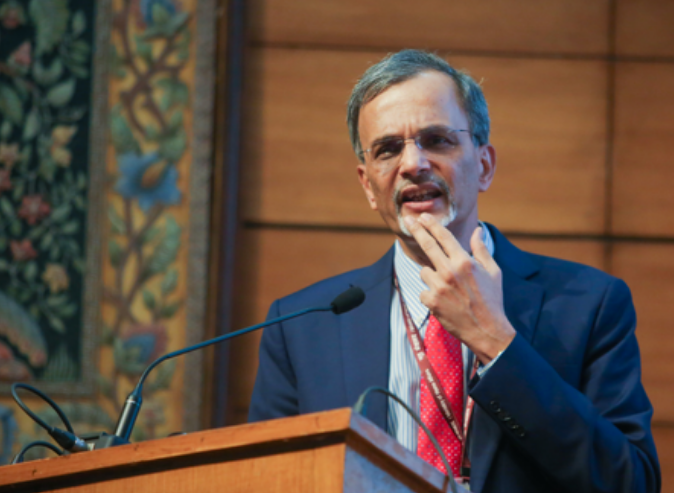

WASHINGTON — India faces growing risks from global conflict and volatile energy prices but is entering the new financial year from a position of economic strength, Chief Economic Advisor V. Anantha Nageswaran said Wednesday.
Speaking at the U.S.-India Economic Forum 2026, Nageswaran said the government’s 6.5 percent GDP growth forecast could prove conservative, while cautioning that global uncertainty remains significant.
“We shouldn’t underestimate or understate the wide range of uncertainty that prevails,” he said.
He identified four key ways global tensions are impacting India: rising energy costs, disruptions to trade, higher logistics and insurance expenses, and weaker remittance flows.
“It is not purely about the price of oil… it is about the commodities that matter,” he said, noting that India’s landed crude cost rose to about $113 per barrel in March.
Nageswaran warned that even if geopolitical tensions ease, restoring stability in energy markets could take longer.
“It’s one thing for the conflict to end… but another thing for restoration of normalcy in energy markets,” he said.
Remittances, a major source of income for India, could also be affected. The country received about $124 billion in 2024–25, with roughly half coming from the Gulf region. Disruptions there could reduce inflows by $5 billion to $10 billion, he said.
Despite these risks, Nageswaran emphasized that India’s economic fundamentals remain solid.
“We are facing them with a position of macroeconomic strength,” he said.
India’s GDP is estimated to have grown 7.6 percent in the year ending March 2026, supported by steady performance across agriculture, manufacturing, and services, along with moderate inflation and improving fiscal balances.
On trade, he said India has expanded its global engagement through new agreements and remains open to foreign goods and services.
“The Indian market is open for foreign goods and services,” he said, citing agreements with the United Kingdom, European Union, and the United States.
These deals are expected to help cushion external shocks and strengthen India’s role in global value chains.
Nageswaran also pointed to a sharp increase in public investment, with capital expenditure rising more than threefold in recent years, boosting infrastructure, logistics, and connectivity.
He highlighted longer-term challenges, particularly the impact of artificial intelligence on jobs.
“The full answer lies in being able to create jobs in AI-insulated sectors,” he said.
He called for expanded vocational training and job creation in sectors such as healthcare, hospitality, and elder care.
Looking ahead, Nageswaran said India must build “strategic buffers” in key commodities to reduce vulnerability to supply disruptions.
The forum, organized by the U.S.-India Strategic Partnership Forum, brought together policymakers and business leaders to discuss bilateral ties and economic challenges.
India, now the world’s fourth-largest economy, is targeting a $5 trillion economy in the coming years, even as global risks rise due to geopolitical tensions and energy market instability. (Source: IANS)