India walks a tightrope amid US-Iran tensions: Former White House official

By Lalit K. Jha
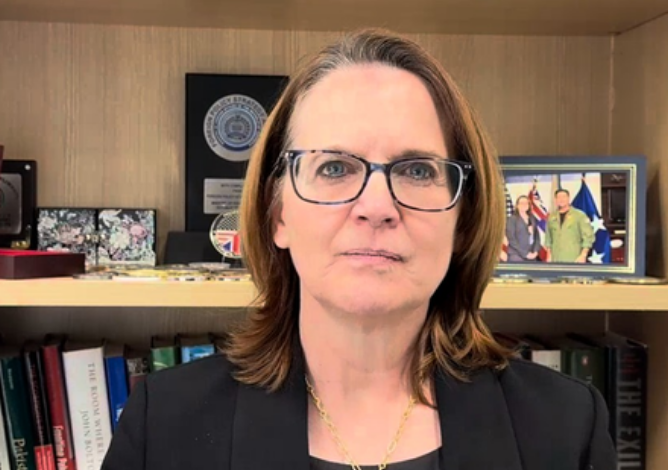
Washington– The ongoing US military operations involving Iran are straining India’s energy security and testing its diplomatic balance, according to Lisa Curtis, a former White House official for South Asia, who said New Delhi is navigating a complex and increasingly volatile situation.
“Well, I think first of all, it’s impacting India’s oil supply. India really relies on oil coming from the Middle East, so I’m sure Indian officials are very concerned about rising oil prices and how the crisis will impact the Indian economy,” Curtis told IANS in an interview.
She identified energy as the immediate concern for India, given its dependence on Middle Eastern crude. The spike in oil prices triggered by the conflict could weigh on India’s economic outlook.
Curtis also pointed to a diplomatic complication arising from recent US military action against Iran. “The US attacked an Iranian vessel shortly after it participated in an India-hosted naval exercise, a multilateral naval exercise,” she said, calling it “embarrassing for India” and a source of tension in the bilateral relationship.
India, she said, expects Washington to uphold a rules-based international order. “India looks to the United States to be a responsible player and to protect freedom of the seaways and protect other countries’ sovereignty and protect them from coercion,” she said.
“But in this case, it’s the US that is acting in a disruptive manner to that rules-based order,” Curtis added.
As a result, India is adopting a cautious stance. “India is, you know, trying to take a more neutral position,” she said, noting that New Delhi is balancing “strong relations with Iran” with the importance of its economic and strategic ties with the United States.
She said India’s approach mirrors that of other US allies. Countries such as Japan, Australia, and the United Kingdom are “trying to balance this idea of maintaining a strong partnership with the United States, but not getting drawn into a war that they are not part of.”
Curtis also said Washington appears increasingly isolated over its Iran policy. “I do think that the US is isolated from its major allies and partners when it comes to the military operations in Iran,” she said.
She noted that allies are reluctant to commit military assets. “Countries do not wanna send, you know, warships to escort oil tankers through the Horus Straits… They don’t want to be involved in the military action that’s happening,” she said.
Instead, partners are seeking non-military ways to support stability. “They wanna support the United States… trying to help reduce risk of oil tankers… release strategic reserves into the market,” she said.
On bilateral ties, Curtis said the US-India relationship has improved recently. “I think the US-India strategic relationship is at a much better place than it was, you know, six months ago,” she said, citing the “completion of the interim trade framework deal” as a key step.
She added that US policy shifts on Russian oil could benefit India. “The fact that the United States is allowing Russia… to sell oil… will help India,” she said, noting that “anything that the US can do to help India navigate the energy crisis will be welcome.”
However, Curtis warned that policy unpredictability in Washington is raising concerns. “It demonstrates just how fickle and unpredictable this Trump administration is,” she said, adding that “the unpredictable nature… is something that is alarming other countries.”
“I think this is something that’s gonna cause India to deal cautiously with this Trump administration moving forward,” she said. (Source: IANS)