Study Finds Dwarf Galaxies Could Host Intermediate-Mass Black Holes
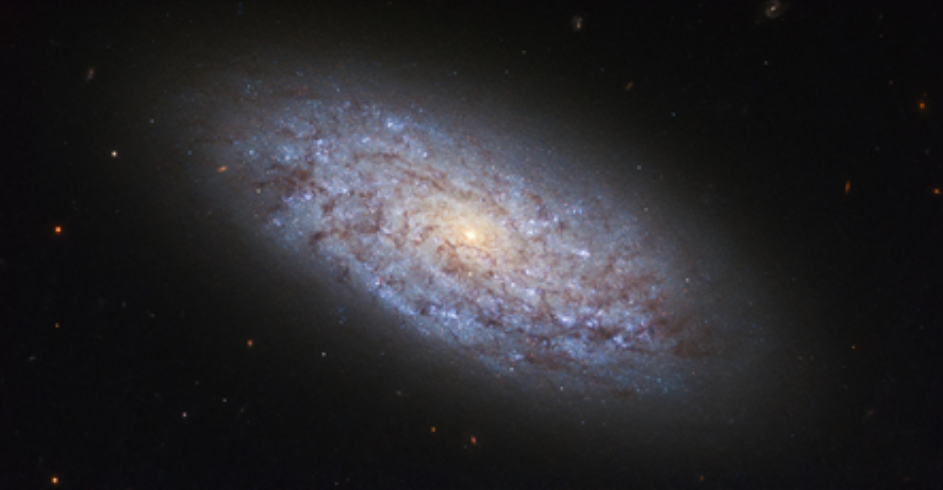

NEW DELHI — Indian scientists have found that some of the smallest galaxies orbiting the Milky Way may be capable of hosting black holes, with new research showing data consistent with the presence of intermediate-mass black holes.
The study, conducted by researchers K. Aditya and Arun Mangalam of the Indian Institute of Astrophysics, examined dwarf spheroidal galaxies—faint, low-mass systems that are dominated by dark matter and lack significant gas.
Using detailed dynamical models, the researchers analyzed three key gravitational components in these galaxies: stars, dark matter halos, and a potential central black hole. By studying how stars move within these systems, they were able to estimate the possible mass of any central black hole.
“We find that our models, combined with the data, place strong upper limits on central black hole masses of these dwarf spheroidal galaxies, typically below one million solar masses, with several galaxies allowing only much smaller values,” Mangalam said.
He added that while the findings do not confirm the existence of large black holes in these galaxies, they are “fully consistent with the presence of intermediate-mass black holes.”
According to the Ministry of Science and Technology, the study offers important insights for both theoretical models and future astronomical observations.
“By establishing a unified relation down to the smallest galaxies, it provides a critical benchmark for simulations of galaxy and black hole evolution,” Mangalam said.
The research comes as astronomers prepare for a new generation of observational tools, including the proposed National Large Optical Telescope and the Extremely Large Telescope, which are expected to provide significantly improved resolution and sensitivity.
These advanced facilities could allow scientists to more precisely track stellar motion in faint galaxies, helping to detect subtle signatures of black holes that have so far remained elusive.
While supermassive black holes are commonly found at the centers of large galaxies, detecting them in dwarf spheroidal galaxies has proven far more difficult due to their faintness and lack of gas. The new findings suggest that even these small, dark matter-dominated systems may still follow broader patterns linking galaxies and black holes. (Source: IANS)