India Raises Concern Over Hormuz Shipping Attacks, Maintains Neutral Position on UN Veto

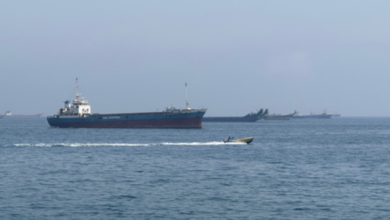
UNITED NATIONS — India voiced concern over recent attacks on commercial shipping in the Strait of Hormuz while maintaining a neutral position on the veto by Russia and China of a United Nations Security Council resolution aimed at Iran.
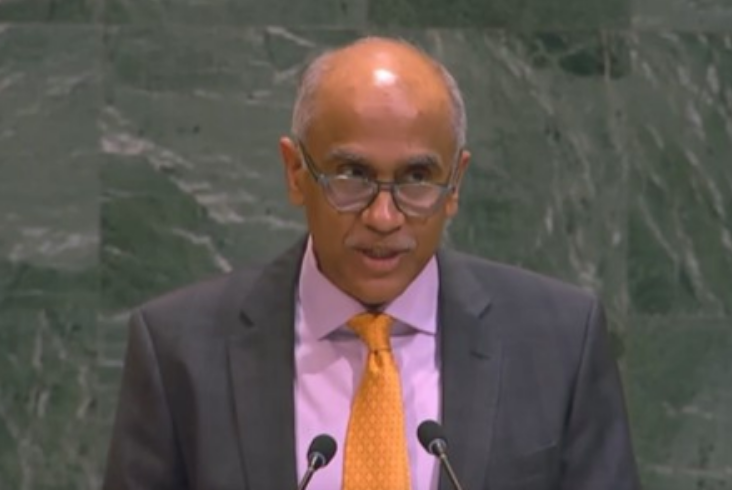
Speaking at a UN General Assembly meeting convened to address the veto, India’s Permanent Representative called for restraint without directly taking sides in the dispute.
“We have urged all states to promote dialogue and diplomacy and de-escalation of tensions, and to purposefully address underlying issues,” he said. “We have also called for respect of sovereignty and territorial integrity of all states.”
The meeting was held under a UN process requiring permanent Security Council members to explain their vetoes before the General Assembly within 10 days.
On April 7, Russia and China blocked a resolution introduced by Bahrain that called on Iran to halt attacks on commercial shipping and uphold freedom of navigation. The veto drew criticism from the United States, Israel, and Gulf nations, while Moscow and Beijing defended their decision.
In a brief statement, India’s envoy avoided commenting directly on the veto but underscored the country’s concerns over maritime security.
“An aspect of particular concern for India for its energy and economic security relates to commercial shipping through the Strait of Hormuz,” he said.
The strategic waterway handles roughly 20 percent of global fossil fuel traffic, making it critical to global energy supplies. Disruptions in the region have already affected India, which relies heavily on energy imports.
“India has deplored the fact that commercial shipping was made a target of military attacks in this conflict,” he said, adding that Indian seafarers had been among those killed. “We reiterate that the targeting of commercial shipping and endangering innocent civilian crew members, or otherwise impeding the freedom of navigation and commerce in the Strait of Hormuz, are unacceptable. International law in this regard must be fully respected.”
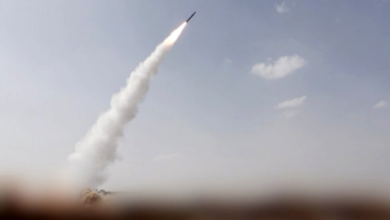
The tensions follow Iranian attacks on shipping in the Strait after joint U.S.-Israel strikes on Iran in late February. More recently, U.S. President Donald Trump imposed a naval blockade on Iranian ports.
Despite its neutral tone on the veto, India had earlier co-sponsored a separate resolution introduced by Bahrain on March 11 condemning Iran’s attacks on neighboring countries. That resolution passed after Russia and China abstained.
At the General Assembly meeting, Russia and China defended their decision to block last week’s resolution. Russia’s Deputy Permanent Representative Anna M. Evstigneeva described the measure as one-sided, saying it ignored actions by Israel and the United States that contributed to the conflict and could have encouraged further escalation.
China’s Permanent Representative Fu Cong said the resolution risked providing a “veneer of legitimacy for unauthorised military operations,” despite acknowledging the concerns raised by Gulf nations.
Representing Gulf states and Jordan, Kuwait’s envoy Tareq M. A. M. Albanai criticized the veto, calling the situation “a clear and direct threat to international peace and security,” and said a new resolution would be introduced following broader consultations.
U.S. Permanent Representative Mike Waltz sharply criticized Russia and China, accusing them of enabling Iran’s actions.
“They deliberately chose to turn a blind eye — and worse, chose to permit — Iran’s attacks on its neighbours, its terror against its own people, and its death grip that it’s attempting to place on the global economy,” Waltz said.
He also accused Iran of contributing to a potential food crisis by blocking shipments, including fertilizers, bound for South Asia.
“It is clear who chose obstruction over responsibility,” he added. (Source: IANS)