

By Chanchala Srivastava
When something truly moves me, I do not want to speak about it immediately. I want to stay with it. To protect the feeling from explanation. To return to it later and see whether it still knows me.

That was my experience reading a short piece by Vinod Kumar Shukla—poem, fragment, or quiet prose, the label hardly matters. It stirred something silently, without urgency, without demand.
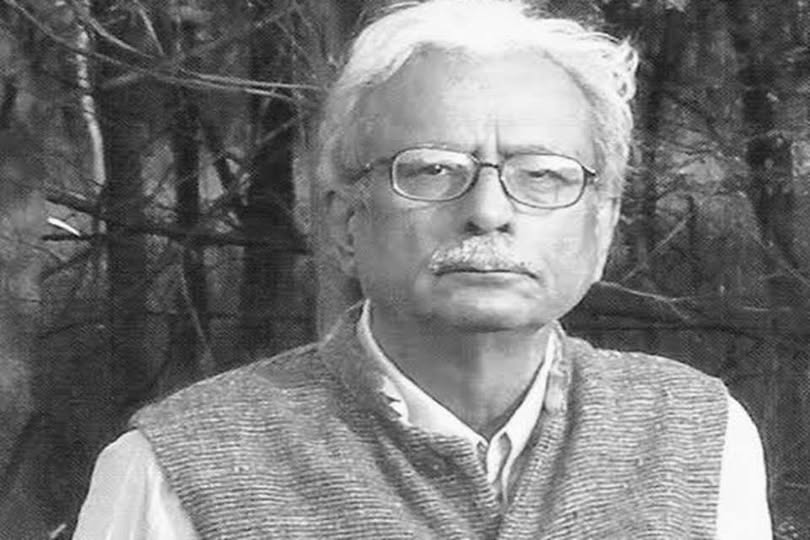
Vinod Kumar Shukla, who passed away recently, was one of the most distinctive voices in modern Hindi literature. Awarded the Jnanpith Award, India’s highest literary honour, his work stood apart for its radical simplicity. At a time when literary ambition often leaned toward grand themes and elaborate language, Shukla chose the ordinary—homes, neighborhoods, routines, pauses—and made them luminous.
His writing did not explain life; it stayed with it.
I felt compelled to translate one of his brief pieces into English—not as an act of interpretation, but of companionship. Translation, in its truest form, is only an effort: to carry mood, rhythm, and restraint into another language, knowing that something essential will always remain behind.
Here is that translation:
We Will Not Meet Again
It was decided
that we will not meet again
but we met again.
First, after fifteen years
then eight years after that.
This is how life is
like death postponed for a while
which separates us,
like death.
Five years later, it happened again
She came to live in my neighborhood
She didn’t know my address then
Nor did I know hers.
The little life left to us
was meant to be lived nearby –
in the same neighborhood.
At the beginning –
we lived in one home.
The poem opens with certainty: It was decided that we would not meet again.
Who decides such things—people, time, circumstance, fate? The poem does not say. And yet, against that decision, life intervenes. The meetings occur. First after fifteen years, then eight years later. No details are given. No gestures, no words, no explanations. Only the fact of meeting.
Shukla leaves these moments unspoken. The silence around them is as important as the meetings themselves.
Later, the two live in the same neighborhood—near, yet unknowingly so. Neither knows the other’s address. Proximity without connection. Nearness without reunion. The poem does not judge this condition; it simply records it.
And then, quietly, the final line arrives: At the beginning – we lived in one home.
With this understated recollection, the poem reshapes itself. The separations, the delayed encounters, the strange closeness—all are revealed as remnants of a shared life once lived together. Shukla does not tell us what was lost, or why. He does not tell us what remains. He trusts the reader to feel it.
This trust—this refusal to overstate—is at the heart of Shukla’s writing. His language is plain, almost fragile, yet it carries the weight of experience. His work teaches us that emotion does not need volume, that memory does not require ornament, and that literature can be built from what is left unsaid.
As a Jnanpith laureate, Vinod Kumar Shukla was formally recognised for a body of work that reshaped Hindi literature’s relationship with simplicity. But his true legacy lies elsewhere: in teaching readers and writers alike that ordinary words are enough, that life does not need decoration, and that silence, too, can speak.
I return to this small piece as a way of remembering him—and of remembering what his writing taught me: to trust restraint, to stay with feeling, and to remain attentive to what quietly endures.
That, perhaps, is the most lasting remembrance.
(Chanchala Srivastava, a Massachusetts resident) is a writer.)