Indian American Congressional Representation Poised to Remain at Record Six Seats After Midterm Elections
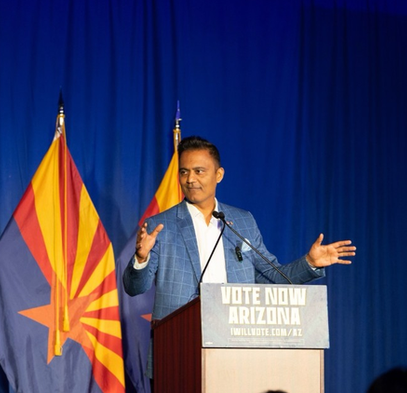

WASHINGTON–Indian American representation in the U.S. House of Representatives is on track to remain at a record six seats following Tuesday’s midterm elections, as five Democratic candidates secured victories and a sixth, Arizona physician Amish Shah, maintained a lead in a closely watched congressional race.
The results could preserve the size of the informal group of Indian American lawmakers known as the “Samosa Caucus,” despite earlier expectations that its membership would decline after two incumbents failed to secure reelection bids.
Four Indian American Democratic incumbents—Ro Khanna of California, Ami Bera of California, Pramila Jayapal of Washington and Suhas Subramanyam of Virginia—won reelection.
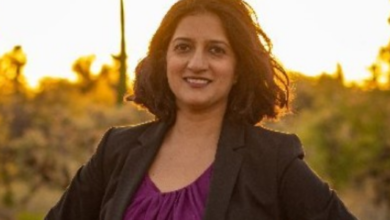
Democrat Pia Dandiya also secured a victory in Florida’s 22nd Congressional District, while Shah remained ahead of Republican Jay Feely in Arizona’s 1st Congressional District as ballots continued to be counted Wednesday night.
If Shah wins, the Indian American delegation will retain six House seats, matching the record established in the 2024 elections.
All six members would be Democrats, placing the entire Indian American congressional delegation in the House majority when the 120th Congress convenes in January 2027.
The current Congress includes six Indian American representatives: Bera, Khanna, Jayapal, Raja Krishnamoorthi of Illinois, Shri Thanedar of Michigan and Subramanyam.
Krishnamoorthi decided to pursue a U.S. Senate seat but lost the Democratic primary on March 17. Thanedar lost his Democratic primary in Michigan on August 4.
Their departures created the possibility that Indian American representation would decline. However, the victories of Dandiya and potentially Shah would offset those losses.
In Arizona, Shah, an emergency-room physician and former state legislator, led Feely by approximately 53 percent to 45 percent with about 85 percent of the expected votes counted Wednesday night.
The district includes Scottsdale and portions of the Phoenix metropolitan area and was previously represented by a Republican.
According to NBC’s election analysis, the district shifted approximately 10 percentage points toward Democrats compared with the 2024 presidential election.
Ballot counting continued in Maricopa County, and major news organizations had not called the race as of Wednesday evening.
The American Association of Physicians of Indian Origin included Shah among congressional winners in a statement issued Wednesday, although the election outcome remained unofficial.
The Congressional Asian Pacific American Caucus said Shah would become the first Indian American elected to represent Arizona’s 1st Congressional District if his victory is confirmed.
His election would also increase the anticipated Asian American and Pacific Islander membership of the caucus to 23.
In Florida, Dandiya defeated Republican Casey Askar in the state’s redrawn 22nd Congressional District, receiving approximately 52 percent of the vote against Askar’s 48 percent, with nearly all ballots counted.
CBS Miami described Dandiya as the first South Asian American elected to represent Florida in Congress.
The Congressional Asian Pacific American Caucus identified her as the first Indian American woman elected to represent Florida’s 22nd Congressional District.
Dandiya, a former White House Fellow, educator and Apple employee, celebrated her victory on social media.
“Thank you #FL22!! I am humbled and honoured to represent my home state… Now, the real work begins!” she wrote on X.
Her election makes her the second Indian American woman elected to Congress, following Jayapal, and adds to the growing representation of South Asian American women in federal politics.
The Congressional Asian Pacific American Caucus said at least 22 Asian American and Pacific Islander lawmakers were positioned to join the caucus in the next Congress, potentially establishing a new membership record.
Among Indian American incumbents, Bera, the longest-serving member of the community currently serving in the House, secured another term in California’s redrawn 3rd Congressional District.
Bera led Republican Robb Tucker by approximately 60 percent to 40 percent, with about 139,000 votes counted.
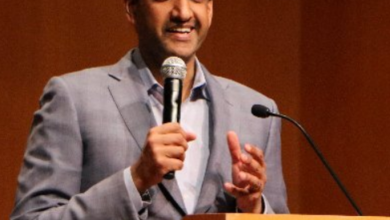
Khanna, Co-Chair of the Congressional Caucus on India and Indian Americans, won another term in California’s 17th Congressional District, defeating Indian American Republican Ritesh Tandon by approximately 72 percent to 28 percent.
The election marked Tandon’s fourth unsuccessful attempt to unseat Khanna.
Khanna entered the final weeks of the campaign with substantial financial resources. According to his Federal Election Commission filing, he reported approximately $17 million in cash on hand as of September 30, the largest campaign reserve among Indian American members of Congress.
In Washington state, Jayapal secured another term in the 7th Congressional District with approximately 88 percent of the vote, defeating Indian American Republican Nirav Sheth.
In Virginia, Subramanyam won reelection to a second term in the 10th Congressional District, defeating Republican Dave Beckwith by approximately 63 percent to 35 percent.
Subramanyam thanked his supporters in a message shared Wednesday.
“The campaign is over, but the work is just beginning. I look forward to working with our community to deliver change in Washington,” he wrote.
All four Indian American Democratic incumbents won by comfortable margins, receiving an average of approximately 71 percent of the vote.
The elections also highlighted the contrasting fortunes of Indian American candidates running under different political affiliations.
Every Indian American Republican and independent candidate whose federal race had been decided lost.
In addition to Tandon and Sheth, Republican Max Ganorkar was defeated in North Carolina’s 4th Congressional District by Democratic incumbent Valerie Foushee.
Ganorkar received approximately 16 percent of the vote, compared with Foushee’s 83 percent.
Two Indian American independent congressional candidates also failed to make significant gains.
Sandeep Dixit received approximately 1 percent of the vote in Ohio’s 13th Congressional District, while Anil Kumar, who had endorsed the Democratic candidate in Michigan’s 11th Congressional District, also received approximately 1 percent.
In Massachusetts, independent U.S. Senate candidate Shiva Ayyadurai received approximately 58,000 votes, representing about 2 percent of the total.
Democratic Senator Ed Markey won reelection with approximately 63 percent of the vote.
In Texas, Democrat Mark Nair lost his congressional race in the 13th District to Republican incumbent Ronny Jackson, who received approximately 62 percent of the vote.
Nair finished with approximately 39 percent.
In Arizona’s 1st Congressional District, write-in candidate Dev Gupta had no reported election result.
Of the 14 Indian American candidates appearing on federal ballots, five had won, one was leading, seven had lost and one write-in candidate had no reported result as of Wednesday evening.
Indian American Democrats won all five of their called victories, while Nair was the only Democratic candidate from the community to lose a congressional race.
Republican and independent Indian American candidates failed to win any of their three respective contests.
Two of the five confirmed Indian American congressional winners, Jayapal and Dandiya, are women.
The results also demonstrated the strength of Democratic incumbents in contests featuring Indian American candidates from both major parties.
In California, Khanna defeated Tandon by a wide margin, while Jayapal overwhelmingly defeated Sheth in Washington.
Campaign finance records showed significant spending in several competitive races involving Indian American candidates.
According to Federal Election Commission reports covering October 1 through October 14, Shah raised approximately $623,000 during the reporting period and had about $206,000 remaining in campaign funds.
Dandiya raised approximately $689,000 and reported about $735,000 in cash on hand.
Her Republican opponent, Askar, reported approximately $1.9 million in available campaign funds after lending his campaign about $2.3 million of his own money.
Federal election filings also showed that political action committees opposing Shah and Dandiya received funding from MAGA Inc., a pro-Trump political organization.
Additional campaign finance disclosures covering the post-election period are due December 3.
The performance of Indian American Democratic candidates reflected broader national gains by their party.
NBC projected that Democrats would regain control of the House of Representatives, with approximately 231 seats called for Democrats and 144 for Republicans as of Wednesday morning.
The network estimated that Democrats could ultimately win about 258 House seats, representing a substantial increase from their previous representation.
Democrats were also projected to regain control of the Senate, with an estimated 54 seats compared with 44 for Republicans, while races in Mississippi and Alaska remained unresolved.
The results would return Indian American Democratic lawmakers to the House majority for the first time since Republicans captured the chamber in the 2022 midterm elections.
In Michigan, Democrat Abdul El-Sayed also won an open U.S. Senate seat, defeating Republican Mike Rogers by approximately 52 percent to 46 percent.
Although El-Sayed is not Indian American, his wife, psychiatrist Sarah Jukaku, was born in Michigan to Indian immigrant parents.
Indian American representation in Congress dates to 1957, when Dalip Singh Saund became the first Indian-born person elected to the U.S. House of Representatives.
The community reached a record six House members following the 2024 elections, increasing from five in the preceding Congress.
With five victories confirmed and Shah holding a lead in Arizona, Indian Americans now appear positioned to preserve that record while entering the next Congress as part of the Democratic majority. (Source: IANS)