Shashi Tharoor Warns of China’s Growing Influence, Says India Cannot Afford Trade Dependence Without Trust
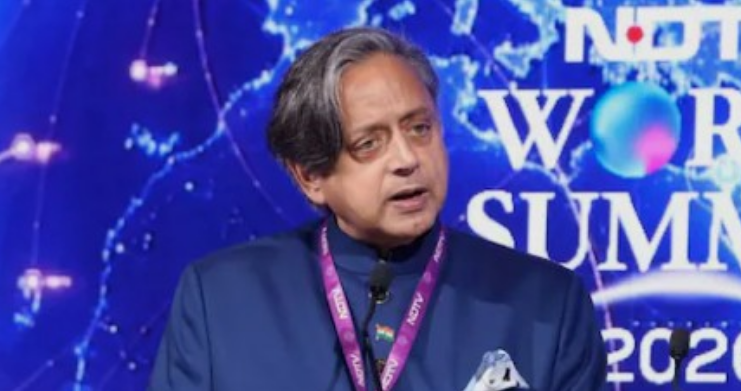

NEW DELHI — Senior Congress leader Shashi Tharoor has raised concerns about China’s actions along India’s borders, its alleged support for Pakistan during Operation Sindoor and New Delhi’s growing dependence on Chinese imports, warning that economic ties could become a tool of geopolitical pressure.
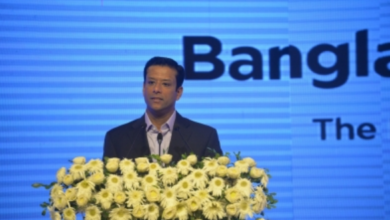
Speaking at the NDTV World Summit on Friday, Tharoor called for a more predictable relationship between India and China, arguing that trade and economic dependencies should not be used to exert political or strategic influence.
“The way in which China has behaved on our borders, the way in which they’ve nibbled away at our territory, their overt support for Pakistan during the brief conflict (Operation Sindoor) between our two countries last year is worrying,” Tharoor said.
The Congress lawmaker accused Beijing of providing Pakistan with military assistance and intelligence during the conflict, describing the alleged sharing of satellite information as a hostile act.
“China not only supplied a vast amount of weapons, which is their legal right to do, but also supplied real-time data while the conflict was going on from their satellite spot above our territory, which was actually a hostile act. These are all things we have to really worry about,” he said.
His remarks came amid a political controversy over purported comments by Indo-Tibetan Border Police Director General Shatrujeet Kapur concerning an ongoing military face-off with China in Arunachal Pradesh.
Kapur reportedly suggested that the Indian Army was successfully managing the situation, prompting renewed debate over security conditions along the disputed border.
Tharoor argued that India’s relationship with China presents a fundamental challenge because the two economies are closely connected despite persistent strategic mistrust.
“On our own borders we have the problem of interdependence without trust. I can’t even say interdependence because our dependence on China is far greater than theirs on us and yet can we trust them?” he said.
The former minister pointed to previous border confrontations, including the deadly 2020 clash in Galwan Valley, as examples of what he described as China’s willingness to undermine longstanding understandings between the two countries.
According to Tharoor, the two nations had previously operated under an arrangement that allowed economic relations to expand while maintaining relative stability along their disputed frontier.
He argued that Beijing’s subsequent actions had weakened that understanding.
“Galwan was not the only incident. There were other incidents in which China essentially unilaterally upended the understanding that had existed between the two countries of a tranquil border and this worries us. Why is it that they want to create this?” Tharoor said.
He questioned why China would jeopardize border stability while continuing to benefit from expanding exports to the Indian market.
“It was initially supposed to be in their interest that the border situation remains tranquil while they dramatically expanded their exports to us. The exports are still expanding and they’re still giving us a rough time,” he added.
Beyond military tensions, Tharoor expressed particular concern about India’s reliance on Chinese products, technology and industrial equipment.
He warned that dependence on imports from a strategically competitive country could leave India vulnerable to supply disruptions during periods of diplomatic disagreement.
The Congress leader cited alleged restrictions on Chinese exports of rare earth materials and large tunnel-boring machines as examples of how supply chains could be disrupted.
“Those exports, by the way, have also created another dependency, which is that the Chinese have shown us repeatedly they can be turned off when they want,” he said.
Tharoor claimed that China had previously suspended certain rare earth exports to India and restricted shipments of large tunnel-boring machines used in infrastructure projects.
“We had developed a major dependence on the large-size tunnel-boring machines, 100 per cent of which were coming from China. Now suddenly they decided not to export those to us as well. We could no longer bore holes into hillsides and construct our highways and so on for a couple of years until they chose to turn the tap back on again,” he said.
His comments highlighted broader concerns about India’s dependence on Chinese manufacturing in sectors critical to infrastructure development and industrial production.
China remains an important source of machinery, components and other manufactured goods for Indian businesses, making disruptions to bilateral trade potentially costly.
Tharoor suggested that India must recognize the strategic risks associated with relying heavily on a country with which it has unresolved territorial disputes.
He emphasized that economic engagement should be governed by stable and reliable arrangements that cannot be abruptly disrupted for political reasons.
“We need, as far as possible, predictable relationships. Relationships which won’t be weaponised, and trade dependencies which won’t be weaponised against us,” he said.
The remarks underscore the continuing challenge facing New Delhi as it seeks to maintain commercial ties with Beijing while addressing border security concerns and reducing vulnerabilities in strategically important supply chains. (Source: IANS)