Indian EB-2 Green Card Backlog Remains Stuck in 2013 as White House Reviews Premium Processing Changes

WASHINGTON, D.C. — Indian professionals seeking employment-based green cards continue to face lengthy immigration backlogs, with the November 2026 Visa Bulletin showing no movement in the EB-2 category for a second consecutive month.
The U.S. State Department kept India’s EB-2 final action date at November 1, 2013, even as the cutoff for applicants from most other countries advanced by three months.
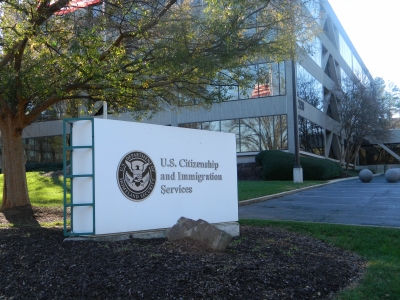
The continued backlog comes as the White House reviews a proposed Department of Homeland Security rule that could change premium processing timelines for certain immigration applications.
According to the federal regulatory tracking website Reginfo.gov, the White House Office of Information and Regulatory Affairs received a proposed U.S. Citizenship and Immigration Services rule titled “Amending the Premium Processing Timeframe” on October 13.
The proposal, identified as RIN 1615-AD25, remains under review. Its text has not been released publicly, leaving unclear whether the government intends to shorten or extend processing deadlines or which immigration categories might be affected.
Premium processing allows employers and applicants to pay an additional fee for expedited USCIS decisions on eligible petitions, including certain H-1B employment applications.
A separate proposal titled “Reforming the H-1B Nonimmigrant Visa Classification Program” has also been under White House review since August 24. That measure, designated economically significant, could have broader implications for employers and foreign professionals, although its proposed changes have not yet been made public.
Meanwhile, the latest Visa Bulletin highlights the significant disparity between Indian green card applicants and those from other countries.
For the EB-2 category, which generally covers professionals with advanced degrees or exceptional ability, the final action date for most countries advanced from January 1, 2025, to April 1, 2025.
Mexico and the Philippines followed the same timeline, while China’s cutoff remained unchanged at October 1, 2021.
Indian applicants, however, remain subject to a cutoff dating back nearly 13 years.
There was limited progress in the EB-3 category, which includes skilled workers and professionals. India’s final action date advanced three weeks to January 22, 2014. The same date applies to Indian applicants in the EB-3 Other Workers category.
For most other countries, the EB-3 final action date moved to June 15, 2024.
India’s EB-1 cutoff, covering priority workers such as individuals with extraordinary ability, outstanding researchers and certain multinational executives, remained at February 1, 2023.
The EB-5 unreserved category for Indian immigrant investors also remained unchanged, with a final action date of December 1, 2023.
Despite the lack of movement in final action dates, some Indian applicants may still be eligible to submit adjustment-of-status applications.
USCIS announced that employment-based applicants must use the Dates for Filing chart for November.
Under that chart, the filing cutoff for Indian applicants in both EB-2 and EB-3 is January 15, 2015.
This means eligible Indian EB-2 applicants already in the United States with priority dates earlier than January 15, 2015, may submit applications to adjust their immigration status. However, their green cards cannot be approved unless their priority dates fall before the November 1, 2013, final action cutoff.
Family-sponsored immigration categories showed somewhat more favorable movement for Indian applicants.
The F1 category, covering unmarried adult children of U.S. citizens, advanced to January 22, 2021, while the F2B category for unmarried adult children of permanent residents moved to August 22, 2020.
The F3 category, covering married children of U.S. citizens, advanced to October 22, 2015.
However, India’s F4 category, which allows U.S. citizens to sponsor their siblings, remained at December 15, 2006. By comparison, the cutoff for most other countries stood at October 22, 2012.
The persistent backlogs reflect the impact of U.S. immigration laws that limit the number of family-sponsored and employment-based immigrant visas available to nationals of any one country.
Under current law, the general per-country ceiling is 7% of the combined annual family-sponsored and employment-based preference visa limits, equivalent to 25,620 visas under the current allocation.
India, China, Mexico and the Philippines are among the countries subject to country-specific cutoff dates because demand exceeds available visa numbers.
The EB-2 backlog has been particularly difficult for Indian professionals, many of whom have spent years working in the United States on temporary employment visas while awaiting permanent residency.
India’s EB-2 category became unavailable during the final months of fiscal 2026 after the available visa numbers were exhausted.
The State Department had previously indicated that the cutoff could advance when the new fiscal year began in October, but the November bulletin shows that progress has stalled again.
The issue has renewed calls in Congress to eliminate country-based restrictions on employment green cards.
Rep. Josh Gottheimer, a New Jersey Democrat, recently highlighted the extraordinary waiting periods faced by Indian applicants while advocating changes to the immigration system.
“Imagine waiting 179 years for a green card. That’s the projected wait for Indian green card applicants,” Gottheimer wrote on X.
The estimate reflects projections for some applicants under existing immigration limits rather than a fixed waiting period for every Indian green card applicant.
For thousands of Indian professionals and their families, the latest bulletin offers little immediate relief, underscoring the continuing uncertainty surrounding their path to permanent residency in the United States. (Source: IANS)