Massachusetts Reports Season’s First EEE-Positive Mosquitoes; Four Plymouth County Communities Moved to Moderate Risk
State health officials urge residents to use mosquito repellent and take precautions as Eastern equine encephalitis is detected in Kingston
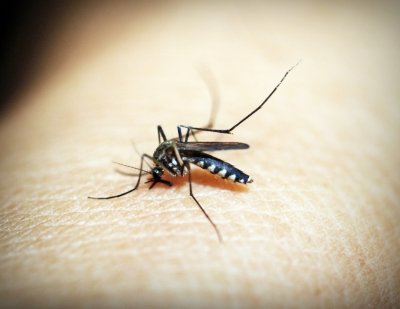

BOSTON — Massachusetts public health officials are urging residents to take precautions against mosquito bites after the state confirmed its first mosquito samples positive for Eastern equine encephalitis (EEE) virus of the 2026 season.
The Massachusetts Department of Public Health (DPH) said Wednesday that EEE was detected in mosquito samples collected August 17 in Kingston, Plymouth County. No human or animal cases of EEE have been reported in Massachusetts so far this year.
The detection prompted the state to raise the EEE risk level to moderate in Carver, Halifax, Kingston and Plympton.
The announcement marks the first detection of EEE in Massachusetts mosquitoes this year and comes later in the season than is typical for the virus. State epidemiologists said the timing may limit the opportunity for EEE activity to intensify, but emphasized that infected mosquitoes can still transmit the virus to people.
“The last EEE outbreak in Massachusetts occurred in 2024 and, since then, there have been no human cases of EEE reported in the state,” Public Health Commissioner Robbie Goldstein, MD, PhD, said in a statement. “Today’s finding alerts us to the presence of EEE in Massachusetts this year.”
Goldstein urged residents to use mosquito repellent whenever they are outdoors, particularly as the summer season continues.
EEE remains a serious health threat
EEE is a rare but potentially fatal mosquito-borne disease that can affect people of any age. The virus is generally transmitted to humans through the bite of an infected mosquito.
Massachusetts has experienced periodic EEE outbreaks in recent years. In 2019, the state recorded 12 human cases and six deaths. In 2020, there were five cases and one death. The state recorded four human cases in 2024, including one death.
There were no human cases reported in Massachusetts in 2021, 2022, 2023 or 2025.
State Epidemiologist Dr. Catherine M. Brown said EEE activity tends to occur in cycles.
“When EEE is found in mosquitoes later in the season like this, there is less opportunity for the risk to increase to very high levels,” Brown said. “But anytime EEE virus is in mosquitoes, it can be spread to people.”
Massachusetts maintains a mosquito surveillance program to identify where EEE and West Nile virus are circulating and to help communities and residents understand changing levels of risk.
Officials point to broader mosquito activity
The EEE detection comes as Massachusetts continues to monitor West Nile virus (WNV) activity in mosquitoes.
Health officials are asking residents statewide to take precautions against both viruses, rather than focusing only on the four communities whose EEE risk level was raised Wednesday.
The state has a formal mosquito-borne illness response plan that uses surveillance information and other factors to assess the risk of human infection and determine when additional mosquito-control measures may be warranted.
The Plymouth County Mosquito Control Project has extensive experience responding to mosquito-borne disease in the region. Its 2025 annual report said the project conducted mosquito surveillance and control activities throughout Plymouth County, including larviciding and adult mosquito control.
The region has also been a focus of previous EEE activity. In 2024, Massachusetts detected substantial EEE activity in Plymouth County, eventually leading to emergency mosquito-control operations in parts of the state.
How residents can reduce their risk
State health officials recommend several steps to reduce exposure to mosquitoes:
Use insect repellent. Residents should use an EPA-registered repellent containing an ingredient such as DEET, picaridin, oil of lemon eucalyptus/PMD, IR3535 or permethrin, following the product label.
DEET should not be used on infants younger than 2 months, and products containing no more than 30 percent DEET are recommended for older children. Oil of lemon eucalyptus should not be used on children younger than 3.
Be especially cautious from dusk to dawn. Many mosquitoes are most active during the evening and overnight hours. Residents in areas with elevated risk should consider rescheduling outdoor activities that take place during peak mosquito-biting times.
Cover exposed skin. Long sleeves, long pants and socks can provide an additional barrier against mosquito bites.
Residents can also reduce mosquitoes around their homes
Health officials are asking residents to eliminate standing water wherever possible because mosquitoes can breed in relatively small amounts of stagnant water.
Homeowners should empty or discard containers that collect water, including unused flowerpots and children’s wading pools. Rain gutters and drains should also be checked, and birdbath water should be changed frequently.
Window and door screens should be kept in good repair and fit tightly to prevent mosquitoes from entering homes.
Pet and horse owners urged to take precautions
Mosquito-borne illnesses can also affect animals.
The state recommends that animal owners eliminate standing water around their properties, including water that accumulates in buckets, tires and wading pools. Water troughs should be flushed at least once a week during the summer to reduce mosquito breeding.
Horse owners are advised to keep horses in indoor stalls at night when possible and to talk with their veterinarians about mosquito repellents approved for animals and vaccinations against EEE and West Nile virus.
Suspected animal cases of EEE or West Nile virus must be reported to the Massachusetts Department of Agricultural Resources, Division of Animal Health, at 617-626-1795, and to the Department of Public Health at 617-983-6800.
Surveillance will continue
For now, Massachusetts has reported no human or animal EEE cases in 2026, but Wednesday’s mosquito finding serves as a warning that the virus is circulating in the state.
The DPH says its mosquito surveillance information, including EEE and West Nile virus-positive mosquito samples, is updated daily.
Residents can find current Massachusetts mosquito-borne disease information through the Massachusetts Department of Public Health’s Arbovirus Surveillance Information page or contact the DPH Division of Epidemiology at 617-983-6800.