Indian American Philanthropy — Part 2: Building Community Through Giving
How collaboration, shared identity, and philanthropic networks are bringing people together for greater social impact

(Editor’s Note: Philanthropy can do more than support worthy causes. It can build relationships, strengthen a shared sense of identity, and bring people together around a common purpose. In Part 2 of our series on Indian American philanthropy, we explore how donors, nonprofit organizations, and community networks are creating opportunities for collective action. From local fundraising initiatives to national organizations and collaborative giving platforms, the article illustrates how relationships and shared commitments can help philanthropy grow in reach and impact. This installment continues the original article by The Bridgespan Group, produced in collaboration with the Ford Foundation, and is reproduced with permission. The original text remains unchanged.)
By: Rohit Menezes, Isaiah Baker, Bradley Seeman
Building Community
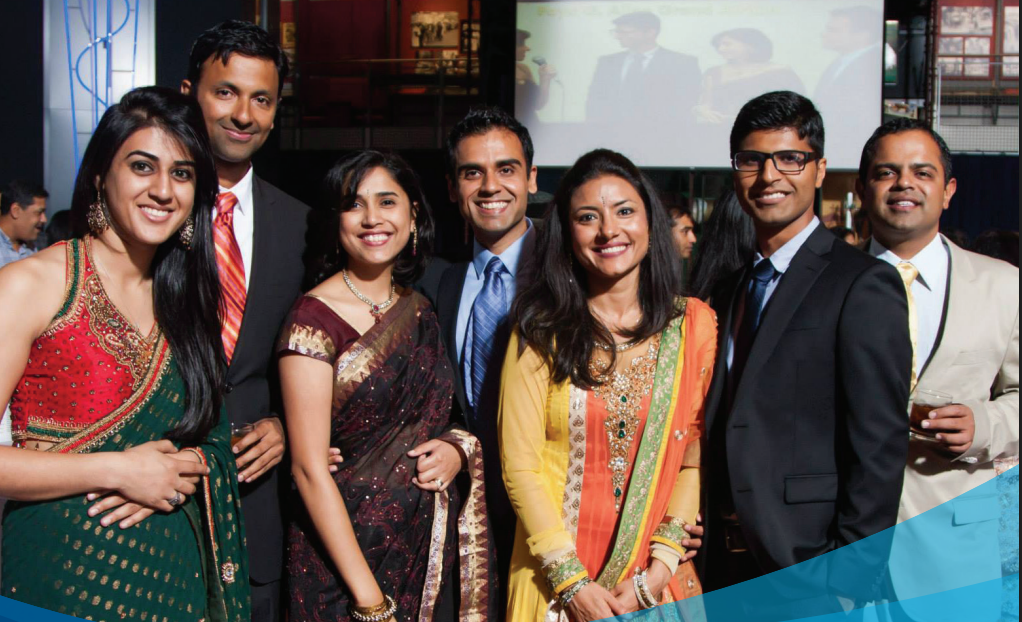
Giving is often inspired and supported through collaboration, peer networks, and community activities and organizations. In our interviews, we repeatedly heard about the connections Indian American donors have built with others around their ideals, identity, and philanthropy, and how these connections power their giving. It’s a two-way street: engaging in community enables giving, and the act of giving enables community. For an immigrant group such as Indians in the United States, this can be a powerful force to build shared identity and common purpose.
To read part-1, pleasse click on the link below.:
Indian American Philanthropy — Part 1: A Community’s Growing Generosity
Sometimes, this community building is local. Earlier, we described how Sapna Saxena helped bring together members of the Indian American community in the Boston area around Indian cinema. She also coordinates a group to participate in a 5K run to benefit Special Olympics Massachusetts, a sports organization for children and adults with intellectual disabilities. “We have 65–70 people join us, and it’s mostly Indians or Indian Americans on the team. It gets people together, and we talk about giving.”
In other cases, larger Indian nonprofits with a presence in the United States use a chapter model with local galas that help them raise funds, while also strengthening Indian American donors’ connections with one another and to India. Pratham USA, for example, which develops and delivers educational programs in India and elsewhere, has chapters in 14 communities across the United States, led by over 300 volunteer leaders. “Pratham is lucky to have a network of volunteers across the country. They host events in their homes or organize communitybuilding events like walks and galas,” explains CEO and Global Executive Manisha Bharti. “They are not only about fundraising. They are also about creating community and connection and spreading joy.”
Indiaspora, a global organization, is working in dozens of countries to build bridges among diaspora leaders so that they can be a force for greater impact. In the United States, Indiaspora annually hosts gatherings that feature diaspora attendees from diverse backgrounds—spanning the arts to sports to academia to business.
“Volunteering is hugely satisfying,” says Akbar Poonawala, who emigrated to the United States in the 1980s for an MBA before building a career in finance. Poonawala started volunteering with the Aga Khan Foundation (AKF), a global development organization working to address the root causes of poverty in Africa, Asia, and the Middle East, as a way to get involved in social impact while also building community. He has now served as a volunteer leader for AKF at the regional and national levels across three decades. “Of course, you feel you are doing something worthwhile with an amazing organization by helping create opportunities for others through the foundation’s work. You also get to meet and make friends with people you respect and admire. I have benefited from multi-decade relationships.”
A few of these organizations have shown that it is possible to bring donors together at a very large scale. Pratham USA engages over 7,000 donors to raise approximately $30 million annually. Akshaya Patra, which offers free lunches in Indian public schools and works hard to reach Indian Americans, has nearly 40,000 individual donors within the Indian American diaspora. Through their outreach efforts in the United States, these organizations have also raised funds from donors beyond the Indian American community.
There is also a steady stream of other Indian NGOs coming to the United States to engage the diaspora for advice and funding. One relative newcomer is Mantra4Change, supported by the Shibulal family and other donors, which seeks to strengthen government schools in five Indian states through partnerships with state and district education departments. While the organization is not pursuing short-term fundraising at the moment, it is convening diaspora members to share more about its work on Shikshagraha, the pan-India movement on education equity.
“Right now, we are in a delayed gratification phase. We are coming, we are meeting people, and we are telling them what we are doing with no expectation of fundraising,” says Santosh More, who cofounded the organization. Early signals are promising. Whereas the organization’s first San Francisco gathering three years ago drew fewer than 10 attendees, its events in 2026 are attracting an average of 50–60 people per event. More notes that diaspora engagement offers the potential for more than money, as the organization is seeking academic partnerships and mentors in areas such as technology, research, and narrative building.
Collaboration can be a particularly powerful way to build community among donors. It helps reduce the risk of giving alone while offering the opportunity to learn from and influence others. Collaborative efforts such as the India Philanthropy Alliance (IPA), a US-based coalition of more than 30 organizations focused on India’s development, and India Giving Day, an annual campaign championed by IPA to galvanize giving, also address oft-cited donor concerns about which organizations they can trust by providing suggestions about vetted nonprofits in India.
By launching the Rebuild India Fund with Dasra through the family’s Tarsadia Foundation, the Patels chose to support collaborative giving. Says Shirish Dayal, executive vice president of Tarsadia, “By creating a fund, we hoped to engage other people and help change how funding is done—do it in a way that is locally guided and longer term.”
Stay tuned for Part-3: Engaging Across Generations.
(Note: Footnotes will be added in the final part-3.)