August 5 Underscores Competing Narratives Over Kashmir
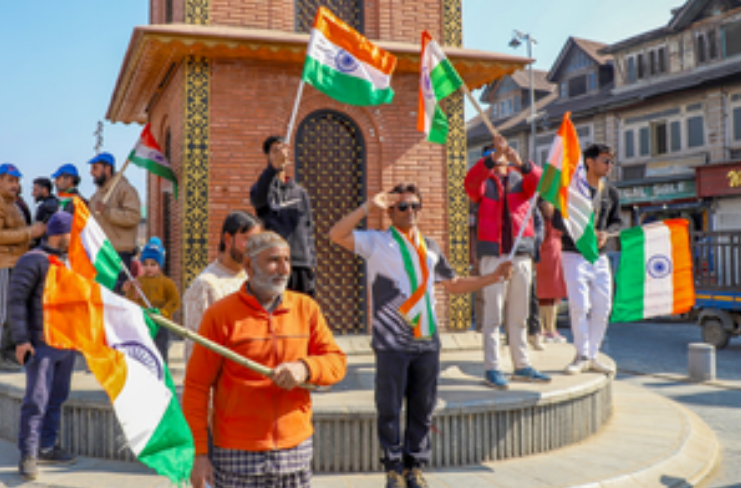

New Delhi — India and Pakistan will mark Aug. 5 with sharply different accounts of what the date represents for Jammu and Kashmir.
In India, the anniversary recalls the 2019 constitutional changes that revoked Jammu and Kashmir’s special status and brought the region under the same legal framework as the rest of the country. Pakistan, meanwhile, observes the date as “Youm-e-Istehsal,” or Day of Exploitation, and portrays the move as the subjugation of Kashmiris.
Seven years later, the two positions remain irreconcilable. India points to infrastructure, tourism, investment and elections as evidence of progress, while Pakistan continues to challenge New Delhi’s actions and its administration of the region.
Supporters of the 2019 decision cite expanded transportation links and the establishment of major educational and medical institutions among the most visible changes in Jammu and Kashmir.
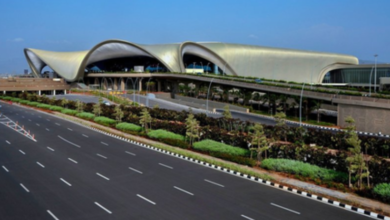
The Udhampur-Srinagar-Baramulla rail project has connected the Kashmir Valley more closely with the national railway network. Its key features include the Chenab Rail Bridge and a Vande Bharat service inaugurated in June 2025.
New institutions, including the All India Institute of Medical Sciences in Jammu and campuses of the Indian Institute of Management and Indian Institute of Technology, have also expanded access to healthcare and higher education.
Government figures have reported a substantial rise in tourism and new investment proposals since 2019. However, security concerns remain, as demonstrated by the April 2025 attack in Pahalgam and its impact on the tourism sector.
Political participation has also returned through panchayat elections, District Development Council polls and the 2024 Jammu and Kashmir Assembly elections. The Indian government presents those elections as evidence that democratic institutions have been restored at both local and regional levels.
The situation in Pakistan-administered Kashmir has followed a different course, with residents holding repeated demonstrations over electricity prices, wheat subsidies, inflation and privileges enjoyed by government officials.
Protest groups have argued that the territory produces significant hydroelectric power while local consumers continue to face high electricity costs. Demonstrators have also demanded greater economic relief and political accountability.
The Indian Ministry of External Affairs has cited the unrest while accusing Pakistan of exploiting the territory’s resources and violating the rights of its residents.
During an October 2025 briefing, the ministry described the protests as a consequence of what it called Pakistan’s oppressive policies and systematic extraction of resources from areas under its control.
Authorities in Pakistan-administered Kashmir have responded to periods of unrest with curfews, communication restrictions and security deployments. India has also criticized elections held there, describing them as an effort to legitimize Pakistan’s administration of territory claimed by New Delhi.
The competing commemorations reflect the wider dispute between the two countries. India uses Aug. 5 to emphasize integration, development and electoral participation, while Pakistan uses it to condemn the revocation of Jammu and Kashmir’s special status.
The anniversary also draws attention to unresolved problems on both sides of the Line of Control, including security threats, political grievances, economic hardship and competing claims over representation and legitimacy. (Source: IANS)