
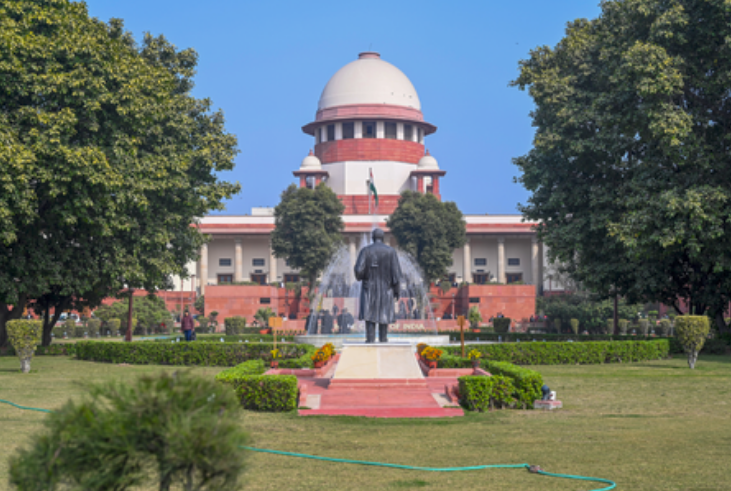

NEW DELHI, India — The Supreme Court is scheduled to hear on Tuesday a plea filed by renowned classical vocalist Ustad Faiyaz Wasifuddin Dagar against music composer A.R. Rahman, alleging that the song “Veera Raja Veera” from the Tamil film “Ponniyin Selvan II” is inspired by his family’s traditional composition “Shiva Stuti.”
According to the cause list published by the apex court, the matter is listed for hearing on February 10 before a bench headed by Chief Justice of India Surya Kant and comprising Justices Joymalya Bagchi and N.V. Anjaria.
The plea follows a September 24, 2025 ruling by the Delhi High Court, which set aside an interim order directing Rahman and the film’s producers to deposit Rs 2 crore and to modify the song’s credits in favor of the Junior Dagar Brothers.
A division bench of the Delhi High Court had held that there was no prima facie material to establish that the late Ustad N. Faiyazuddin Dagar and Ustad N. Zahiruddin Dagar, collectively known as the Junior Dagar Brothers, were the authors or composers of “Shiva Stuti.”
The court drew a distinction between performance rights and authorship, observing that “mere performance or fixation of a musical piece does not, by itself, confer copyright in the underlying composition.”
Setting aside the single-judge order, the bench ruled that the materials relied upon by Wasifuddin Dagar, including recordings of performances and album inlay cards, at best demonstrated performance rights under the Copyright Act and could not be treated as proof of authorship.
The High Court further observed that “Shiva Stuti” is part of the broader Dagarvani or Dhrupad tradition of Hindustani classical music, which has historically evolved through oral transmission across generations. Granting exclusive copyright over such compositions, it said, could have serious implications for the guru-shishya parampara.
Challenging the High Court’s decision, Wasifuddin Dagar has now approached the Supreme Court seeking restoration of interim relief and recognition of what he has described as the moral and copyright interests of the Junior Dagar Brothers. (Source: IANS)