Report Warns Radical Turn in Bangladesh Could Amplify Islamist Voice on Global Stage

Tel Aviv —As Bangladesh heads into national elections next week, the country stands at a political crossroads that could reshape its domestic landscape and international posture, according to a report cited by The Times of Israel. Analysts warn that a shift toward radical Islamist politics could make Bangladesh more vocal in international Islamist forums and introduce new regional and global uncertainties.
With the Awami League banned from contesting the February 12 election, the political arena has narrowed largely to two camps: the Bangladesh Nationalist Party (BNP) and an Islamist alliance led by Jamaat-e-Islami. The report notes that the outcome will determine whether Bangladesh moves toward stability, prolonged uncertainty, or a new ideological direction altogether.
The BNP, one of the two remaining major contenders, faces lingering trust issues among voters. “When it ruled in the past, the country was known for corruption and weak institutions,” the report said, adding that the party historically relied on Islamist allies. Many voters remain skeptical about whether the BNP has meaningfully reformed.
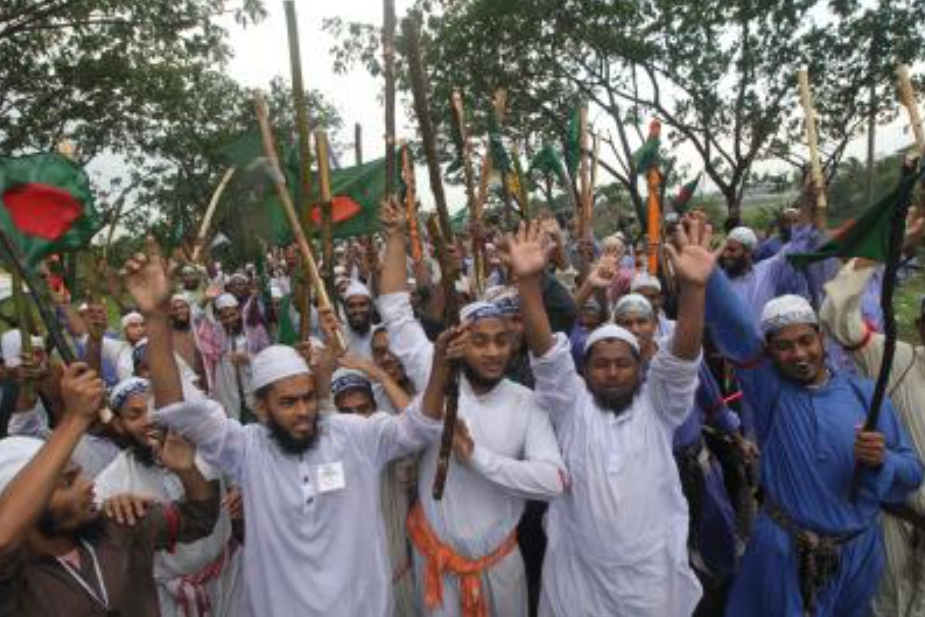
Greater concern, the report suggests, surrounds the resurgence of Jamaat-e-Islami, a party long marginalized for its Islamist ideology and its alignment with Pakistan during the 1971 Bangladesh Liberation War. Since the collapse of the Sheikh Hasina-led Awami League government in 2024, Jamaat has significantly strengthened its organizational presence across the country.
“Jamaat presents itself as disciplined, honest, and close to religious values,” the report noted. “In many areas, its organization is stronger than that of secular parties weakened by years of pressure.” While supporters view the party as a source of moral leadership and clean governance, secular Bangladeshis and religious minorities see its rise as deeply unsettling.
If Jamaat and its allies gain power, Bangladesh may not formally become a religious state, but public discourse would likely shift in a more conservative direction, the report warned. Minority communities could feel increasingly insecure, while women’s rights and secular education may face new pressures. Internationally, Bangladesh could adopt a colder stance toward India and Western nations, while maintaining pragmatic ties with China and other partners.
For Israel and Middle Eastern observers, such a shift could result in more openly hostile rhetoric, even if formal diplomatic policy remains unchanged. Bangladesh currently has no official relations with Israel, but its ideological orientation carries broader implications.
The report also cautioned that a hung parliament or a disputed election outcome could pose the greatest risk. “Protests could return. Political violence could increase. The military, which never fully left politics, could step in as a power broker,” it said, describing this scenario as the one most feared by diplomats.
From a global perspective, the report concluded that Bangladesh’s political direction matters well beyond its borders. “A more religious and nationalist Bangladesh could become louder in Islamist international forums,” it said, while a stable civilian government, though distant, would at least remain predictable. (Source: IANS)