
Memory Is Reconstruction, Not Replay: Insights from Neuroscience Experts on Harvard Thinking Podcast
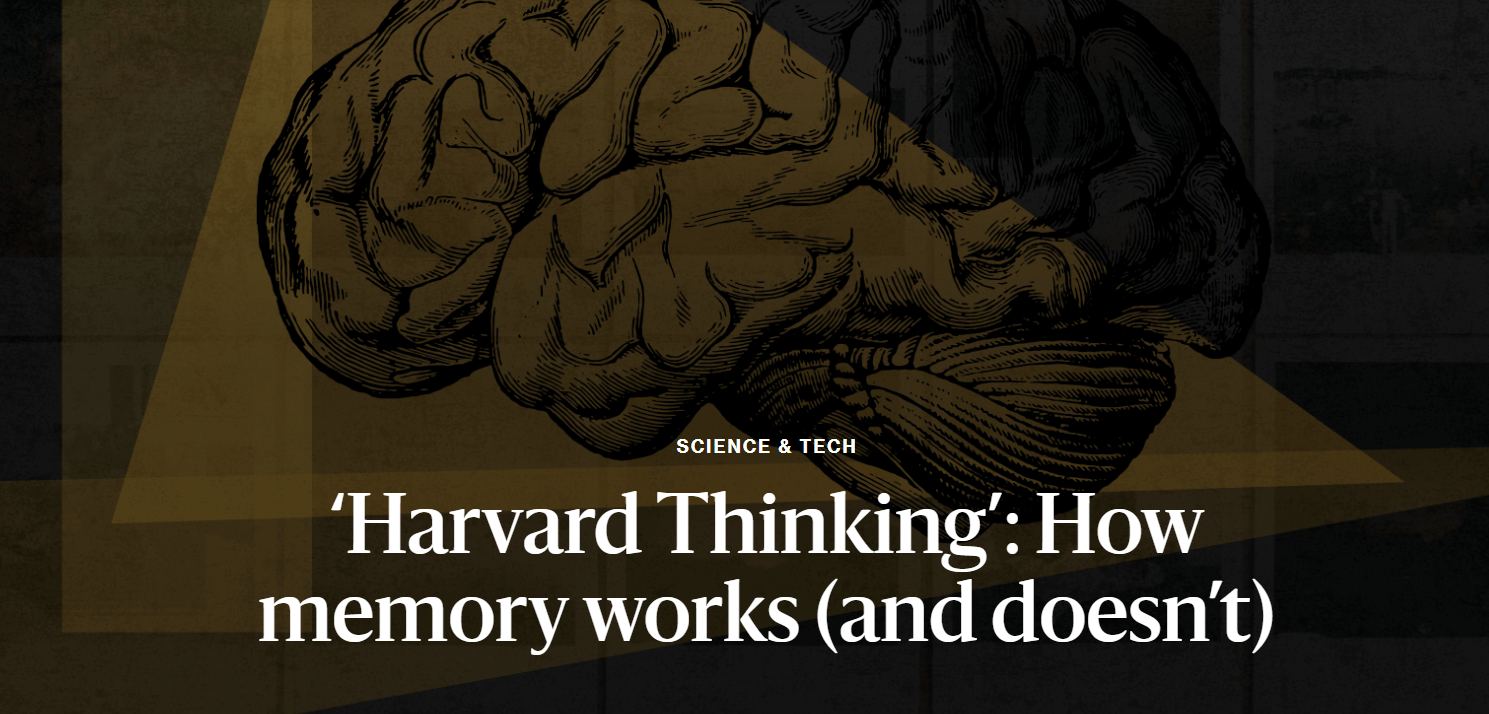

In a recent episode of the Harvard Thinking podcast, hosted by Samantha Laine Perfas, leading neuroscientists and psychologists explored the intricate and often surprising nature of human memory. Guests included Venki Murthy, director of Harvard’s Center for Brain Science; Margaret O’Connor, associate professor of neurology at Mass General Brigham; and Dan Schacter, professor of psychology at Harvard and author of The Seven Sins of Memory. The discussion focused on how memories are constructed rather than simply replayed, and how understanding this process can help us improve memory retention and accuracy.
Murthy emphasized that memory is not a literal recording of past events but patterns of neural activity in the brain. He noted that recalling a memory is more like reconstructing a pattern than replaying a tape, and these reconstructions can vary slightly each time they are retrieved. Distinctive sensory cues, such as smells, can sometimes trigger vivid recollections, although these memories are still subject to reconstruction and interpretation. Murthy highlighted that in animal studies, neural activity can be tracked to see how memories are encoded and recalled, providing insight into the dynamic nature of memory.
O’Connor explained that distinctiveness plays a crucial role in memory retention. Unique or unusual experiences are more likely to be remembered, a principle she summarizes as “bizarre is best.” She also discussed how memory can be affected by medical conditions, age, and even mood, noting that biases and prior knowledge shape what we encode and later retrieve. Flashbulb memories—vivid recollections of shocking events like the Kennedy assassination—demonstrate that even highly confident memories are prone to distortions and inaccuracies over time.
Schacter elaborated on memory as a constructive process, combining specific experiences with general knowledge. This process allows flexible recall but can also lead to errors such as misattribution, bias, and suggestibility. Misidentifications by eyewitnesses, sometimes with grave consequences, exemplify how memory can fail despite high confidence. He also highlighted the phenomenon of the reminiscence bump, where people recall more experiences from adolescence and early adulthood than from other periods of life.
The podcast also explored practical strategies for improving memory. O’Connor recommended encoding techniques, visual memory strategies, chunking, spaced repetition, and leveraging technology like cameras or smartphones to create external memory aids. Murthy noted that while neural patterns underlying memories change over time, repeated rehearsal and retrieval can strengthen recall, even if the memories remain imperfect reconstructions.
A particularly fascinating discussion involved how smells can evoke early autobiographical memories. While the effect is not universal, certain scents can trigger a cascade of associations in the hippocampus and limbic system, sometimes bringing long-dormant experiences to the surface. Yet, as Murthy and Schacter noted, it is often the context of the experience—not the sensory cue itself—that forms the basis of what is recalled.
Overall, the conversation emphasized that memory is dynamic, constructive, and prone to errors—but also remarkably resilient. By understanding the mechanisms behind memory formation and recall, we can develop strategies to strengthen it, remain aware of its fallibility, and appreciate the ways our experiences shape who we are.
Additional Key Takeaways (Bullet Points):
-
Memory is reconstructive: our brains combine elements of past experiences with general knowledge, rather than recording events like a video.
-
Distinctive, unusual, or emotionally salient experiences are more likely to be remembered accurately.
-
Smells can act as powerful cues for early autobiographical memories, though the recalled content is typically the episode, not the scent itself.
-
Flashbulb memories, while vivid and detailed, are also subject to reconstruction and inaccuracies.
-
Memory errors can include misattribution (wrong source), bias (influence of mood or expectations), and suggestibility (being influenced by others’ suggestions).
-
Eyewitness misidentifications illustrate the real-world consequences of memory errors.
-
Childhood development and parental interactions can shape autobiographical memory formation.
-
The reminiscence bump explains why memories from adolescence and early adulthood are disproportionately recalled.
-
Practical memory strategies include encoding methods, spaced repetition, visual aids, chunking, and external tools like cameras or apps.
-
Repeated retrieval of meaningful experiences strengthens memory, even if it introduces slight distortions.
Click here to see the original story and poscost.
Credits:
Podcast: Harvard Thinking, hosted by Samantha Laine Perfas, Harvard Staff Writer
Guests: Venki Murthy, Margaret O’Connor, Dan Schacter
Production and editing: Sarah Lamodi, Ryan Mulcahy, Paul Makishima, Max Larkin
Original music and sound design: Noel Flatt, Harvard University
Copyright 2025