Trump Administration’s Plan to End H-1B Grace Period Draws More Than 31,000 Public Comments
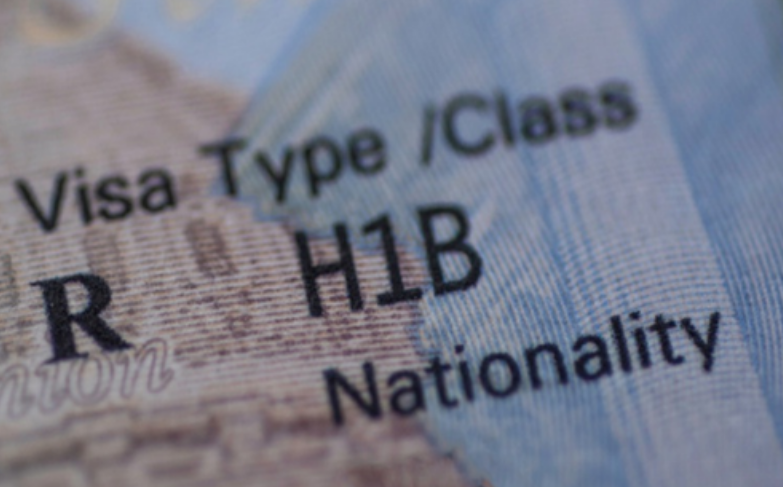

WASHINGTON–A Trump administration proposal to eliminate the 60-day grace period that allows laid-off H-1B visa holders to find new employment in the United States has generated more than 31,000 public comments, highlighting widespread interest in a policy change that could significantly affect Indian professionals working in America.
The proposal had received 31,383 posted comments as of Tuesday night, up from approximately 27,000 on November 2 and 30,382 earlier Tuesday.
The Department of Homeland Security (DHS) published the proposed regulation on September 11 as part of an effort to revise immigration rules governing foreign workers who lose their jobs.
Under current regulations, eligible H-1B visa holders have up to 60 days after their employment ends to secure another job, change their immigration status or make arrangements to leave the United States. The grace period cannot extend beyond the expiration of their authorized stay.
The protection also applies to workers in several other temporary visa categories, including L-1, O-1 and TN, as well as their dependents.
If the proposed change is finalized, affected foreign workers would lose the discretionary grace period and could be required to leave the country after losing employment unless they have another legal basis to remain.
The proposal could have particularly significant consequences for Indian nationals, who represent the largest group of H-1B visa beneficiaries in the United States.
According to U.S. Citizenship and Immigration Services (USCIS) data cited in its fiscal 2025 report to Congress, approximately 70% of the 406,348 approved H-1B petitions involved individuals born in India. Chinese nationals accounted for about 12%.
DHS has defended the proposed elimination of the grace period, arguing that temporary immigration status should remain tied to the employment that originally qualified foreign workers for admission to the United States.
The department said the existing grace period “is not mandated by statute” and adds administrative responsibilities for immigration officials.
According to DHS, federal immigration authorities had to determine whether the grace-period provision applied in more than 1.9 million petitions and applications submitted between October 2017 and May 2026.
Using revoked employment petitions as an indicator, the department estimated that an average of 65,752 foreign workers annually lost or changed jobs between fiscal 2021 and 2025.
Of those workers, approximately 3,795 had petitions filed by new employers during the grace period each year.
The department acknowledged that eliminating the protection could create financial and immigration-related challenges for affected workers, including lost income, relocation expenses and potential removal proceedings.
For Indian professionals employed in technology, engineering and other specialized industries, the proposed change could reduce the time available to find a new employer following a layoff.
The proposal has attracted considerably more public attention than two other pending DHS regulatory changes affecting international students and foreign professionals.
A separate proposal involving fees of $70,000 for initial Optional Practical Training and $30,000 for subsequent training had received 8,947 posted comments by Tuesday night. The public comment period for that measure closed Monday.
Another proposed regulation would eliminate the practice of generally deferring to previous USCIS decisions when reviewing extension applications involving substantially unchanged circumstances. That proposal had received 686 comments, with submissions accepted through November 13.
The number of comments submitted does not necessarily indicate whether respondents support or oppose the proposed changes.
DHS is required to review public feedback before determining whether to move forward with a final regulation. Any finalized rule would establish an effective date for the revised requirements.
The current 60-day grace period was introduced under a regulation adopted in 2016 and implemented on January 17, 2017.
The H-1B visa program allows U.S. employers to hire foreign professionals in specialty occupations requiring specialized knowledge, particularly in technology, engineering and other highly skilled fields.
For thousands of Indian professionals and their families, the administration’s decision on the proposed rule could determine how much time they have to remain in the United States after an unexpected job loss. (Source: IANS)