India Criticizes UN Record-Keeping in Security Council Reform Talks

UNITED NATIONS — India has criticized how negotiations on United Nations Security Council reforms are being recorded, saying the latest summary did not accurately reflect the broad support among member states for expanding both permanent and non-permanent seats on the council.
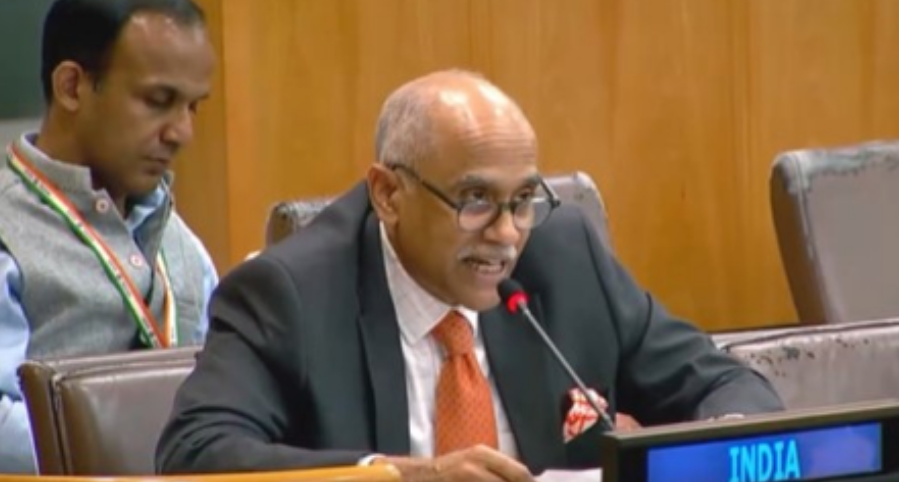
India’s Permanent Representative to the UN, P. Harish, said Tuesday that most UN member states support expansion in both categories, but the latest document from the Intergovernmental Negotiations process described that backing only as “significant.”
“Characterising this support as merely ‘significant’ does not accurately reflect the views of the majority,” Harish said.
He spoke on behalf of the G4 — India, Brazil, Germany and Japan — a group that advocates reform of the Security Council and supports permanent seats for its members in an expanded body.
“The G4 kindly requests that the Elements Paper for the session accurately capture the views and sentiments of a majority of member states in an objective manner,” Harish said.
The “Elements Papers” have become central to the process because formal text-based negotiations have not begun. A small group of countries has blocked the adoption of a negotiating text, leaving the summaries as the main record of positions taken during the talks.
At the previous session, which focused on Africa’s position on Security Council reform, many countries backed the continent’s demand for additional permanent and non-permanent seats.
A group called Uniting for Consensus opposes expanding the permanent membership category. The group, led by Italy and including Pakistan, has resisted moves toward a negotiating text that would set out the framework for detailed talks.
Harish said the G4 believes any consolidated model for reform must lead to text-based negotiations.
“Such a model must be drawn up in an objective manner and solely in accordance with the views expressed by various groups and member states in IGN discussions,” he said.
Rejecting the argument that a negotiating text requires prior consensus, Harish said, “A consolidated model is a starting point for discussion, not an end point designed for consensus or the lowest common denominator.”
“We cannot stress enough that possible bridging proposals and hybrid ideas must evolve from discussions among groups and member states on the basis of text negotiation,” he added.
Harish said the reform process risks remaining stalled unless negotiations move to a formal text.
“The G4 strongly emphasises that the IGN runs the obvious risk of not achieving any real progress till the commencement of text-based negotiations,” he said.
“As a reform-centric group, G4 once again underscores that the IGN must start negotiations on the basis of a text without any further delay,” he said. (Source: IANS)